


LUNG CANCER
Latest News

Advertisement
Latest Videos





































Advertisement
More News

Five novel agents for the treatment of patients with advanced squamous cell carcinoma (SCC) of the lung will be evaluated in the recently launched Lung-MAP trial.
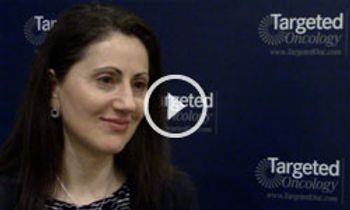
Vassiliki Papadimitrakopoulou, MD, from the University of Texas MD Anderson Cancer Center, discusses the implementation of personalized medicine for lung cancer patients.
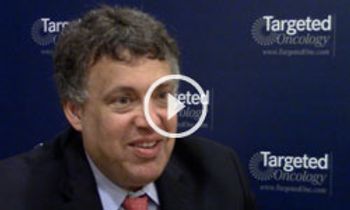
Roy S. Herbst, MD, PhD, from Yale-New Haven in Connecticut, discusses the benefit of treating lung cancer with immunotherapy.

The Cancer Genome Atlas (TCGA) began in 2006, with a total investment of $100 million from the National Cancer Institute and the National Human Genome Research Institute for a 3-year pilot period.

Drs. Grace Dy and Hongbin Chen Discuss Systemic Treatment for Metastatic, Non-Small Cell Lung Cancer (NSCLC)
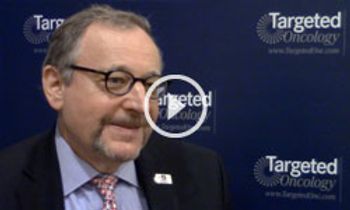
Fred R. Hirsch, MD, PhD, Professor of Medicine and Pathology, Associate Director for International Programs, University of Colorado Cancer Center, discusses the importance of biomarkers for lung cancer.
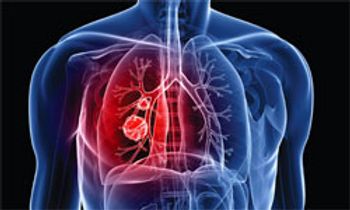
Immunotherapies have shown great promise in the treatment of advanced cancers, including metastatic melanoma and non-small cell lung cancers (NSCLC)

Oncogenic driver mutations have been detected in over 60% of the non-small cell lung cancer (NSCLC) tumor samples surveyed by the Lung Cancer Mutation Consortium (LCMC).
Therapeutic options available for the treatment of metastatic non-small cell lung cancer (NSCLC) include cytotoxic chemotherapies and targeted therapies.

Quincy Chu, MD, associate professor, medical oncologist, University of Alberta, discusses the development of ceritinib.

Several clinical trials combining nivolumab (Opdivo) with targeted therapies against ALK, c-MET, and T790M for patients with non-small cell lung cancer (NSCLC) have been established as part of a collaboration between Novartis and Bristol-Myers Squibb (BMS).

The highly selective ALK inhibitor AP26113 has been granted a Breakthrough Therapy Designation by the FDA for the treatment of patients with ALK-positive metastatic NSCLC who received prior treatment with crizotinib.

Patients with advanced lung cancer had improved appetite, less weight loss, and a significant increase in lean body mass when treated with a ghrelin agonist, two randomized trials showed.

Almost 60% of patients with advanced non–small cell lung cancer had tumor shrinkage when treated with the PD-L1 inhibitor pembrolizumab.

Timing of metastatic development, lymph node involvement, and type of disease all factor into the overall survival (OS) rate of patients with stage IV NSCLC, and could offer a potential risk stratification scheme for ablative therapy.
Siavash Jabbari, MD, discusses the potential for implantable cardiac devices such as pacemakers to malfunction following radiation therapy.
Paul A. Bunn, Jr., MD, Giant of Cancer Care: Lung Cancer, professor of medicine in medical oncology, head of the division of medical oncology, University of Colorado, discusses the potential benefit for a blood-based test to detect a T790M mutation in lung cancer.

Andrew R. Allen, BM, BCh, MA, MRCP, PhD, Executive Vice President of Clinical and Pre-Clinical Development, Chief Medical Officer, Co-Founder, Clovis Oncology, discusses how patients are selected for treatment with CO-1686.

The World Health Organization (WHO) classifies lung cancer into 2 major categories based on histology, prognosis, and treatment: non-small cell lung cancer (NSCLC) and small cell lung cancer (SCLC).
Lung cancer remains the leading cause of cancer-related mortality in the United States, despite decreases in lung cancer mortality rates beginning in 1991 for the male population and decreases beginning in 2003 for female population.

The optimal management of patients with early-stage NSCLC remains controversial, and the prospect of exposing an otherwise low-risk patient to potentially toxic chemotherapy based on limited prognostic information remains a problem for many clinicians.
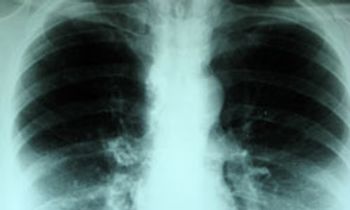
A preliminary analysis has shown that eribulin mesylate (Haloven) failed to meet its primary endpoint of improving overall survival in pre-treated patients with advanced NSCLC.

Suresh S. Ramalingam, MD, a professor of medical oncology at the Winship Cancer Institute of Emory University, discusses the role of heat shock protein 90 (Hsp90) in the treatment of lung cancer.

James L. Mulshine, MD, professor, Associate Provost for Research, Vice President, Rush University Medical Center discusses the correlation between e-cigarettes and smoking cessation.
AstraZeneca has announced new collaborations with QIAGEN and Roche to create 2 separate, noninvasive companion diagnostic tests to be used with 2 of its drugs for NSCLC, gefitinib (IRESSA) and AZD9291.
Advertisement
Advertisement
Trending on Targeted Oncology - Immunotherapy, Biomarkers, and Cancer Pathways
1
SOT106 Receives New FDA FTD and ODD in Sarcoma
2
Iberdomide Doubles MRD-Negative CR Rate in Phase 3 EXCALIBER-RRMM Trial
3
IMS 2026 Day 4 Recap: MRD-Guided Regimens Highlight Final Sessions
4
Trispecifics: A New Strategy to Prevent Antigen Escape
5