




LUNG CANCER
Latest News
Advertisement
Latest Videos







































Advertisement
More News

The majority of lung cancers are non–small cell lung cancers (NSCLCs), which are associated with several gene mutations.
A fluorescent molecular contrast agent accurately identified 92% of lung adenocarcinomas during pulmonary surgery.

While targeting HER2 mutations is mainly associated with breast cancer, there could be therapeutic potential with anti-HER2 agents in non-small cell lung cancer (NSCLC).

Precision medicine with TKIs and immunotherapies is revolutionizing the treatment of patients with NSCLC. Paul A. Bunn, Jr, MD, head of the Division of Medical Oncology at the University of Colorado, discussed the current translational advances with these agents in a discussion held at this year’s International Lung Cancer Congress.

Clinical trial designs are experiencing a huge transformation geared toward the discovery and confirmation of new predictive biomarkers for patients who have non-small cell lung cancer (NSCLC), as well as other types of solid tumors.
Paul A. Bunn, Jr., MD, distinguished professor, Division of Medical Oncology, University of Colorado, James Dudley Chair in Lung Cancer Research, Lung Cancer: Giant of Cancer Care, discusses immunotherapy in lung cancer.
Walter J. Curran, Jr., MD, FACR, associate vice president of cancer, Woodruff Health Sciences Center, executive director, Winship Cancer Institute, Lawrence W. Davis Chair of Radiation Oncology, Emory University, discusses radiation therapy dose for the treatment of patients with lung cancer.

A new drug application (NDA) was recently submitted for rociletinib (CO-1686) as a treatment for patients who have EGFR T790M-positive metastatic non-small cell lung cancer (NSCLC) following previous administration of an EGFR TKI.

After a successful demonstration as single-agents, clinical trials are currently assessing PD-1 and PD-L1 inhibitors, combined with chemotherapy, targeted therapies, and radiation therapy, in an attempt to further improve outcomes for patients who have non-small cell lung cancer (NSCLC).

Barbara J. Gitlitz, MD, associate professor of clinical medicine, Keck Medicine, University of Southern California, discusses EGFR mutations in patients with lung cancer.

Next generation therapies proven to be highly effective, are in development for patients who have oncogene-driven non-small cell lung cancer (NSCLC), specifically those with alterations in EGFR, ALK, ROS1, and NTRK.
Roy Decker, MD, PhD, associate professor of therapeutic radiology, assistant professor of surgery (Otolaryngology), Clinical Research Program Leader, Therapeutic Radiology, Yale University, discusses stereotactic body radiation therapy (SBRT) in surgery for patients with early non-small cell lung cancer (NSCLC).

In addition to late patient presentation, the high mortality rate in lung cancer can be largely attributed to the complex nature of the disease and a very high rate of heterogeneity in the causative molecular abnormalities.

Immunotherapies (immune checkpoint inhibitors) and targeted therapies (tyrosine kinase inhibitors [TKIs] that target specific mutations in one or more oncogenic drivers) represent two of the most researched types of therapy under investigation for the treatment of non-small cell lung cancer (NSCLC).
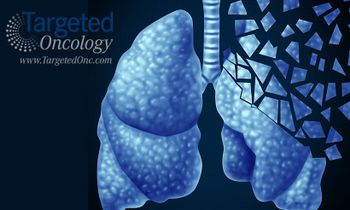
An impressive array of newly approved treatments, as well as investigational agents, for non–small cell lung cancer (NSCLC) emerged in the first 6 months of 2015.

Martin Reck, MD, PhD, Head of Thoracic Oncology, Hospital Grosshansdorf, discusses the phase III SQUIRE trial in patients with non-small cell lung cancer (NSCLC) treated with necitumumab.

The University of Texas MD Anderson Cancer Center in Houston has been selected as the site for one of two new Genome Characterization Centers (GCCs) funded by the National Cancer Institute (NCI) and National Institute of Health (HHSN261200800001E).

Breakthrough therapy designation has been granted by the US Food and Drug Adminstration (FDA) to the combination of the BRAF inhibitor dabrafenib (Tafinlar) and the MEK inhibitor trametinib (Mekinist) as treatment for patients with BRAF V600E-mutant non–small cell lung cancer

Nivolumab (Opdivo) was recently approved by the European Commission as a treatment for patients who have locally advanced or metastatic squamous non-small cell lung cancer (NSCLC), following prior chemotherapy, based on findings from the phase III Checkmate-017, as well as the phase II Checkmate-063 trials.

Ginseng polysaccharides may affect the balance of T-helper cells in patients with non-small cell lung cancer.
Mark A. Socinski, MD, professor, Medicine and Cardiothoracic Surgery, director, Lung Cancer Section, Division of Hematology/Oncology, clinical associate director, Lung SPORE, co-director, UPMC Lung Cancer Center of Excellence, co-leader, UPCI Lung Cancer Program, University of Pittsburgh, discusses the adverse events, as well as the overall significance, of nivolumab in patients with advanced non-squamous non-small cell lung cancer (NSCLC).

Gefitinib (Iressa) was recently approved by the FDA for the frontline treatment of patients who have metastatic, EGFR-positive non-small cell lung cancer (NSCLC) with an exon 19 deletion or exon 21 (L858R) substitution.
The approval of necitumumab, combined with gemcitabine and cisplatin for the first-line treatment of patients who have locally advanced or metastatic squamous non-small cell lung cancer (NSCLC), was supported by FDA’s Oncologic Drugs Advisory Committee (ODAC).

James Stevenson, MD, Department of Hematology and Oncology, Cleveland Clinic, discusses the impact of a stage IV non-small cell lung cancer (NSCLC) care pathway on frontline and maintenance chemotherapy use.

Clovis Oncology has initiated the rolling submission process for rociletinib in EGFR T790M-positive advanced non–small cell lung cancer following prior treatment with a TKI.
Advertisement
Advertisement
Trending on Targeted Oncology - Immunotherapy, Biomarkers, and Cancer Pathways
1
SOT106 Receives New FDA FTD and ODD in Sarcoma
2
Iberdomide Doubles MRD-Negative CR Rate in Phase 3 EXCALIBER-RRMM Trial
3
IMS 2026 Day 4 Recap: MRD-Guided Regimens Highlight Final Sessions
4
Trispecifics: A New Strategy to Prevent Antigen Escape
5