




LUNG CANCER
Latest News
Advertisement
Latest Videos





































Advertisement
More News
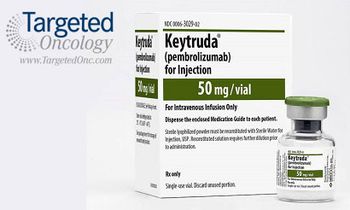
The immunotherapy, pembrolizumab (Keytruda), has been FDA approved for treatment in patients with pretreated advanced non-small cell lung cancer across all histologies with tumors expressing PD-L1.

Frontline combination treatment with erlotinib and bevacizumab demonstrated high efficacy in patients with advanced non-small cell lung cancer who harbored an EGFR T790M mutation.

Lorraine Pelosof, MD, PhD, assistant professor, Division of Hematology/Oncology, The University of Texas Southwestern Medical Center, discusses targets and possible therapies for never smokers diagnosed with non-small cell lung cancer (NSCLC).

Data from the pivotal KEYNOTE-001 trial showing pembrolizumab's efficacy in pretreated non-small cell lung cancer were presented just days before the FDA is scheduled to make its approval decision on the PD-1 inhibitor in this setting (October 2, 2015).

Rociletinib has been granted priority review designation as a treatment for patients with EGFR T790M-mutant metastatic non-small cell lung cancer following prior administration of an EGFR TKI.

Inhibition of PD-L1 with atezolizumab (MPDL3280A) showed crucial clinical efficacy as monotherapy for the treatment of patients with advanced non-small cell lung cancer (NSCLC).

Patients with advanced lung and gastrointestinal neuroendocrine tumors had a 52% reduction in risk of progression or death with everolimus compared with placebo.
David J. Stewart, MD, head, Division of Medical Oncology, University of Ottawa/The Ottawa Hospital, discusses a study that investigated the impact of delaying approval on overall survival.

Joshua M. Bauml, MD, assistant professor, University of Pennsylvania, discusses the significant impacts of a new electronic platform.

When cetuximab (Erbitux) was added to chemotherapy, the risk of death was reduced by 44% for patients with advanced squamous non-small cell lung cancer (NSCLC) whose tumors test positive for EGFR gene amplification.

Osimertinib (AZD9291), the third-generation TKI, demonstrated a 71% objective response rate (ORR) in those with EGFR T790M-mutant non-small cell lung cancer (NSCLC), following resistance to frontline anti-EGFR therapy.

When bevacizumab (Avastin) was added to adjuvant chemotherapy, overall survival (OS) did not improve in patients with surgically resected early-stage non-small cell lung cancer (NSCLC)
Squamous cell lung cancer represents a distinct molecular pathologic NSCLC with unmet therapeutic needs, especially after failure of first-line platinum-based doublet chemotherapy.

Activation of T-cell function has become a main focus of immunotherapeutic approaches aimed at enhancing an anticancer immune response and suppressing mechanisms used by tumor cells for immune evasion.

Lecia V. Sequist, MD, MPH, associate professor of medicine, Massachusetts General Hospital, discusses the IMPRESS trial, which was presented at the 2015 World Conference on Lung Cancer.

Continued treatment with gefitinib (Iressa) beyond progression showed a trend toward better outcomes for those with T790M-negative non-small cell lung cancer (NSCLC).

For patients who have metastatic squamous non-small cell lung cancer (NSCLC) whose tumors were positive for EGFR copy number, as determined by the FISH analysis, survival tended to be better with the addition of necitumumab to their conventional chemotherapy.

Coexisting driver mutations within EGFR-mutant non-small cell lung cancer (NSCLC) could possibly contribute to primary resistance to EGFR-targeted therapy.

Nivolumab (Opdivo) and ipilimumab (Yervoy), a chemotherapy-free regimen, showed activity as a first-line therapy for patients who have advanced non-small cell lung cancer (NSCLC).
Daniel S. Oh, MD, assistant professor of surgery, University of Southern California, Keck School of Medicine, discusses myPlan genetic testing in patients with lung cancer.

By adding bevacizumab (Avastin) to a standard chemotherapy doublet, the risk of death is reduced by 24%, with the risk of disease reducing by 39%, in patients who have malignant pleural mesothelioma (MPM).

The majority of patients under the age of 40 who have lung cancer had tumors with mutations that can be targeted with existing therapies.

The FDA recently granted alectinib a priority review designation for patients who have ALK-positive, locally advanced or metastatic non-small cell lung cancer (NSCLC) and progressed or are intolerant to crizotinib (Xalkori).

Lung cancer is the leading cause of cancer-related mortality worldwide, with approximately 1.6 million deaths annually.

The standard of care for lung cancers has been dramatically transformed by the growing availability of molecular diagnostics and genetic testing, and by targeted therapies that specifically inhibit a number of well-established oncogenic drivers.
Advertisement
Advertisement
Trending on Targeted Oncology - Immunotherapy, Biomarkers, and Cancer Pathways
1
SOT106 Receives New FDA FTD and ODD in Sarcoma
2
Iberdomide Doubles MRD-Negative CR Rate in Phase 3 EXCALIBER-RRMM Trial
3
IMS 2026 Day 4 Recap: MRD-Guided Regimens Highlight Final Sessions
4
Trispecifics: A New Strategy to Prevent Antigen Escape
5