



LUNG CANCER
Latest News
Advertisement
Latest Videos






































Advertisement
More News
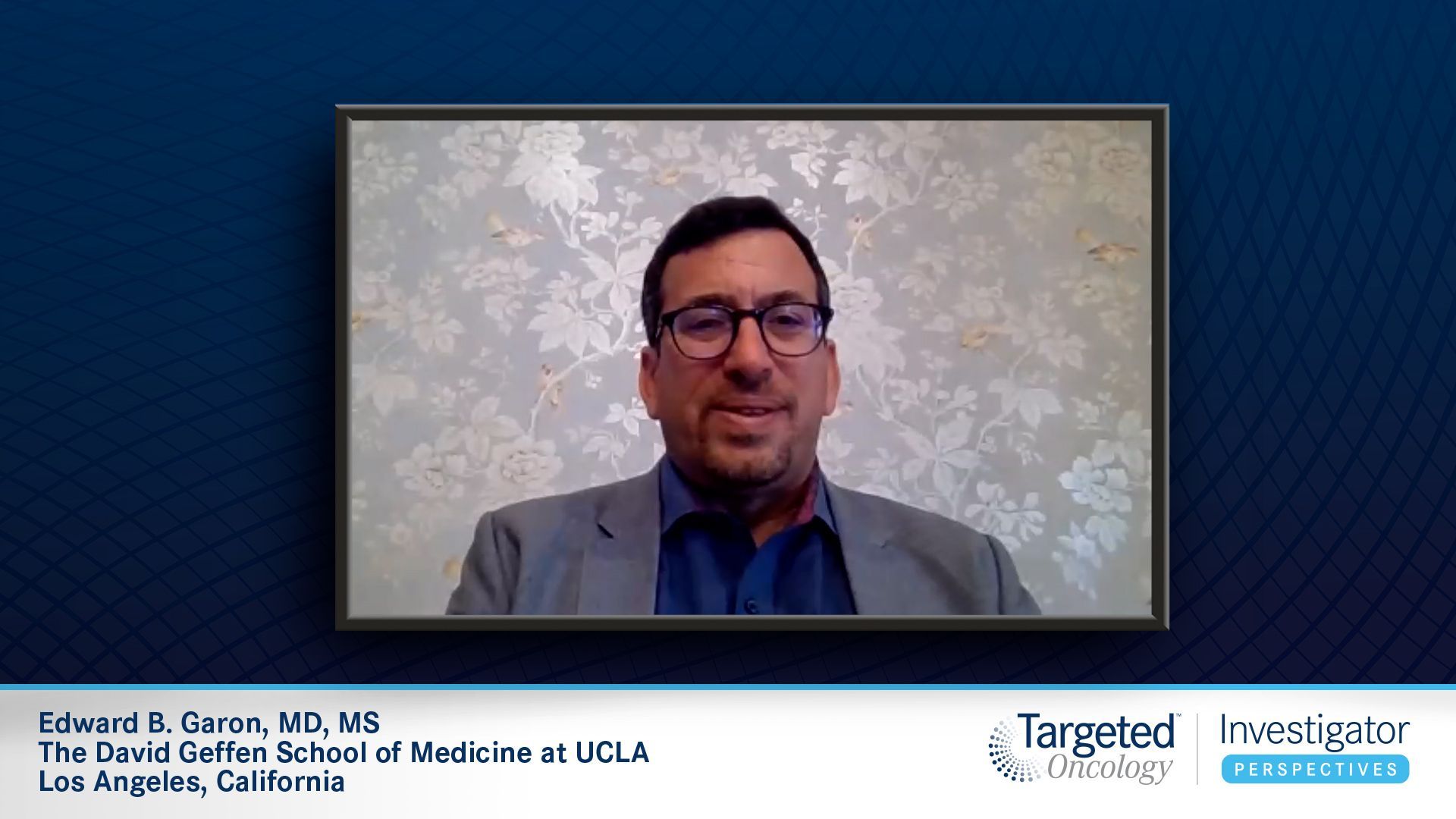
Closing the program, Edward B. Garon, MD, MS, shares his view on the implications of recent mNSCLC data in clinical practice, and the unmet needs the field must focus on in the future.
Dr Garon continues with an explanation of the updated analysis of the POSEIDON trial presented at the 2022 World Conference on Lung Cancer.
A key opinion leader reviews the study design and efficacy and safety outcomes of the POSEIDON trial investigating durvalumab + tremelimumab + chemotherapy for treatment of mNSCLC.
During a Targeted Oncology case-based roundtable event, Joel Neal, MD, PhD, and Leah Backhus, MD, MPH, discussed adjuvant therapies including chemotherapy, immunotherapy, and targeted therapy for patients with non–small cell lung cancer.
The impressive POSEIDON clinical trial results have led to the FDA approval of tremelimumab in combination with durvalumab and platinum-based chemotherapy for the treatment of metastatic non–small cell lung cancer.

Lauren Welch, MSN, NP-C, AOCNP, describes how she approaches management of patients with NSCLC and known high PD-L1 expression while she waits for pending biomarker testing results.
Zosia Piotrowska, MD, and Michelle Shiller, DO, AP/CP, MGP, explain the frequency of the different biomarkers in NSCLC, and steps clinicians might take to ensure timely and effective molecular testing for their patients.
Positive Study 16113 results have led the FDA to grant approval to to cemiplimab in combination with chemotherapy for the treatment of patients with advanced non–small cell lung cancer.

In the second interview of this series, Ben Creelan, MD, Associate Member at the H. Lee Moffitt Cancer Center & Research Institute in Tampa, Florida, reviews clinical trial data and explains the rationale of using tumor-infiltrating lymphocytes (TILs) in non-small cell lung cancer (NSCLC) treatment.
During a Targeted Oncology case-based roundtable event, Ravi Salgia, MD, PhD, discussed with participants their approach to molecular testing and treatment of a patient diagnosed with non–small cell lung cancer.
Five-year data from the phase 3 KEYNOTE-042 shows that patients with non–small cell lung cancer without EGFR/ALK alterations continue to elicit durable benefit with pembrolizumab monotherapy vs chemotherapy.
Despite halting the development of SRF388, the developer announces positive phase 1 efficacy and progress in a phase 2 study of SRF388 in combination with pembrolizumab.

David S. Hong, MD, discusses larotrectinib and its mechanism of action.

In an interview with Targeted Oncology, Benny Weksler, MD, MBA, reviews key trials that have recently influenced the standard of care for patients with stage IB to IIIB NSCLC.
In an interview with Targeted Oncology, Edward B. Garon, MD, MS, discussed the results of the phase 3 CANOPY-A study.
Melina E. Marmarelis, MD, reports the rationale and key findings from the Chrysalis-2 trial of patients with EGFR-mutated advanced non–small cell lung cancer.

Andreas Saltos, MD, discusses what he anticipates future research will examine regarding treatment options for EGFR and KRAS-mutated non-small cell lung cancer.
In the second installment of the series, Ben Creelan, MD, reviews clinical trial data and explains the rationale of using tumor-infiltrating lymphocytes (TILs) in non-small cell lung cancer (NSCLC) treatment.
Dr Mark Socinski reviews the challenges faced when treating chemotherapy induced myelosuppression and discusses the impact of trilaciclib on CIM and how that will impact clinical practice.

During a Targeted Oncology case-based roundtable discussion, Zofia Piotrowska, MD, MHS, discussed the data from clinical trials supporting mobocertinib and amivantamab for patients with non–small cell lung cancer and an EGFR exon 20 insertion mutation.
Many studies’ results have suggested that the use of ctDNA for monitoring responses to treatment could be a significant tool for clinical research as well as a predictive biomarker.
Prior to the 20th Annual Winter Lung Cancer Conference, Mark A. Socinski, MD, spoke with Targeted Therapies in Oncology about expectations for the upcoming meeting and major topics in non–small cell lung cancer.
During a Targeted Oncology case-based roundtable event, Afshin Dowlati, MD, discussed the data supporting the use of atezolizumab and durvalumab as therapy for patients with small cell lung cancer.
During a Targeted Oncology case-based roundtable event, Rachel E. Sanborn, MD, discussed with participants the case of a patient with metastatic lung adenocarcinoma with potential targetable biomarkers.
Advertisement
Advertisement
Trending on Targeted Oncology - Immunotherapy, Biomarkers, and Cancer Pathways
1
SOT106 Receives New FDA FTD and ODD in Sarcoma
2
Iberdomide Doubles MRD-Negative CR Rate in Phase 3 EXCALIBER-RRMM Trial
3
IMS 2026 Day 4 Recap: MRD-Guided Regimens Highlight Final Sessions
4
Trispecifics: A New Strategy to Prevent Antigen Escape
5