




LYMPHOMAS
Latest News

Advertisement
Latest Videos




CME Content

































Advertisement
More News




Goals of "Project Impact: A Campaign to Defeat Pediatric Brain Tumors" include improving clinical outcomes for pediatric brain tumor patients and informing the development of the first-ever standard of care for treating pediatric high-grade gliomas.
As therapeutic approaches with more efficacy and less toxicity are still highly needed, researchers are currently working to identify new targets in the MB field.
The management of medulloblastoma, the most common malignant brain cancer in children, has not changed in decades but breakthroughs are on the horizon.
Data from the phase I HD7 through HD11 trials proves promising enough to move on to phase II.

Sarat Chandarlapaty, MD, PhD, medical oncologist, Memorial Sloan Kettering, discusses some of the emerging therapies for patients with ER-positive metastatic breast cancer.
Pembrolizumab (Keytruda) is associated with an exceptional overall response rate (ORR) in patients with relapsed/refractory Hodgkin lymphoma.

A majority of patients (66%) with classical Hodgkin lymphoma (cHL) who had progressed after receiving autologous stem cell transplant (ASCT) and brentuximab vedotin (adcetris) experienced a response to nivolumab (Opdivo) monotherapy, findings from the phase II CheckMate-205 trial showed when presented at the 2016 ASCO Annual Meeting.
Treatment options are limited for patients with Waldenstrom's macroglobulinemia (WM), says Morie A. Gertz, MD. Combination therapies offer a potential solution, but the rarity of the disease is an obstacle.

The FDA has granted an accelerated approval to nivolumab for patients with classical Hodgkin lymphoma following relapse or progression after autologous hematopoietic stem cell transplantation and post-transplantation brentuximab vedotin.

The FDA has granted a breakthrough therapy designation to pembrolizumab (Keytruda) as a treatment for patients with relapsed or refractory classical Hodgkin lymphoma (cHL).
The FDA has granted nivolumab (Opdivo) a priority review for use in previously treated patients with classical Hodgkin lymphoma (cHL), giving the drug the potential to become the first PD-1 inhibitor approved for a hematologic malignancy.

Expanding on the efficacy shown in numerous single-group studies, a phase II study published in The Lancet Oncology showed lenalidomide significantly increased progression free survivalin patients with relapsed or refractory mantle cell lymphoma.
Six ongoing clinical trials investigating several idelalisib (Zydelig) combinations have been halted due to reports of increased adverse events such as death for patients with hematologic malignancies, according to an alert issued by the FDA.

Obinutuzumab (Gazyva) plus bendamustine, followed by obinutuzumab alone has been approved by the FDA as a treatment of patients with follicular lymphoma who were not responsive to a rituximab regimen, or who relapsed after rituximab-based therapy.

In this article, Shipra Gandhi, MD, Pallawi Torka, MD, and Francisco J. Hernandez Ilizaliturri, MD summarize the current clinical development of these novel agents in lymphoid malignancies.

Patrick Johnston, MD, PhD, assistant professor of medicine, Mayo Clinic, discusses a phase I study that incorporated belinostat with standard CHOP chemotherapy for patients with newly diagnosed peripheral T-cell lymphoma. Johnston says the goal of the trial was to discover the maximum tolerable dose. He said there were no additional significant toxicities in patients and the combination was well-tolerated.

Kathryn Kolibaba, MD, discusses results from the phase II trial dubbed Pyramid Trial. The open-label trial examined a combination of R-CHOP and bortezomib in patients with untreated non-germinal center B-cell-like subtype diffuse large cell lymphoma.
Jeffrey Jones, MD, discusses small molecule inhibitors of B-cell receptor signaling in chronic lymphocytic leukemia (CLL).

Amy Johnson, PhD, discusses the overall high response rates in patients with chronic lymphocytic leukemia (CLL) to a new novel bruton tyrosine kinase (BTK) inhibitor called acalabrutinib (ACP-196).
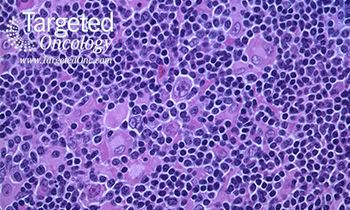
In this review, our authors discuss the mechanism of action and clinical development of various checkpoint inhibitors in lymphoma.
Advertisement
Advertisement
Trending on Targeted Oncology - Immunotherapy, Biomarkers, and Cancer Pathways
1
NCCN Survey Finds Persistent Cancer Drug Shortages Across US Centers
2
Risk-Adapted Quadruplet Therapy Sustains 5-Year Survival Benefit in High-Risk Myeloma
3
FDA Grants Final Approval to Cabozantinib Capsule Formulation
4
Subcostal Robotic Surgery Cuts Thoracic Pain
5