



MULTIPLE MYELOMA
Latest News

February 27th 2018
By Jason Harris
Denosumab was recently recommended for approval by the European Medicines Agency’s Committee for Medicinal Products for Human Use for the prevention of skeletal-related events in patients with multiple myeloma, according to Amgen, the developer of the RANK ligand inhibitor.
Advertisement
Latest Videos
















































Advertisement
More News

Using next-generation squencing methods, researchers are attempting to combine clinical and genomic biomarkers to identify patients with smoldering multiple myeloma who are at high risk for disease progression.
According to recently published results of the international, double-blind randomized phase III 482 Study in <em>The Lancet Oncology, </em><sup> </sup>denosumab was noninferior to zoledronic acid (Zometa) in preventing skeletal-related event in patients with newly diagnosed multiple myeloma.
In a phase Ib/II dose escalation study, rapid and tolerable responses were seen with the combination of selinexor, daratumumab, and low-dose dexamethasone in patients with relapsed/refractory multiple myeloma who were previously exposed to immunomodulatory and proteasome inhibitors.<br />
Overall survival was extended for patients with relapsed or refractory multiple myeloma by nearly 8 months with the combination of carfilzomib, lenalidomide, and dexamethasone compared with lenalidomide and dexamethasone alone in results from the phase III ASPIRE trial.
Patients with relapsed/refractory myeloma who had prior exposure to lenalidomide (Revlimid) experienced a significant improvement in progression-free survival with pomalidomide (Pomalyst) added to the combination of bortezomib (Velcade) and low-dose dexamethasone, according to findings from the phase III OPTIMISMM trial.

Phyllis McKiernan, a nurse practitioner at John Theurer Cancer Center, Hackensack Medical Center, discusses a study of outcomes of autologous stem cell transplantation in very elderly patients with multiple myeloma.

Saad Z. Usmani, MD, Chief of the Plasma Cell Disorders Program, Levine Cancer Institute/Carolinas HealthCare System, discusses the MMprofiler in multiple myeloma.

Based on findings from the ALCYONE study, which were published in the <em>New England Journal of Medicine</em> and presented at the 2017 ASH Annual Meeting,<sup> </sup>the FDA has granted a priority review designation to daratumumab (Darzalex) in combination with bortezomib (Velcade), melphalan, and prednisone for the treatment of patients with newly diagnosed multiple myeloma who are ineligible for autologous stem cell transplant.
The FDA has issued its approval for overall survival data from the phase III ENDEAVOR trial to be added to the carfilzomib (Kyprolis) label for use in patients with relapsed or refractory multiple myeloma.
C. Ola Landgren, MD, PhD, recently shared the treatment considerations and decisions he makes when treating patients with multiple myeloma. Landgren, chief of the Myeloma Service at Memorial Sloan Kettering Cancer Center, in New York, explained his treatment decisions based on 2 case scenarios during a <em>Targeted Oncology</em> live case-based peer perspectives dinner.
According to an updated analysis of the POLLUX trial, progression-free survival remained superior over time in patients with relapsed/refractory multiple myeloma treated with combination therapy that included the anti-CD38 antibody daratumumab.

Andrew L. Pecora, MD, President of the Physician Services Division and Chief Innovation Officer at Hackensack Meridian Health, discusses preliminary safety and efficacy data for combined checkpoint inhibition with ipilimumab (Yervoy) and nivolumab (Opdivo) as consolidation therapy following autologous stem cell transplant in patients with multiple myeloma and non-Hodkin lymphoma.






Multiple Myeloma
Based on data from the phase III 482 study, denosumab (Xgeva) has been granted FDA approval for the prevention of skeletal-related events in patients with multiple myeloma, according to Amgen, the developer of the RANK ligand inhibitor.

Mark W. Bustoros, MD, a postdoctoral fellow at Dana-Farber Cancer Institute, Harvard Medical School, discusses ongoing research exploring the use of liquid biopsies in patients with smoldering multiple myeloma.
The proteasome inhibitor ixazomib has received a recommendation from the United Kingdom's National Institute for Health and Care Excellence for patients with relapsed/refractory multiple myeloma.
Rapid and durable responses were induced with the combination of selinexor, weekly bortezomib (Velcade), and low-dose dexamethasone (Vd), according to results of a dose escalation/expansion trial of patients with relapsed/refractory multiple myeloma (RRMM) presented at the 2017 ASH Annual Meeting.
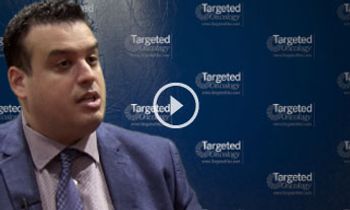
Joshua Richter, MD, Hackensack University Medical Center, discusses a tool which explored the incidence and survival impact of self-reported symptoms and psychologic distress among patients with multiple myeloma during the 2017 ASH Annual Meeting.
Daratumumab (Darzalex) in combination with VMP (bortezomib [Velcade], melphalan, and prednisone) could become a new standard of care for patients with newly diagnosed multiple myeloma who are unable to undergo transplant following findings from the phase III ALCYONE study.
Advertisement
Advertisement
Trending on Targeted Oncology - Immunotherapy, Biomarkers, and Cancer Pathways
1
Anito-Cel Delivers Durable Responses With Low Neurotoxicity in RRMM
2
Risk, Histology, and Metastatic Site Guide First-Line RCC Treatment Choices
3
FDA Application Withdrawn for I-DXd in Small Cell Lung Cancer
4
Elinzanetant Gets Priority Review for VMS From Breast Cancer Endocrine Therapy
5