
MULTIPLE MYELOMA
Latest News
Advertisement
Latest Videos












































Advertisement
More News
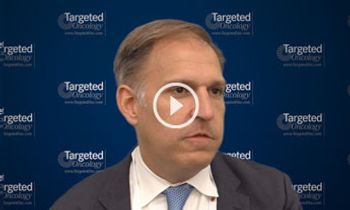
Peter M. Voorhees, MD, investigator, department of hematologic oncology & blood disorders, Levine Cancer Institute/Atrium Health, discusses efficacy and updated safety findings of a safety run-in cohort from the phase II Griffin trial, a randomized study of daratumumab, bortezomib, lenalidomide, and dexamethasone (Dara-Vrd) versus Vrd in patients with newly diagnosed multiple myeloma eligible for high-dose therapy and autologous stem cell transplantation, during the 2018 ASH Annual Meeting.
In a study of transplant-eligible patients with newly diagnosed multiple myeloma, daratumumab added to bortezomib, lenalidomide, and dexamethasone induced at least a very good partial response in all patients, including a complete response in 63% of patients, at the end of consolidation therapy.<br />
During a <em>Targeted Oncology </em>case-based peer perspectives program, Sikander Ailawadhi, MD, reviewed with other physicians his clinical considerations for the management of multiple myeloma. Ailawadhi discussed his treatment options and other factors that go into his decision making with the group during the meeting based on a case scenario of a patient with high-risk, transplant-ineligible multiple myeloma.
During a <em>Targeted Oncology </em>live case-based peer perspective presentation, Ajai Chari, MD, spoke on the treatment options and considerations he makes when treating patients with relapsed/refractory multiple myeloma.

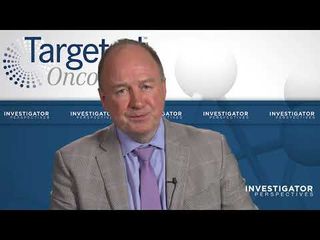
Ajai Chari, MD, discusses the rationale for using combination therapy in patients with multiple myeloma.
During a <em>Targeted Oncology </em>live case-based peer perspectives presentation, Ravi Vij, MD, MBA, reviewed with other healthcare professionals the treatment options and considerations he makes when treating patients with multiple myeloma.
Thalidomide Added to Induction and Maintenance Therapy in Multiple Myeloma Boosts Long-term Survival
Adding thalidomide to induction and maintenance therapy in stem cell transplant-eligible, newly diagnosed patients with multiple myeloma improved event-free survival and progression-free survival compared with standard chemotherapy drugs and interferon alfa, according to a long-term follow-up analysis from a phase III open-label randomized trial.
Sarah Holstein, MD, PhD, explains her rationale for choosing a triplet regimen over a quadruplet in patients with multiple myeloma.

Based on data from the phase II ELOQUENT-3 trial, elotuzumab (Empliciti) has received approval from the FDA in combination with pomalidomide (Pomalyst) and low-dose dexamethasone for the treatment of patients with relapsed/refractory multiple myeloma following 2 or more prior therapies, including lenalidomide (Revlimid) and a proteasome inhibitor.

Eric Smith, MD, PhD, discusses the use of armored chimeric antigen receptor T cells in multiple myeloma.
Newly diagnosed patients with multiple myeloma who are not candidates for high-dose chemotherapy and autologous stem cell transplant saw a 45% reduction in the risk of disease progression or death with the addition of daratumumab (Darzalex) to lenalidomide (Revlimid) and dexamethasone compared with lenalidomide/dexamethasone alone.

Eric Smith, MD, PhD, discusses challenges with CAR T-cell therapy as a treatment option for multiple myeloma. While studies have shown CD19 CAR T cells and BCMA CAR T cells have durable responses in this patient population, patients still relapse over time.
A new drug application for selinexor has been granted a priority review by the FDA as a treatment for patients with penta-refractory multiple myeloma, according to Karyopharm Therapeutics, the manufacturer of the agent.

Infographic: Here, we share the top 5 oncology news stories we reported this week, including the most recent FDA updates and expert insights on key developments in the field.
The next-generation sequencing assay clonoSEQ has gained FDA approval as a test for minimal residual disease in patients with acute lymphoblastic leukemia or multiple myeloma.
A once-weekly dosing option of carfilzomib (Kyprolis) has been approved by the FDA for use in combination with dexamethasone for patients with relapsed/refractory multiple myeloma, Amgen, the manufacturer of the agent, has announced.<br />
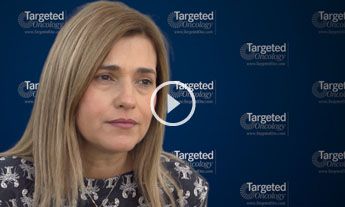
Sham Mailankody, MBBS, discusses current treatment options and shifting preferences, especially toward triplet combinations, for patients with relapsed/refractory multiple myeloma, as well as emerging immunotherapy treatment options.




Advertisement
Advertisement
Trending on Targeted Oncology - Immunotherapy, Biomarkers, and Cancer Pathways
1
Anito-Cel Delivers Durable Responses With Low Neurotoxicity in RRMM
2
Risk, Histology, and Metastatic Site Guide First-Line RCC Treatment Choices
3
FDA Application Withdrawn for I-DXd in Small Cell Lung Cancer
4
Frontline CAR T and Bispecific Antibodies Are the Next Frontier in Myeloma
5