

Renal Cell Carcinoma
Latest News
Overall Survival Approaching 5 Years for Metastatic Renal Cell Carcinoma
By Jordyn Sava
Research Explores Possible Link Between Gut Microbiome and Better Outcomes in Kidney Cancer
By Jordyn Sava
Advertisement
Latest Videos








































Advertisement
More News
During a Targeted Oncology Case-Based Roundtable event, Toni K. Choueiri, MD, discussed treatment options using immune checkpoint inhibitors in patients with advanced renal cell carcinoma.
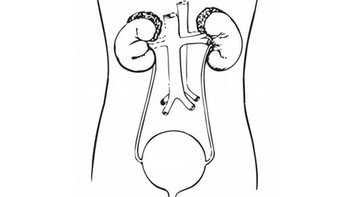
The target number of patients with advanced renal cell carcinoma has been enrolled in the phase 3 CONTACT-3 trial, which aims to determine the efficacy and safety of cabozantinib combined with atezolizumab.
In an interview with Targeted Oncology, Sunil Sudarshan, MD, discussed the kidney cancer paradigm and opportunities to advance the field with new targets.

During a live virtual event, Ulka Vaishampayan, MBBS, discussed the results of the CLEAR trial of lenvatinib and pembrolizumab compared with sunitinib in first-line treatment of advanced RCC.
During a live virtual event, Sandy Srinivas, MD, discussed the tolerability of the tyrosine kinase inhibitor/immunotherapy combinations cabozantinib plus nivolumab and lenvatinib plus pembrolizumab, compared with the dual immunotherapy ipilimumab plus nivolumab.

Cristiane D. Bergerot, PhD, discusses how financial toxicity associated with renal cell carcinoma is impacting oncologists and their patients.
In an interview with Targeted Oncology, Matthew T. Campbell, MD, discussed unmet needs for patients with renal cell carcinoma and sarcomatoid dedifferentiation. He also explained how to approach the treatment of patients with challenging non-clear cell tumors.
In an interview with Targeted Oncology, Toni Choueiri, MD, discusses the impact the approval of adjuvant pembrolizumab has had on the RCC space.
Cristiane D. Bergerot, PhD, discussed factors contributing to financial toxicity in patients with RCC and how it impacts oncology care providers.

Toni Choueiri, MD, explains what led to the phase 3 COSMIC-313 clinical trial.
FDA approval is being sought for dovitinib as a treatment option for patients with renal cell carcinoma.
Rana R. McKay, MD, discussed the implications of the KEYNOTE-564 study along with the future of adjuvant immunotherapy in RCC, in an interview with Targeted Oncology
In an interview with Targeted Oncology, Nicholas J. Vogelzang, MD, discussed how the treatment landscape has changed for renal cell carcinoma and the continuing promise of lenvatinib.
Proactive management of treatment-emergent adverse events, including treatment interruption, may be crucial for patients with renal cell carcinoma receiving lenvatinib in combination with pembrolizumab, according to the CLEAR study investigators.
Despite advanced in the field of renal cell carcinoma, most patients still die of the disease and more options and new targets are needed, says Moshe C. Ornstein, MD, MA.
During a live virtual event, Sandy Srinivas, MD, discussed results from the CLEAR trial of lenvatinib and pembrolizumab in renal cell carcinoma and the participants' experiences with the regimen including dose reductions needed by their patients across multiple cancer types.
Based on the case of a man with metastatic renal cell carcinoma, Brian Rini, MD, and peers discussed later-line immunotherapy and tyrosine kinase inhibitor combination therapies.
In an interview with Targeted Oncology, Eric Jonasch, MD, discussed the impact belzutifan has had on the VHL-assocaited renal cell carcinoma space, along with unmet clinical needs the agent is addressing.
In an interview with Targeted Oncology, Viraj Master, MD, PhD, FACS , discussed how adjuvant pembrolizumab may impact the treatment landscape of renal cell carcinoma.
In a post-hoc analysis of the CheckMate 9ER trial, researchers found that, along with additional efficacy benefits, the combination of nivolumab plus cabozantinib had manageable adverse events.
Advertisement
Advertisement
Trending on Targeted Oncology - Immunotherapy, Biomarkers, and Cancer Pathways
1
Giredestrant Plus Everolimus Improves PFS in ER+ Advanced Breast Cancer
2
Denosumab Biosimilar Approved For Existing Oncology Indications
3
FDA Oncology Recap: Approvals, Designations, and Decisions in September 2026
4
New Drug Application Filed for Savolitinib/Osimertinib in MET+ NSCLC
5