


Renal Cell Carcinoma
Latest News
Advertisement
Latest Videos








































Advertisement
More News

Matthew T. Campbell, MD, MS, discusses trials investigating cabozantinib in patients with renal cell carcinoma.

In an interview with Targeted Oncology, Thomas Hutson, DO, PharmD, reviewed findings from the CLEAR study and how these data are set to re-shape the treatment landscape of advanced renal cell carcinoma.
The standard dose of lenvatinib, 18 mg per day, demonstrated an improved health-related quality of life and a longer time to deterioration over a lower starting dose of lenvatinib, 14 mg per day, in patients with renal cell carcinoma, according to secondary results from a phase 2 trial.
In an interview with Targeted Oncology, Walter M. Stadler, MD, discussed recent updates and changes in the kidney cancer landscape, including treatment with HIF and VEGFR inhibitors.
A look toward the future treatment of advanced renal cell carcinoma.
Expert perspectives on the clinical utility of lenvatinib plus pembrolizumab as a frontline combination for advanced renal cell carcinoma.
Robert J. Motzer, MD, discusses dosing strategies to mediate toxicities and maximize efficacy from the frontline combination of lenvatinib plus pembrolizumab for renal cell carcinoma.
Robert J. Motzer, MD, provides perspective on recent data from the phase 3 CLEAR trial (Study 307)/KEYNOTE-581 for advanced renal cell carcinoma.
A comprehensive review of the efficacy and safety data from the phase 3 CLEAR trial (Study 307/KEYNOTE-581) for the frontline treatment of advanced renal cell carcinoma.
An expert in genitourinary oncology, Robert J. Motzer, MD, reviews the recent historic advances in frontline combinations for the treatment of advanced clear-cell renal cell carcinoma.

Bradley McGregor, MD, discusses the ongoing COSMIC-313 trial of cabozantinib, ipilimumab, and nivolumab in patients with renal cell carcinoma.
The novel, selective hypoxia-inducible factor-2 alpha inhibitor belzutifan was granted a priority review by the FDA for the treatment of patients with von Hippel-Lindau disease–associated renal cell carcinoma who do not require immediate surgery.
The first therapy for adults with relapsed or refractory advanced renal cell carcinoma who have received two or more prior systemic therapies has been granted approval by the FDA.
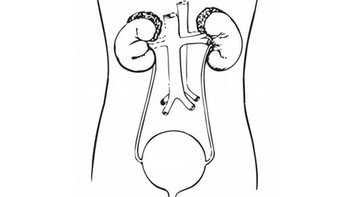
Updated data show a continued survival benefit for patients with metastatic renal cell carcinoma as the group reached the median overall survival endpoint for the phase II MERECA study.
During a Targeted Oncology Case-Based Peer Perspective virtual event, Amir Mortazavi, MD andMoshe Ornstein, MD, MA discussed available treatment regimen for a patient with clear cell renal cell carcinoma and sarcomatoid features.

Brian I. Rini, MD, discusses the dosing of nivolumab plus ipilimumab for patients with renal cell carcinoma.
In a 7 to 1 vote, oncologists favored the use of axitinib in combination with pembrolizumab or avelumab over cabozantinib monotherapy for the treatment of intermediate and high-risk clear cell renal cell carcinoma. Chandler H. Park, MD, reviewed that clinical trial research that supports the axitinib combinations, as well as other targeted therapy options.

The immunotherapy combination of nivolumab and ipilimumab has improved survival and response rates compared with sunitinib, in patients with advanced renal cell carcinoma with sarcomatoid histology, including those with intermediate and poor-risk features.
In an interview with Targeted Oncology, Nizar M. Tannir, MD talked about how the introduction of nivolumab plus ipilimumab to the front-line setting of sRCC impacts the treatment paradigm.
Findings from the phase 3 CLEAR trial showed that the addition of lenvatinib to either pembrolizumab or everolimus led to an improvement in survival and response rates in comparison with sunitinib monotherapy in the first-line setting for patients with advanced renal cell carcinoma.
The addition of the oral hypoxia-inducible factor 2α inhibitor belzutifan to cabozantinib led to disease control in a majority of patients with previously treated advanced clear cell renal cell carcinoma, according to preliminary results from a phase 2 trial presented at the 2021 Genitourinary Cancers Symposium.
Cabozantinib reduced the risk of disease progression or death by 40% in comparison with sunitinib in patients with metastatic papillary renal cell carcinoma, according to findings from the randomized phase 2 SWOG 1500 study.
In patient with metastatic renal cell carcinoma who have brain metastases, treatment with cabozantinib displayed significant intracranial and extracranial, results from a retrospective analysis presented during the 2021 Genitourinary Cancers Symposium show.
Nivolumab in combination with cabozantinib continues to demonstrate superior efficacy over sunitinib monotherapy in the frontline treatment of patients with advanced renal cell carcinoma, according to extended follow-up data from the phase 3 CheckMate 9ER trial.
The VEGF tyrosine kinase inhibitor tivozanib hydrochloride demonstrated a significantly increased quality-adjusted time without symptoms of disease and toxicity as third- or fourth-line therapy in patients with metastatic renal cell carcinoma compared with sorafenib in the phase 3 TIVO-3 trial.
Advertisement
Advertisement
Trending on Targeted Oncology - Immunotherapy, Biomarkers, and Cancer Pathways
1
Giredestrant Plus Everolimus Improves PFS in ER+ Advanced Breast Cancer
2
Denosumab Biosimilar Approved For Existing Oncology Indications
3
FDA Oncology Recap: Approvals, Designations, and Decisions in September 2026
4
New Drug Application Filed for Savolitinib/Osimertinib in MET+ NSCLC
5