

In an interview with Targeted Oncology, Tanya B. Dorff, MD, discussed the role of goserelin and LHRH antagonists in the ever-changing treatment landscape for patients with prostate cancer.


Your AI-Trained Oncology Knowledge Connection!
In an interview with Targeted Oncology, Tanya B. Dorff, MD, discussed the role of goserelin and LHRH antagonists in the ever-changing treatment landscape for patients with prostate cancer.

A recent phase 1/2 study revealed promising results, with an estimated 4-month intracranial progression-free survival rate of 70.7% with stereotactic radiosurgery with the combination of nivolumab and ipilimumab.

For large cell lymphomas, physicians typically use CT and positron emission tomography-computed tomography scans to look for signs of minimum residual disease when treatment is completed.

NXC-201 has demonstrated safety and elicited hematologic and organ responses in patients with relapsed/refractory amyloid light chain amyloidosis, including frail patients.
In the phase 3 CARTITUDE-4 trial, ciltacabtagene autoleucel was shown to be effective when used in patients with multiple myeloma exhibiting poor prognostic features.
In an interview with Targeted Oncology, Justin Taylor, MD, discussed early research on NX-2127, a BTK degrader being evaluated for the treatment of chronic lymphocytic leukemia.
IberVd showed high efficacy with deep, ongoing responses among older patients with transplant-ineligible, newly diagnosed multiple myeloma.
Researchers identified KDM6A’s role in CD38 regulation and found that an EZH2 inhibitor could potentially reduce resistance to an anti-CD38 antibody in multiple myeloma cells.
Although response rates were lower among patients given previous anti-BCMA therapy, teclistamab shows promise for all patients with relapsed/refractory multiple myeloma.
At a median duration of response of 12.2 months, the objective response rates with forimtamig across all dose levels was 66.7% with a very good partial response rate of 54.2%, according to data from a phase 1a dose-escalation trial.
In the non–small cell lung cancer space, identifying the appropriate candidate to receive perioperative approaches, such as neoadjuvant or adjuvant therapy, remains the clinical objective.
According to data presented at IMS 2023, a real-world analysis showed that teclistamab demonstrated comparable efficacy to the results observed in the phase 2 MajesTec-1 trial for patients with relapsed/refractory multiple myeloma.
The Dara-KRd regimen with double transplant induced deep response rates and a high minimal residual disease negativity rates among patients with high-risk, newly diagnosed multiple myeloma.

In an interview with Targeted Oncology, Yael Schenker, MD, MAS, FAAHPM, discussed the importance of palliative care and advanced care planning for patients with advanced cancers.

Madhav V. Dhodapkar, MBBS, discusses some of the immunotherapies under investigation and those that are being highlighted at the 20th International Myeloma Society Annual Meeting for patients with multiple myeloma.

Priority review to the biologics license application for odronextamab has been granted by the FDA for adult patients with follicular lymphoma and diffuse large B-cell lymphoma.
Findings from a systematic review on the efficacy of bispecific antibodies were presented during the 20th International Myeloma Society Annual Meeting.
Daniel P. Petrylak, MD, discusses background and findings from the phase 3 KEYNOTE-921 study of pembrolizumab plus docetaxel vs placebo plus docetaxel in patients with metastatic castration-resistant prostate cancer who had received prior next-generation hormonal agent therapy.

Results of the phase 3 MIRASOL study evaluating mirvetuximab soravtansine for platinum-resistant ovarian cancer will be announced at an upcoming meeting.

John M. Burke, MD, discusses how Bruton tyrosine kinase inhibitors have demonstrated unexpected promise in treating follicular lymphoma, challenging previous assumptions in the field of oncology.

Topline results from MARIPOSA reveal a survival advantage with amivantamab plus lazertinib vs osimertinib in patients with EGFR-mutant non–small cell lung cancer. Additional follow-up is planned.

Joshua Richter, MD, evaluates the efficacy and safety data of linvoseltamab for the treatment of patients with multiple myeloma.
IDE161 now has 2 fast track designations from the FDA for patients with breast cancer and ovarian cancer. The agent continues to be evaluated in a first-in-human, phase 1 study for patients with advanced solid tumors.

Researchers presented updated results from longer-term follow-up studies of GC012F for newly-diagnosed multiple myeloma treatment at the International Myeloma Society Annual Meeting.

Cyrus M. Khan, MD, discusses the phase 1/2 trial of glofitamab for use as a treatment option for patients with relapsed/refractory large B-cell lymphoma.
The Isa-KRd combination in the GMMG-CONCEPT trial yielded high MRD negativity rates among patients with newly diagnosed, high-risk multiple myeloma, irrespective of transplant status.

Robert Dreicer, MD, MS, MACP, FASCO, acknowledges that there have been substantial developments in therapies and strategies for treating prostate cancer, leading to heightened expectations of breakthroughs in the field.

Richard S. Finn, MD, and R. Kate (Katie) Kelley, MD, emerged in a discussion about the factors that inform treatment decisions for patients with hepatocellular carcinoma during the International Liver Cancer Association Annual Conference 2023.
Treatment with CAN-2409 produced promising survival data and continues to show a favorable safety and tolerability profile for the treatment of non-resectable, stage III/IV non–small cell lung cancer.
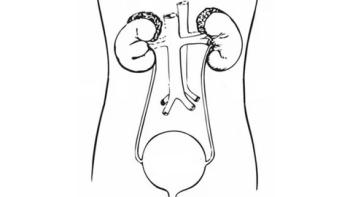
The ADVANCED-2 trial plans to build onto the early antitumor and safety data seen with TARA-002 that were presented this year for patients with non-muscle invasive bladder cancer.