

Recap the 4 late-breaking phase 3 trials from ESMO 2026 Presidential Symposium I in melanoma, bladder cancer, small cell lung cancer, and prostate cancer.

Recap the 4 late-breaking phase 3 trials from ESMO 2026 Presidential Symposium I in melanoma, bladder cancer, small cell lung cancer, and prostate cancer.

Sunvozertinib is FDA approved for patients with NSCLC with EGFR exon 20 insertion mutations that progressed on or after platinum-based chemotherapy.
Vopimetostat yielded favorable outcomes in a phase 1/2 trial in combination with daraxonrasib or zoldonrasib in MTAP-deleted, RAS-mutant pancreatic cancer or lung cancer.
The phase 2 I-SPY2.2 trial found promising responses with rilvegostomig plus trastuzumab deruxtecan in biomarker-defined, immune-positive tumors.

Early multidisciplinary survivorship care during radiotherapy boosts adherence and improves disease-free survival in head and neck cancer, with lower recurrence risk.
Adding the mRNA-based individualized neoantigen intismeran to pembrolizumab reduced the risk of disease recurrence or death by 42% in melanoma.

Experts weigh continuous BTK inhibitors vs fixed-duration CLL therapy, highlighting TP53/17p risk, patient logistics, and subtle zanubrutinib–acalabrutinib tolerability differences.

The FDA converted the accelerated approval of pembrolizumab in TMB-high solid tumors to traditional approval, redefining TMB-high as at least 13 mut/Mb.
Following an end-of-phase 2 meeting with the FDA, Rgenta plans to start a phase 3 trial of oral RGT-61159 in adenoid cystic carcinoma in the first quarter of 2027.
The FDA granted fast track designation to SBE303, Samsung Bioepis’ investigational Nectin-4–targeting ADC, for advanced urothelial cancer following enfortumab vedotin.

The antibody-drug conjugate sofetabart mipitecan showed efficacy and safety, leading to selection of a phase 3 dose for the FRAmework-01 trial.

The FDA granted orphan drug designation to Cardiff Oncology’s PLK1 inhibitor onvansertib for relapsed or refractory CMML after early phase 1 activity.

Findings highlight the need for individualized monitoring after discharge, despite low rates of severe toxicities.

During a live event, Robert Orlowski, MD, PhD, and participants discussed how access barriers, disease tempo, and bridging choices shape CAR T referral for a patient with early relapsed multiple myeloma.
The guidelines incorporate cosibelimab for locally advanced cutaneous squamous cell carcinoma after favorable results in the CK-301-101 trial.
More than 76% of US counties have no TNBC trial, and only 9.8% of rural counties have one vs 47% of metropolitan counties, a new analysis finds.

The phase 3 VERIFY trial found that rusfertide improved clinical response, reduced phlebotomy requirements, and eased symptom burden in patients with polycythemia vera receiving standard-of-care therapy.

At Rutgers Cancer Institute, neuro-oncologists met to discuss the latest trends in precision brain cancer care with FET-PET imaging, advanced molecular testing, and same-day multidisciplinary clinics.
During a virtual event, Thomas Martin, MD, and participants considered the use of the on-body injector for subcutaneous isatuximab for a frail patient with transplant-ineligible newly diagnosed myeloma.
The investigational chemoimmunotherapy antibody-drug conjugate demonstrated enhanced tumor inhibition in preclinical models.

Updated ARC-20 data show casdatifan delivers durable responses and strong survival in clear cell renal cell carcinoma, alone and in key first-line combinations.
Rural breast cancer deaths rise faster than urban rates, driven by low income, later diagnosis, and treatment gaps—warning of widening disparities by 2035.

The TASKIN trial found a 12-month overall survival rate of 61.3% with vilamakitug plus standard-of-care therapy, with exploratory findings suggesting potential benefit in right-sided tumors.
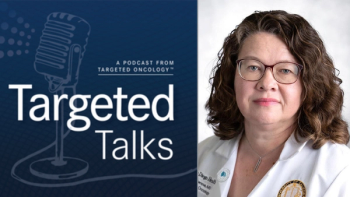
Lyudmila Bazhenova, MD, discusses the FDA’s expanded approval of taletrectinib for ROS1-positive non–small cell lung cancer.
UGN-103, a formulation of intravesical mitomycin as treatment for low-grade intermediate-risk non–muscle-invasive bladder cancer, will receive FDA review with a PDUFA date of June 14, 2027.
FDA approves dostarlimab for MSI-H/dMMR locally advanced rectal cancer, driving high complete responses and helping many patients avoid surgery, radiation, and chemo.
SABR improved recurrence-free survival vs historical benchmark with IVC tumor thrombus; investigators hypothesize this could be used to reduce invasive surgery.
In patients 45+ with papillary thyroid cancer, men with dual BRAF V600E and TERT promoter mutations face sharply higher mortality, reshaping risk stratification.
Selpercatinib achieved a 53% objective response rate in pediatric patients with RET-altered solid tumors, with no treatment discontinuations due to treatment-related adverse events in LIBRETTO-121.

Four oncologists share their perspectives on what is still limiting access to CAR T-cell therapies in 2026.