

Telehealth transplant consults help patients with multiple myeloma overcome racial, age, and rural barriers, speeding eligibility screening and expanding access to specialists.

Telehealth transplant consults help patients with multiple myeloma overcome racial, age, and rural barriers, speeding eligibility screening and expanding access to specialists.

The MUC16xCD3 bispecific antibody showed a 73% response rate in phase 1/2 trial; the sponsor announced plans for a potential registrational cohort and phase 3 trial.

Five myeloma experts share their top takeaways from IMS 2026, including the CERVINO trial and long-term follow-up from the PERSEUS study.

Giredestrant plus everolimus reduced the risk of progression or death by 44% in the ITT population and 62% in ESR1-mutated disease in phase 3 evERA data published in NEJM.

The oral azacitidine/cedazuridine combination was compared with subcutaneous azacitidine in the phase 3 portion of the AZTOUND trial.

Adding zabilugene almadenorepvec to standard gemcitabine/nab-paclitaxel extends survival and response in newly diagnosed metastatic pancreatic cancer, with manageable safety signals.

Late 2026 FDA oncology rulings may reshape care—from CSF-1R and ALK drugs to oral SERDs and BCMA CAR T breakthroughs.
Resubmitted FDA filing advances off-the-shelf EBV-specific T-cell therapy tab-cel for relapsed EBV+ PTLD after transplant, with longer follow-up.

Resection with cesium-131 tile-based radiation therapy prolonged time to surgical bed recurrence vs resection with stereotactic radiation in the phase 3 ROADS trial.

Degevma was approved for skeletal-related events in adults with bone metastases, giant cell tumor of bone, and the treatment of hypercalcemia of malignancy.
FDA fast-tracks plinabulin plus docetaxel for post-immunotherapy non-squamous NSCLC, as DUBLIN-4 phase 3 targets survival gains.
September brought accelerated approvals in ESR1-mutant breast cancer and HER2-mutant non–small cell lung cancer, a Galleri panel vote, and a withdrawn I-DXd application.
The application is supported by the phase 3 SAFFRON trial, in which savolitinib plus osimertinib improved progression-free and overall survival vs chemotherapy.
Proton therapy did not improve overall survival vs photon therapy in advanced hepatocellular carcinoma in the phase 3 NRG-GI003 trial.
Published findings from the ASPEN-06 trial of evorpacept in previously treated HER2+ gastric cancers included exploratory analyses suggesting CD47 is a predictive biomarker for benefit with the targeted agent.
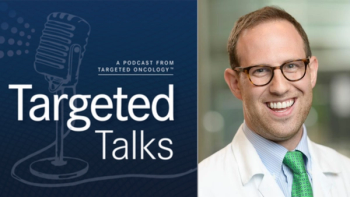
Benjamin Herzberg, MD, discusses KRAS-mutant non–small cell lung cancer, upfront biomarker testing, and the emerging RAS inhibitor toolkit on Targeted Talks.

Clinicians weigh RCC immunotherapy choices by risk, metastasis site, and histology, citing durable outcomes with nivo-ipi and favoring TKIs after early progression.

Published phase 1 findings support the promising efficacy and tolerability of anito-cel in relapsed/refractory multiple myeloma, explains lead author Matthew Frigault, MD.
The FDA communicated that the phase 2 IDeate-Lung01 results were not sufficient for an accelerated approval of I-DXd in small cell lung cancer.

Broad oncology bundles falter; experts push smaller surgery/radiation episodes, better navigation, and AI analytics to improve value-based care.
Elinzanetant, already approved for menopause-related VMS, is being considered to address hot flashes associated with adjuvant breast cancer endocrine therapy.
The phase 2 ALISCA-Lung2 trial (PUMA-ALI-4202) is exploring alisertib plus paclitaxel in small cell lung cancer after immunotherapy and chemotherapy.
In the phase 3 EXCALIBER-RRMM trial, iberdomide plus daratumumab and dexamethasone doubled MRD-negative complete response rates over standard therapy in relapsed myeloma.
Closing sessions at IMS 2026 featured MRD-guided treatment strategies, real-world CAR T-cell data, and mixed results on cilta-cel neurotoxicity prevention in myeloma.
Durvalumab plus enfortumab vedotin improved EFS and OS in MIBC and will be considered for FDA approval in the fourth quarter of 2026.
Etentamig significantly improved response and survival over standard therapy in the phase 3 CERVINO trial, headlining day 3 of IMS 2026 myeloma coverage.

In an interview, Peter Voorhees, MD, discusses his presentation of the CERVINO trial data from the International Myeloma Society meeting.

US cancer deaths keep falling as lung cancer declines; smoking drops, screening rises, but rural and low-education gaps persist.
FDA approves belzutifan plus lenvatinib for advanced clear cell RCC after PD-1/PD-L1 therapy, based on PFS and response rate benefit vs cabozantinib.
Advisory panel backs Galleri blood test for adults 50+, citing strong specificity, mixed sensitivity, and follow-up impacts as FDA weighs approval.