

Breakthrough targeted therapies—from KRAS and PROTACs to CAR T—plus ctDNA monitoring and personalized vaccines push earlier detection and smarter cancer treatment.

Breakthrough targeted therapies—from KRAS and PROTACs to CAR T—plus ctDNA monitoring and personalized vaccines push earlier detection and smarter cancer treatment.

J. Thaddeus Beck, MD, discusses how the shift from intravenous to subcutaneous formulations is changing oncology practice, from clinic logistics to patient preferences.

Experts debate second-line tivozanib for advanced renal cell carcinoma, weighing PFS gains, tolerability, and whether continuing immunotherapy adds real benefit.
The designation expands the investigational immunotherapy’s development across tumor types for patients whose disease progresses after prior treatment, including immune checkpoint inhibition.

Phase 2b data show iopofosine I-131 drives deep, durable responses in relapsed Waldenström macroglobulinemia after BTK inhibitors, with manageable cytopenias.

The RELIGHT study found that adding retlirafusp alfa to chemotherapy extended overall and progression-free survival in previously untreated gastric and GEJ cancers.

Gary Simmons, DO, MSHA, discusses outpatient CAR T-cell therapy in the community, the operational and payer bottlenecks his practice has faced, and advice for colleagues.

During a virtual event, Neil M. Iyengar, MD, and participants discussed how approvals for trastuzumab deruxtecan before and after surgery complicate sequencing for patients with HER2-positive early breast cancer.
The oral KRAS G12D inhibitor VS-7375 elicited clinical responses across patients with KRAS G12D–mutant pancreatic, lung, and colorectal cancer.

ASH updates myelofibrosis care with expanded molecular testing, earlier transplant consultation, tailored JAK inhibitor use, anemia strategies, and aspirin guidance to reduce clot risk.
FYB206 is being reviewed as a pembrolizumab biosimilar after meeting pharmacokinetic equivalence; no additional efficacy trial is required.
FDA accepts updated tab-cel BLA for EBV+ PTLD after transplant, adding ALLELE data; PDUFA decision set for March 31, 2027.

Preview the late-breaking studies at ESMO Congress 2026, from KRAS inhibitors and ADCs to bispecifics and perioperative immunotherapy across tumor types.

During a live event, Mary Jo Fidler, MD, and participants discussed how an intermediate-risk regimen, insurance resistance, and limited experience with trilaciclib shape neutropenia prevention in extensive-stage disease.

The phase 2/3 AHEAD-MERIT trial will continue to evaluate patients with HPV-positive head and neck squamous cell carcinoma for its second primary end point of overall survival.
FDA expands nogapendekin alfa inbakicept plus BCG use to high-grade papillary-only BCG-unresponsive NMIBC, offering durable control and strong cystectomy-avoidance outcomes.
Real-world German MINT data show mogamulizumab delivers durable responses, ~20-month PFS, manageable safety, and improved quality of life in MF and Sézary syndrome.
The phase 2 PEGASUS trial of ctDNA-guided adjuvant therapy in high-risk stage II/III colon cancer missed its primary end point but reduced neurotoxicity.
Cancer deaths keep falling as survival rises, fueled by prevention, early detection, and therapies, yet gaps persist, and research funding uncertainty threatens future gains.
Experts weigh IO-TKI vs dual immunotherapy for metastatic ccRCC, highlighting rapid symptom relief, bone/brain response, survival outcomes, and toxicity tradeoffs.
This marks the fourth submission to the FDA for approval of rivoceranib plus camrelizumab for this first-line indication in hepatocellular carcinoma.
The FDA granted FTD to opantistomig, a PD-L1/4-1BB bispecific antibody, for first-line treatment of biliary tract cancer.

Texas Oncology’s virtual care navigation pilot supported 740 patients on oral oncolytics across 11 community sites, offering a scalable model for at-home care.
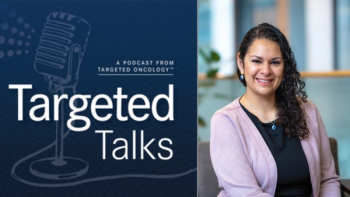
For Hispanic Heritage Month, Narjust Florez, MD, discusses lung cancer risk, biomarker testing, and trial access in Hispanic and Latinx patients.

During a live event, Seth M. Pollack, MD, and participants discussed 2 investigational agents for recurrent diffuse tenosynovial giant cell tumor.
A phase 2 trial is planned for an allogeneic CAR T-cell product in patients with lung or breast cancer with brain metastases.
RYZ101, a targeted alpha radiopharmaceutical, boosts progression-free survival in SSTR+ GEP-NETs after progression, offering a promising post-¹⁷⁷Lu option.

Natera’s blood test analyzes cell-free DNA to screen for several cancer types from a single sample.

A Japanese study found favorable sensitivity and specificity for recurrence of melanoma based on presence of melanoma-specific markers in circulating tumor DNA.

Theodore Wagener, PhD, of The Ohio State University discusses the design of the phase 2 DREAM LUNG study of psilocybin-assisted therapy for depression in non–small cell lung cancer.