
At IMS 2026, 7-year GEM2014MAIN data showed that half of patients who stopped MRD-guided maintenance remained progression free, and new data from DREAMM 9, MIDAS, and novel bispecific antibody studies were presented.

At IMS 2026, 7-year GEM2014MAIN data showed that half of patients who stopped MRD-guided maintenance remained progression free, and new data from DREAMM 9, MIDAS, and novel bispecific antibody studies were presented.
LRRC15-targeting ADC SOT106 gains FDA fast track and orphan status for sarcomas, showing preclinical promise as it heads into a first-in-human trial.
The oral FGFR2 inhibitor lirafugratinib is now FDA approved for the second-line treatment of cholangiocarcinoma harboring FGFR2 alterations.
A new IMS/IMWG consensus definition requires 5 years of treatment-free, MRD-negative remission before multiple myeloma can be called cured.
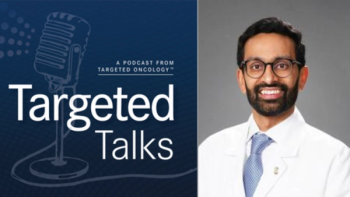
Dr Raj Singh previews key ASTRO 2026 data, from FMISO PET-guided de-escalation in HPV-positive head and neck cancer to SRS vs whole brain radiotherapy trials in brain metastases.

New analysis tracks life-years gained from blood cancer therapies, revealing breakthrough inflection points, stubborn AML gaps, and inequities in access.
At IMS 2026, mezigdomide plus elranatamab yielded a 100% ORR in MELT-MM, while other abstracts covered cevostamab, anito-cel vs cilta-cel, and linvoseltamab in HR-SMM.
New 177Lu-dotatate radioligand therapy expands options for SSTR+ GEP-NETs, backed by NETTER-1 efficacy and key safety guidance.

For Prostate Cancer Awareness Month, Herbert Lepor, MD, discusses the leading concerns in managing early prostate cancer and tailoring strategies to the patient based on their risk and goals.
The FDA has recommended conducting a new trial showing an OS benefit with tovecimig in biliary cancer before submitting a BLA.

NCCN guidelines indicate rusfertide for patients who are intolerant to phlebotomy or who receive frequent phlebotomy, regardless of risk status.

Community oncology practices rapidly adopt bispecific therapy, but reimbursement gaps, intensive monitoring demands, and limited hospital coordination hinder safe, scalable in-office programs.

Preview the 2026 International Myeloma Society meeting: the IMS/IMWG cure consensus, plenary session phase 3 trials, and new bispecific/CAR T myeloma findings.

During a roundtable event, Amit R. Mehta, MD, and participants discussed treatment selection for a patient with immune thrombocytopenia at risk of thrombotic events.
The FDA designation is for LYT-200 plus a hypomethylating agent for relapsed/refractory high-risk myelodysplastic syndromes.

Real-world ESAS data show higher symptom burden after cancer diagnosis shifts spending from treatment to ER, home and mental health care.

Jeff Sharman, MD, explores how targeted therapies have transformed CLL treatment and what emerging approaches could shape the future of care.

Updated TRUST-I and TRUST-II data show durable taletrectinib responses in ROS1+ NSCLC regardless of prior chemotherapy or fusion partner.

David DiBardino, MD, explains how intratumoral radioenhancer therapy works, why standardization remains a challenge, and what early CONVERGE study data suggest for locally advanced NSCLC.
Oncologists weigh second-line options after IO/TKI failure in metastatic ccRCC, highlighting tolerability, mechanism shifts, and belzutifan’s broader role.
In the phase 3 EMBER-3 trial, imlunestrant plus abemaciclib doubled median progression-free survival vs imlunestrant alone in ESR1-mutated advanced breast cancer.

CELESTIMO trial shows mosunetuzumab plus lenalidomide boosts PFS in relapsed follicular lymphoma, supporting earlier-line outpatient, chemo-free care.

The FDA's Expedited Investigational New Drug (IND) Pilot Program pairs trial sponsors and research institutions to promote phase 1 trials in the US.

During a live event, Sikander Ailawadhi, MD, and participants considered a case patient with relapsed multiple myeloma after a quadruplet induction who declined CAR T-cell therapy.
FDA clears Triton 1 robotic colonoscopy for screening and advanced therapy, backed by first-in-human data showing high detection rates and reduced clinician workload.

Results from the phase 3 MAVERICK trial (SWOG S1827) show MRI surveillance alone improved cognitive failure-free survival vs adding PCI in SCLC.
The COPERNICUS study of amivantamab/lazertinib showed lower rates of adverse events and discontinuation with supportive care regimens in patients with EGFR-mutated non–small cell lung cancer.
The FDA approved an sNDA updating the taletrectinib label with a 49.7-month median duration of response from TRUST-I in ROS1-positive NSCLC.
Phase 3 trial shows trastuzumab botidotin boosts PFS and response rates vs T-DM1 in pretreated HER2-positive metastatic breast cancer, with manageable ocular toxicity.
During a live event, Ruta Rao, MD, and participants discussed how toxicity history, rather than head-to-head trial data, drives the choice among 3 antibody-drug conjugates once the first one fails or becomes intolerable.