

Stuart J. Schnitt, MD, discussed how AI enhances cancer diagnoses and the need for professional oversight, ethical clarity, and equitable adoption.


Your AI-Trained Oncology Knowledge Connection!
Stuart J. Schnitt, MD, discussed how AI enhances cancer diagnoses and the need for professional oversight, ethical clarity, and equitable adoption.

The KEYNOTE-B96 study of pembrolizumab plus paclitaxel in recurrent platinum-resistant ovarian cancer has met its primary end point of progression-free survival.
Belrestotug plus dostarlimab showed no progression-free survival benefit in NSCLC, leading GSK and iTeos to discontinue all development and ongoing trials.

The FDA granted accelerated approval to telisotuzumab vedotin for the treatment of NSCLC with high c-MET protein overexpression.
The FDA approved belzutifan as the first oral therapy for advanced or metastatic pheochromocytoma and paraganglioma in patients 12 years and older.
Ariel Lopez-Chavez, MD, discusses the role of comprehensive genomic profiling in small cell lung cancer management.

Telisotuzumab vedotin plus osimertinib demonstrated safety and efficacy in patients with c-MET protein overexpression.

Data from the phase 2 ROME trial were presented by Andrea Botticelli, MD, during the ESMO Targeted Anticancer Therapies Congress 2025.
Findings from the TROPION-Lung04 study were presented at the ESMO Targeted Anticancer Therapies Congress 2025 in March.
Nini Wu, MD, MBA, discusses how community oncology practices can leverage technology to maximize efficiency and reduce administrative burdens.

Madhur Nayan, MD, PhD, discusses a new machine learning model developed to enhance prostate cancer screening.

Adding pertuzumab to standard of care improved survival by 17% in patients with early-stage HER2-positive breast cancer.

T-DXd monotherapy and T-DXd plus pertuzumab continue to show robust efficacy in HER2-positive metastatic breast cancer.
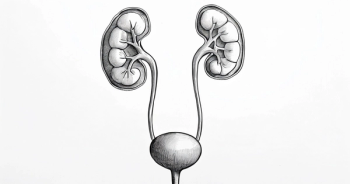
Colin P.N. Dinney, MD, PhD, discussed updated analyses of the BOND-003 and CORE-001 trials in bladder cancer.

THE001, a thermosensitive doxorubicin liposome for soft tissue sarcomas, received FDA orphan drug designation, offering development benefits.
Disitamab vedotin plus toripalimab showed significant survival benefits vs chemo in first-line HER2+ advanced urothelial carcinoma, with a manageable safety profile.

Jack Khouri, MD, discusses data from a multicenter study of teclistamab in patients with relapsed/refractory multiple myeloma who had prior exposure to BCMA-directed therapy.
Andrew Kuykendall, MD, discusses data from a phase 2 trial of fedratinib for the treatment of myeloproliferative neoplasms.
The FDA has cleared investigational new drug applications and handed out fast track designations. Plus, data shows promise for novel therapies in hard-to-treat cancers.
Colin P.N. Dinney, MD, provides some background on translational analyses from the BOND-003 and CORE-001 trials.
The field of cancer research and treatment is, almost by definition, continually evolving.
The FDA cleared the investigational new drug application of IDE849, a potential first-in-class DLL3-targeted antibody-drug conjugate for solid tumors.
Durvalumab plus full BCG significantly improved disease-free survival in high-risk early bladder cancer vs BCG alone in the POTOMAC trial.

The anti-GD2 therapy naxitamab has been included in the NCCN Clinical Practice Guidelines in Oncology for the treatment of patients with neuroblastoma.
ADRX-0706, a Nectin-4-targeted antibody-drug conjugate, has earned FDA fast track designation in advanced cervical cancer.

Nicole A. Cipriani, explores the clinical relevance of the BRAF p.V600E mutation in papillary thyroid carcinoma and its potential role in guiding treatment decisions.
Stuart J. Schnitt, MD, discussed artificial intelligence enhancements roadblocks, and potential integration for cancer diagnostics with Targeted Oncology.
Enriqueta Felip, MD, PhD, discusses how results from the phase 3 3475A-D77 trial evaluating subcutaneous pembrolizumab vs intravenous pembrolizumab, plus chemotherapy, for the treatment of metastatic NSCLC may impact patient experience and clinical workflow.