

CA-4948 was found to have a complete remission rate of 40% and an objective response rate of 57% in some patients with acute myeloid leukemia and myelodysplastic syndrome.

CA-4948 was found to have a complete remission rate of 40% and an objective response rate of 57% in some patients with acute myeloid leukemia and myelodysplastic syndrome.

Devimistat shows therapeutic potential in patients with clear cell sarcoma after dose-escalation ends with no observed dose-limiting toxicities.

A phase 2 study is preparing to enroll patients with Epstein-Barr virus-positive advanced nasopharyngeal carcinoma, who will be treated with an investigational EBNA1 inhibitor.

Tycel Jovelle Phillips, MD, discussed the use of glofitamab in patients with R/R MCL who have failed BTK inhibitors in an interview with Targeted Oncology.
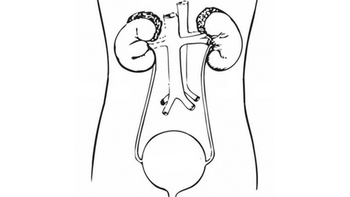
In an interview with Targeted Oncology, Sunil Sudarshan, MD, discussed the kidney cancer paradigm and opportunities to advance the field with new targets.

Shannon N. Westin, MD, MPH, FACOG, discusses the DUO-E trial, which evaluated durvalumab, a PD-L1 inhibitor, with or without olaparib in patients with endometrial cancer, design, and end points.

American Oncology Network, LLC and its partner, Cancer & Blood Specialists of Arizona have announced the opening of their new cancer center location in Flagstaff, Arizona.
A study of zilovertamab in combination with ibrutinib for the treatment of relapsed or refractory mantle cell lymphoma will be launched in the second quarter of 2022.
Data from a phase 1 trial found that the maximum-tolerated dose of INBRX-106 for metastatic solid tumors is 0.1 mg/kg once every 3 weeks.
Efficacy was seen with blocking LAG-3 in combination with PD-1 as a therapeutic strategy for patients with melanoma. Additionally, this research establishes LAG-3 as the third immune checkpoint pathway to have proven clinical benefit in this patient population.
Telisotuzumab vedotin has shown interim efficacy in patients with advanced or metastatic EGFR wild-type non–small cell lung cancer and has now been granted breakthrough therapy designation from the FDA
Phase 1b data indicate that pembrolizumab in combination with pepinemab is safe for the frontline treatment of advanced, recurrent, or metastatic head and neck squamous cell carcinoma.

Katherine Poruk, MD, discusses upcoming surgical advances being made the field of pancreatic cancer.

Sotorasib produced an objective response rate of 9.7% in patients with colorectal cancer.
Topline results from the phase 2 NOVA-II trial showed clinical efficacy and an acceptable safety profile with OQL011.
In an interview with Targeted Oncology, Shaji Kumar, MD, discussed the current standard of care in multiple myeloma, along with the need for risk stratification in this patient population.
In an interview with Targeted Oncology, Mark Roschewski, MD, discussed precision medicine in diffuse large B-cell lymphoma and using acalabrutinib in a pre-chemotherapy window to better understand its potential benefit.
The study of the XPO1 inhibitor for solid tumors aims to accrue 48 patients.
IMX-110 may soon be granted fast track designation for the treatment of rhabdomyosarcoma children.

Fifty percent of patients in the first 2 cohorts of an early-phase study experienced stable disease on annamycin, and no dose-limiting toxicities were observed.
A new Zangmeister Cancer Center location has opened in Grove City, Ohio.

Theodore W. Laetsch, MD, discusses which trials were used for the retrospective study of the TRK inhibitor larotrectinib for the treatment of TRK-fusion cancers, including thyroid cancers.
A phase 3 trial of consibelimab aims to enroll 560 patients with non–small cell lung cancer, who will be randomized to receive either consibelimab with chemotherapy, or chemotherapy alone.

Lurbinectedin is being evaluated as treatment of patients with small cell lung cancer in a phase 3 trial.
Patients with high levels of amphiregulin appeared to be at a higher risk of early death from acute graft-versus-host-disease, signaling that it may be a predictive biomarker.
Although cytokine release syndrome can occur in patients treated with APVO436, the event can be managed with steroids without adversely affecting treatment.

Tycel Phillips, MD, a clinical associate professor of hematology and medical oncology at the University of Michigan Health, discusses the mechanism of action of glofitamab in patients with mantle cell lymphoma.
The FDA closed 2021 with 5 new treatment options for cancer and multiple designations that may bring new therapies to the armamentarium for oncologists in the future.
Gurbakhash Kaur, MD, discusses the use of bispecific T-cell engagers as an alternative to chimeric antigen receptor (CAR) T-cell therapy for the treatment of multiple myeloma.