


A comparison of anatomic and functional imaging in the assessment of clinical outcomes in patients with Ewing sarcoma has shown that FDG-PET, assessed by PERCIST criteria, was superior in predicting clinical benefits and identifying responses.


Your AI-Trained Oncology Knowledge Connection!
A comparison of anatomic and functional imaging in the assessment of clinical outcomes in patients with Ewing sarcoma has shown that FDG-PET, assessed by PERCIST criteria, was superior in predicting clinical benefits and identifying responses.
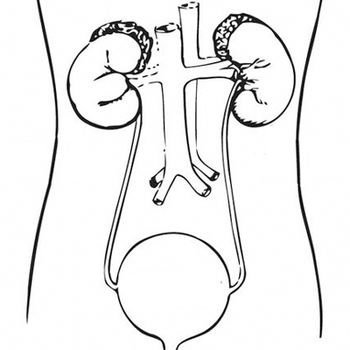
Elizabeth Plimack, MD, discusses recent pivotal findings in the field of genitourinary malignancies, specifically renal cell carcinoma (RCC) and bladder cancer.
The antibody drug conjugate XMT-1536 could change the treatment paradigm for both non-small cell lung cancer (NSCLC) and ovarian cancer, according to Donald Bergstrom, MD, PhD.

William G. Wierda, MD, PhD, discusses which groups of CLL patients may benefit from ibrutinib versus chemoimmunotherapy and clinical trials that may provide further clarification.
Emily M. Ko, MD, gives an overview of a study examining risk factors for surgical treatment delay for patients with endometrial cancer.
Treatment with KTE-C19 demonstrated an objective response rate (ORR) of 79% and a complete remission (CR) rate of 52% for patients with aggressive, chemorefractory non-Hodgkin's lymphoma (NHL).
<em>Targeted Oncology</em> speaks with Shaji Kumar, MD, to understand the roles that the new criteria for response and minimal residual disease (MRD) assessment in multiple myeloma and what role MRD testing will play going forward in multiple myeloma.<br />
The FDA has granted a priority review designation to daratumumab (Darzalex) in combination with lenalidomide (Revlimid) and dexamethasone or bortezomib (Velcade) and dexamethasone for patients with relapsed multiple myeloma following at least 1 prior therapy.

In a 14-0 vote, the FDA’s Oncologic Drugs Advisory Committee (ODAC) denied the approval of apaziquone (EOquin; Qapzola) for intravesical instillation immediately following transurethral resection in patients with non-muscle invasive bladder cancer.
A type II variation application for the use of nivolumab (Opdivo) as a treatment for patients with locally advanced unresectable or metastatic urothelial carcinoma (mUC) who have progressed following platinum-based chemotherapy is now under formal review.

The c-MET inhibitor capmatinib (INC280) demonstrated early signals of efficacy with an overall response rate (ORR) of 20% when administered to patients with advanced c-MET–dysregulated non–small cell lung cancer (NSCLC).
Lori Rink, PhD, speaks about what oncologists have learned about GIST in the past 3 decades, the important role of imatinib mesylate (Gleevec) in treating the disease, and the personalized treatment approach on the horizon.

The FDA-approved fixed dose of 200 mg of pembrolizumab administered once every 3 weeks yielded durable responses in patients with recurrent and/or metastatic head and neck squamous cell carcinoma (HNSCC), according to results from an expansion cohort of the phase Ib KEYNOTE-012 trial.
In an interview with <em>Targeted Oncology</em>, Naiyer Rizvi, MD, director of Thoracic Oncology and Immunotherapy at Columbia University Medical Center, discusses data from the phase III KEYNOTE-024 trial and expressed his optimism about immunotherapy in the NSCLC field.

James Hsieh, MD, PhD, discusses the 3 "eras" in the treatment of kidney cancer.
Two competing methods of delivering locoregional therapy to patients with hepatocellular carcinoma (HCC) both have advantages and may be most successful in subgroups of individuals with intermediate-stage disease, according to experts who debated the relative merits of the techniques at the 2016 International Liver Cancer Association (ILCA) conference.
Michael Choti, MD, discusses the importance of biomarkers when it comes to choosing treatments, which treatments to choose for certain patients with GI cancer, and the improvement of systemic therapy.
According to results from a phase Ib study, pembrolizumab (Keytruda) was well tolerated and demonstrated promising antitumor activity in patients with PD-L1–positive advanced cervical squamous cell cancer.
Findings of a recent population-based, case-control study showed regular screening for cervical cancer was found to be associated with an overall mortality prevention rate of 83%.
According to findings from a randomized phase III trial, patients with endometrial and cervical cancer reported significantly less acute gastrointestinal toxicity (GI) when treated with pelvic intensity-modulated radiation therapy (IMRT) as opposed to standard pelvic radiation therapy.
Jennifer Woyach, MD, offers her expert insight into the practical clinical use of CLL treatments.
Focusing primarily on the therapeutic categories of PI3K and BTK inhibitors, O’Brien, associate director for clinical science at the Chao Comprehensive Cancer Center, acknowledged efforts to build on existing success but said the hoped-for progress and advances await definitive data.
In the past 12 months, two agents have been approved for soft tissue sarcoma, both of which have demonstrated impressive outcomes in patients with specific subtypes of the rare disease.
A comparison of anatomic and functional imaging in the assessment of clinical outcomes in patients with Ewing sarcoma has shown that FDG-PET, assessed by PERCIST criteria, was superior in predicting clinical benefits and identifying responses, according to a study published in the <em>Journal of Clinical Oncology</em>.<br />
Newer agents, including immunotherapies and HER2 and VEGF-targeted therapies, are being investigated in gastric cancer, but the jury is still out on if these therapies will be beneficial, said David H. Ilson, MD, PhD, a medical oncologist at Memorial Sloan Kettering Cancer Center.<br />
Immuno-oncology and the classification of subtypes of gastric cancer could greatly advance treatment efficacy and variation, according to Manish A. Shah, MD.
As gastric cancers continue to be classified into different subtypes, oncologists will now have the opportunity to improve treatment by determining which targeted agents are appropriate for which subtypes, said Howard S. Hochster, MD.<br />

Part 1 of the phase III COLUMBUS trial has shown positive results for the combination of the BRAF inhibitor encorafenib (LGX818) and the MEK inhibitor binimetinib (MEK162) for patients with <em>BRAF</em>-mutant melanoma.
Findings from a recent phase II trial<sup>1 </sup>showed that combining the diabetes drug metformin with everolimus (Afinitor) and letrozole resulted in a clinical benefit rate (CBR) of 60% in women with advanced or recurrent endometrioid endometrial cancer.