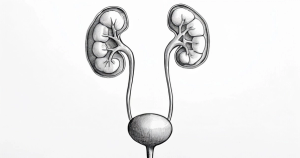


Obinutuzumab (Gazyva) plus bendamustine, followed by obinutuzumab alone has been approved by the FDA as a treatment of patients with follicular lymphoma who were not responsive to a rituximab regimen, or who relapsed after rituximab-based therapy.


Your AI-Trained Oncology Knowledge Connection!
Obinutuzumab (Gazyva) plus bendamustine, followed by obinutuzumab alone has been approved by the FDA as a treatment of patients with follicular lymphoma who were not responsive to a rituximab regimen, or who relapsed after rituximab-based therapy.

In the study, the bavituximab combination showed OS data similar to expectations while patients in the docetaxel-alone arm "dramatically outperformed OS expectations," according to Peregrine Pharmaceuticals.

Blinatumomab (Blincyto), an anti-CD19 agent, had a 69% response rate in patients with non-Hodgkin Lymphoma (NHL), according to updated data from a phase I, open-label, multicenter study.

Biomarkers ultimately hold the key to improving both progression-free survival and overall survival with second-line afatinib in patients with recurrent or metastatic head and neck squamous cell carcinoma.
A neoadjuvant combination of motolimod plus cetuximab was found to increase the immune responses in both the blood and tumor microenvironment for patients with head and neck squamous cell carcinoma.
The FDA has accepted a supplemental new drug application for a capsulated form of enzalutamide for review in patients with metastatic castration-resistant prostate cancer. This application includes findings from the head-to-head studies, TERRAIN and STRIVE.

With no significant difference between intermittent and continuous androgen-deprivation therapy, patients with prostate cancer may experience an improvement in their quality of life with the former.

While still in its early stages, integrative genomic testing could be the future for personalizing therapy for patients with castration-resistant prostate cancer (CRPC), according to Tomasz M. Beer, MD, FACP.
The use of induction chemotherapy for advanced head and neck squamous cell carcinoma (HNSCC) does not improve overall survival (OS) when compared to concurrent chemotherapy plus radiation.
Palbociclib (Ibrance) has been approved by the FDA for use in combination with fulvestrant in pretreated patients with HR-positive, HER2-negative metastatic breast cancer.

Tumor infiltrating lymphocyte (TIL) technology represents an intriguing way of overcoming the immunosuppressive power of cancer, according to Jeffrey S. Weber, MD, PhD.
This week's best content includes oral HPV's role in SCCHN, a full clinical hold for pacritnib, immunotherapies in head and neck cancer, and more.
The 5-year overall survival (OS) in elderly patients with locally advanced head and neck cancers was drastically improved with concurrent chemoradiation versus radiation therapy alone, according to an analysis of the National Cancer Data Base.

The FDA has handed down a breakthrough therapy designation for midostaurin (PKC412) as a potential treatment for adults with newly diagnosed FLT3-mutated acute myeloid leukemia (AML).
Patients with HPV-positive oropharyngeal squamous cell cancer (OPSCC) who smoke can develop tobacco-associated mutations over time. These accumulated mutations result in less dependence on E6/E7 and other HPV-associated mutations.
Despite its initial running start, the continuing development of immunotherapies in the field of non-small cell lung cancer (NSCLC) won't be slowing down anytime soon, according to Naiyer Rizvi, MD.

The FDA has granted a breakthrough therapy designation to durvalumab as a treatment for patients with PD-L1 positive inoperable or metastatic urothelial bladder cancer following progression on prior treatment with a platinum-based regimen.

While the US Preventive Services Task Force (USPSTF) has issued recommendations against routine PSA-based screening for prostate cancer, E. David Crawford, MD, feels as though this is a step in the wrong direction.
Patients with advanced non-small cell lung cancer receiving the combination checkpoint blockade with the PD-L1 inhibitor durvalumab and the anti-CTLA-4 agent tremelimumab had a response rate of 23%, according to phase Ib data from Study 006.
The FDA has scheduled an Oncologic Drugs Advisory Committee (ODAC) advisory hearing for April 12 to review the new drug application for rociletinib, a treatment for metastatic EGFR T790-mutated non-small cell lung cancer.
The FDA has announced a full clinical hold for trials exploring pacritinib following reports of patient deaths. These deaths stemmed from intracranial hemorrhage, cardiac failure, and cardiac arrest in the phase III PERSIST-2 trial.
With the field of immunotherapy growing at a rapid rate, and its increasing incorporation in the armamentarium of treatments in melanoma, Jeffrey S. Weber, MD, PhD, discusses where the field is going and how oncologists can be using the therapies.

Nivolumab's new FDA expanded approval putsthe drug in the frontline for all patients with advanced melanoma, which Jedd D. Wolchok, MD, PhD, says will be beneficial for patients.

A new treatment delivery method is being explored that combines real-time imaging with convection-enhanced delivery of chemotherapy for patients with high-grade gliomas, according to the lead investigator of early phase research exploring the approach, Nicholas A. Butowski, MD.

Preclinical research conducted on tumor samples and mouse models showed that FGL2 is secreted by glioblastoma, which causes the upregulation of immune suppression mechanisms. Additionally, in these early studies, an anti
The FDA has granted an affinity enhanced T-cell therapy breakthrough therapy designation for patients with inoperable or metastatic pretreated synovial sarcoma who harbor HLA-A*201, HLA-A*205, or HLA-A*206 alleles and whose tumors express the NY-ESO-1 tumor antigen
The understanding that medulloblastoma is comprised of 4 distinct molecular subtypes of disease, each representing a unique opportunity for new drug development, has set the groundwork for a wave of advances in the treatment of pediatric brain cancer, according to Matthias A. Karajannis, MD.

Targeted Oncology spoke with Andrew S. Chi, MD, PhD, head of Neuro-Oncology at NYU Langone's Laura and Isaac Perlmutter Cancer Center, on recent developments in the treatment paradigm for patients with brain cancer, including his recent study into mutant IDH1 gliomas and the role of the NAD metabolite.
The FDA has granted sacituzumab govitecan (IMMU-132) breakthrough therapy designation for the treatment of patients with triple-negative breast cancer (TNBC) following at least 2 treatments for metastatic disease, according to Immunomedics, the manufacturer of the investigational antibody-drug conjugate.

Adjuvant chemotherapy was associated with improved overall survival (OS) compared with observation postcystectomy in patients with pathologic T3/4 and/or pathologic node-positive bladder cancer, according to a retrospective analysis published in the Journal of Clinical Oncology.