

Videos


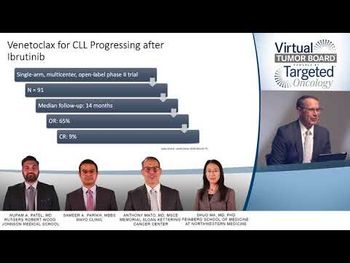









Ruben Mesa, MD, discusses the current state of the treatment landscape for patients with myeloproliferative neoplasms.

Joseph Chao, MD, discusses the importance of assessing the microsatellite instability (MSI) status in patients with advanced gastric/gastroesophageal junction cancer based on findings from a comparative analysis of KEYNOTE-059, KEYNOTE-061, and KEYNOTE-062.




Managing A Case of Heavily Pretreated Recurrent Ovarian Cancer
Hirva Mamdani, MD, explains the rationale for conducting a safety and efficacy study of durvalumab in patients following multimodality therapy for locally advanced esophageal and gastroesophageal junction adenocarcinoma.
Benjamin P. Levy, MD, discusses the evolution of molecular drivers in non–small cell lung cancer over the last few years and which testing should be included in patients.

Rajat Bannerji, MD, PhD, discusses the safety and efficacy results of REGN1979 in the follicular lymphoma cohort enrolled in the phase I study of patients with relapsed/refractory B-Cell non-Hodgkin lymphoma who were previously treated with an anti-CD20 agent.

Suresh S. Ramalingam, MD, discusses how the EGFR tyrosine kinase inhibitor osimertinib compared with other EGFR inhibitors for patients with EGFR-mutant lung cancer.
Antonio Gonzalez Martín, MD, discusses the results from the phase III PRIMA study, which evaluated the PARP inhibitor niraparib versus placebo as a frontline treatment of patients with newly diagnosed ovarian cancer who responded to platinum-based chemotherapy.
Robert C. Doebele, MD, PhD, shares his thoughts on what the next steps are for entrectinib in patients with <em>ROS1</em>-positive non–small cell lung cancer. In August of 2019, the FDA granted approval to this agent as treatment of patients with metastatic NSCLC who are <em>ROS1</em>-positive.
Advertisement
Advertisement
Trending on Targeted Oncology - Immunotherapy, Biomarkers, and Cancer Pathways
1
Tarlatamab Shows Activity in SCLC With Brain Metastases in Real-World Cohort
2
Generic Larotrectinib Capsules Gain Tentative FDA Approval
3
FDA Grants Rare Pediatric Disease Designation to Opaganib for Neuroblastoma
4
ASCO 2026 Highlights: Breast & Lung Cancer Advances With Ajaz Khan, MD
5