
Multiple myeloma care shifts to four-drug frontline regimens and MRD testing, boosting deep responses and guiding relapse strategies like BCMA CAR-T and genomic profiling.

Multiple myeloma care shifts to four-drug frontline regimens and MRD testing, boosting deep responses and guiding relapse strategies like BCMA CAR-T and genomic profiling.

Estelamari Rodriguez, MD, delivers her top takeaways from the 2026 IASLC Targeted Therapies in Lung Cancer meeting.
Learn how to spot myeloma progression, distinguish relapse vs refractory disease, and decide when to treat—especially after lenalidomide maintenance and biochemical relapse.


CLL17 finds fixed-duration venetoclax regimens match continuous ibrutinib at 3 years, boosting confidence in personalized frontline CLL choices.
New DLBCL trials test bispecifics with chemo, BTK add-ons, and MRD-guided preemptive allo CAR-T to cut relapse risk.

Erica Pimenta, MD, PhD, discusses her research into using existing GLP-1 receptor agonists in dedifferentiated liposarcoma.
Lymphoma care still leaves gaps—research aims for higher cure rates, longer remission, and fewer toxicities across B-, T-cell and Hodgkin.

ADCs revolutionize breast cancer care, expanding beyond HER2-positive to HER2-low tumors, reshaping early therapy—and spotlighting MRD testing as the next frontier.
Lymphoma care shifts beyond harsh chemo as CAR T, bispecific antibodies, and antibody-drug conjugates deliver stronger, safer treatment.

Learn how ctDNA/MRD testing guides gastroesophageal cancer care—patient counseling, coverage hurdles, and what rising ctDNA means before scans.
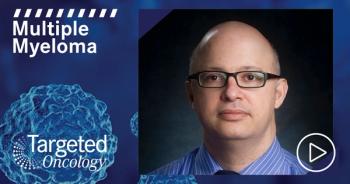
Luciano Costa, MD, PhD, discusses the considerations for managing infection risk with bispecific antibodies in multiple myeloma.

Vincent Ma, MD, discusses the next steps in proving the value of circulating tumor DNA in predicting outcomes of advanced melanoma treatment.
New study signals ctDNA MRD clearance and 90% drops predict better gastroesophageal cancer outcomes, fueling calls for prospective trials.

Erica Pimenta, MD, PhD, discusses how the IGF-1 and GLP-1 pathways could potentially be targets in dedifferentiated liposarcoma.

This segment focuses on the durability of benefit with first-line chemo-immunotherapy in advanced SCAC and how the POD1UM-303 findings are shaping real-world treatment decisions.
Luciano Costa, MD, PhD, discussed why the lack of high-grade cytokine release syndrome in the MajesTEC-3 trial should encourage the use of teclistamab.

Frontline antibody-drug conjugates boost progression-free survival in metastatic triple-negative breast cancer, showing early overall survival gains and expanding options.

Dr. Antoni Vilaseca Cabo discusses using an intravesical drug delivery system to continuously administer the FGFR inhibitor erdafitinib directly into the bladder, marking the first mutation-directed therapy for non-muscle invasive bladder cancer that offers patients an oncologically beneficial and bladder-sparing option with minimal toxicity.

A discussion with the patient about the importance of bone health when treated with androgen-deprivation therapy (ADT) should occur early in the treatment plan.

The use of PSMA PET scans are useful in initial staging, detecting biochemical relapse, and eligibility for radionuclide treatment.
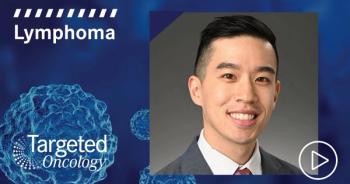
MRD testing personalizes diffuse large B‑cell lymphoma therapy—shorten chemo for early responders and flag high‑risk patients for targeted add‑ons.
New HER2+ breast cancer trials refine chemo and antibody use—cutting toxicity with de‑escalation, while escalating high‑risk patients with T‑DXd.

LITESPARK-011 demonstrated improved progression-free survival with the combination of belzutifan plus lenvatinib vs cabozantinib.
Luciano Costa, MD, PhD, discusses the how the MajesTEC-3 trial's 83% improvement in PFS contributed to a 3-month turnaround to FDA approval.
MRD testing promises sharper DLBCL response tracking than PET scans, cutting false positives, biopsies, and guiding therapy as trials catch up.

Explore effective treatment strategies for managing functional tumors and their impact on patient quality of life, including systemic and liver-directed therapies.
MRD testing in lymphoma grows fast, but varying assays and limited guidelines leave clinicians guessing; trials and standards clarify care.

Sagar Lonial, MD, discusses the expanding potential uses of cereblon E3 ligase modulators (CELMoDs) in combination with T-cell redirection therapies in multiple myeloma.