Luciano Costa, MD, PhD, explains the findings from a competing risk analysis of the MajesTEC-3 trial linking survival to reduced myeloma progression.

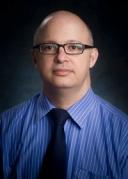
Luciano Costa, MD, PhD, is Director of the Multiple Myeloma Research and Treatment Program at the University of Alabama at Birmingham
Luciano Costa, MD, PhD, explains the findings from a competing risk analysis of the MajesTEC-3 trial linking survival to reduced myeloma progression.
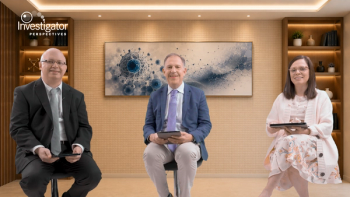
In this closing segment, Dr. Peter Voorhees, Dr. Luciano Costa, and Dr. Doris Hansen discuss the limitations of available evidence for sequencing therapies in relapsed/refractory multiple myeloma.
In this segment, Dr. Peter Voorhees presents a modified case involving a patient in their early 70s with relapsed multiple myeloma whose disease has become refractory to both lenalidomide and daratumumab following frontline daratumumab, lenalidomide, and dexamethasone therapy.
In this segment, Dr. Peter Voorhees opens the panel discussion on sequencing and patient selection across the multiple myeloma treatment continuum.
In this segment, Dr. Peter Voorhees and Dr. Doris Hansen discuss the safety profile and post-treatment management of CAR T-cell therapy in relapsed/refractory multiple myeloma, with emphasis on considerations for community oncologists caring for patients after discharge from the CAR T-cell center.
In this segment, Dr. Peter Voorhees and Dr. Doris Hansen discuss how the findings from CARTITUDE-2 Cohort A relate to the randomized CARTITUDE-4 study and how these data inform consideration of CAR T-cell therapy in relapsed/refractory multiple myeloma.
In this segment, Dr. Peter Voorhees introduces the role of BCMA-directed CAR T-cell therapy in relapsed/refractory multiple myeloma and its movement into earlier lines of treatment.
In this segment, Dr. Peter Voorhees discusses treatment selection with bispecific antibodies in relapsed/refractory multiple myeloma, focusing on patients with prior CD38 antibody exposure.
In this segment, Dr. Peter Voorhees discusses the MonumenTAL-3 study evaluating the GPRC5D-directed bispecific antibody talquetamab in earlier-line relapsed/refractory multiple myeloma.
In this segment, Dr. Peter Voorhees introduces the evolving role of bispecific antibodies in relapsed/refractory multiple myeloma, highlighting the movement of these therapies into earlier lines of treatment.
In this segment, Dr. Luciano Costa provides practical considerations for managing patients with newly diagnosed multiple myeloma receiving frontline quadruplet therapy.
In this segment, Dr. Peter Voorhees and Dr. Luciano Costa discuss how treatment selection can be individualized for patients with newly diagnosed multiple myeloma, including considerations when choosing between triplet and quadruplet regimens.
In this segment, Dr. Peter Voorhees and Dr. Luciano Costa discuss the design and clinical implications of the CEPHEUS trial in newly diagnosed multiple myeloma, with particular attention to patients who were transplant-ineligible or transplant-deferred.
In this segment, Dr. Peter Voorhees introduces the Targeted™ Oncology Investigator Perspectives program and outlines the evolving treatment landscape in newly diagnosed multiple myeloma, including the movement of novel therapies into earlier lines of treatment.
Luciano Costa, MD, of UAB, explains why most patients with myeloma will soon need just 1 or 2 lines of therapy to restore normal life expectancy.
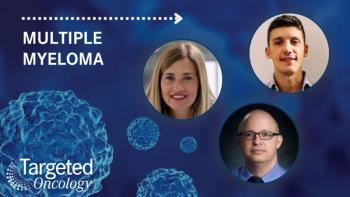
Luciano Costa, MD, PhD, María Victoria Mateos, MD, PhD, and Roberto Mina, MD, shared their thoughts on the use of teclistamab and CRS management earlier in multiple myeloma.
Luciano Costa, MD, PhD, discusses the considerations for managing infection risk with bispecific antibodies in multiple myeloma.
FDA clears teclistamab plus daratumumab for early-relapse multiple myeloma, delivering striking PFS gains and scalable outpatient use.
Luciano Costa, MD, PhD, discussed why the lack of high-grade cytokine release syndrome in the MajesTEC-3 trial should encourage the use of teclistamab.
Luciano Costa, MD, PhD, discusses the how the MajesTEC-3 trial's 83% improvement in PFS contributed to a 3-month turnaround to FDA approval.
