

Opinion|Videos|September 30, 2026
CEPHEUS and Frontline Treatment in Newly Diagnosed Multiple Myeloma
In this segment, Dr. Peter Voorhees and Dr. Luciano Costa discuss the design and clinical implications of the CEPHEUS trial in newly diagnosed multiple myeloma, with particular attention to patients who were transplant-ineligible or transplant-deferred.
Advertisement
Episodes in this series
In this segment, Dr. Peter Voorhees and Dr. Luciano Costa discuss the design and clinical implications of the CEPHEUS trial in newly diagnosed multiple myeloma, with particular attention to patients who were transplant-ineligible or transplant-deferred. Dr. Costa reviews how these eligibility considerations shaped interpretation of the study and describes the clinical context in which a triplet regimen represented the treatment standard when the trial was designed. He discusses the rationale for adding a CD38 monoclonal antibody to a VRd backbone and highlights the resulting improvements in response depth, complete response rates, MRD negativity, and progression-free survival. Dr. Costa also addresses analyses of patients considered truly transplant-ineligible and notes that the observed treatment benefit was maintained in this population. The conversation then turns to real-world evidence evaluating frontline daratumumab-based quadruplet therapy. Dr. Costa discusses how real-world treatment modifications, including less intensive dosing approaches in older patients, can affect implementation while noting that treatment effectiveness has remained consistent with the clinical trial experience.
Advertisement
Related to this article

September brought accelerated approvals in ESR1-mutant breast cancer and HER2-mutant non–small cell lung cancer, a Galleri panel vote, and a withdrawn I-DXd application.
The application is supported by the phase 3 SAFFRON trial, in which savolitinib plus osimertinib improved progression-free and overall survival vs chemotherapy.

Proton therapy did not improve overall survival vs photon therapy in advanced hepatocellular carcinoma in the phase 3 NRG-GI003 trial.
Published findings from the ASPEN-06 trial of evorpacept in previously treated HER2+ gastric cancers included exploratory analyses suggesting CD47 is a predictive biomarker for benefit with the targeted agent.
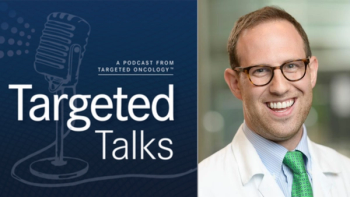
Benjamin Herzberg, MD, discusses KRAS-mutant non–small cell lung cancer, upfront biomarker testing, and the emerging RAS inhibitor toolkit on Targeted Talks.

Clinicians weigh RCC immunotherapy choices by risk, metastasis site, and histology, citing durable outcomes with nivo-ipi and favoring TKIs after early progression.

Published phase 1 findings support the promising efficacy and tolerability of anito-cel in relapsed/refractory multiple myeloma, explains lead author Matthew Frigault, MD.
The FDA communicated that the phase 2 IDeate-Lung01 results were not sufficient for an accelerated approval of I-DXd in small cell lung cancer.
Advertisement
Advertisement
Trending on Targeted Oncology - Immunotherapy, Biomarkers, and Cancer Pathways
1
New Drug Application Filed for Savolitinib/Osimertinib in MET+ NSCLC
2
Anito-Cel Delivers Durable Responses With Low Neurotoxicity in RRMM
3
Proton Therapy Does Not Improve Survival in Advanced HCC Trial
4
CD47-Targeted Evorpacept Shows Durable Responses in HER2+ Gastric Cancer
5