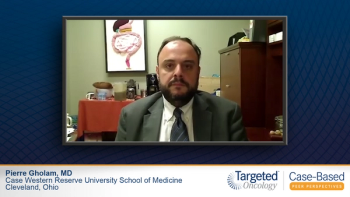
Pierre Gholam, MD, provides insight on the case of a 61-year-old man with stage 4 hepatocellular carcinoma and evaluates current treatment options on TKIs.

Pierre Gholam, MD, provides insight on the case of a 61-year-old man with stage 4 hepatocellular carcinoma and evaluates current treatment options on TKIs.

Axel Hauschild, MD, PhD, discusses the key findings from the phase 3 COMBI-AD clinical trial, which demonstrated sustained long-term relapse-free survival benefit with the combination of dabrafenib and trametinib compared with placebo in patients with resected, stage III BRAF V600E/K-mutated melanoma.

Mikkael Sekeres, MD, discusses a phase 2 study of pevonedistat plus azacitidine versus azacitadine monotherapy in patients with higher-risk myelodysplastic syndromes /chronic myelomonocytic leukemia or low-blast acute myelogenous leukemia.
Julia K. Rotow, MD, discusses the excitement of EGFR tyrosine kinase inhibitors for the treatment of patients with EGFR-mutant lung cancers.







Margaret von Mehren, MD, describes the rationale for treating a man with GIST with ripretinib as fourth-line therapy.

Alessandro Gronchi, MD, discusses a phase 2 trial of trabectedin and radiotherapy in patients with soft-tissue sarcoma.
Christopher Flowers, MD, describes the management of an elderly patient with relapsed follicular lymphoma using newer novel therapy.

Alexander M. Eggermont, MD, PhD, discusses the results of the KEYNOTE 054 trial of pembrolizumab versus placebo in patients with high-risk stage III melanoma after a complete resection.