Daniel DeAngelo, MD, PhD, discusses how TKIs have given patients with CML a full lifespan and what is being done to build on the incredible progress in this setting.

Daniel DeAngelo, MD, PhD, discusses how TKIs have given patients with CML a full lifespan and what is being done to build on the incredible progress in this setting.
Giada Bianchi, MD, discusses tailoring therapy in myeloma, addressing ultra-high-risk disease, and amyloidosis becoming a chronic condition at IMS 2026.
Dr. Jason Mouabbi discusses the role of molecular testing in guiding treatment selection for patients with PIK3CA-mutated HR-positive/HER2-negative advanced breast cancer.
Dr. Jason Mouabbi introduces the discussion on managing PIK3CA-mutated HR-positive/HER2-negative advanced breast cancer in clinical practice, with a focus on treatment selection and practical adverse-event management.
Andrew Kuykendall, MD, reviews VERIFY trial that led to FDA approval of rusfertide in polycythemia vera.
Saad Usmani, MD, discusses how MRD negativity may define treatment duration and raise cure fractions in multiple myeloma, live from IMS.
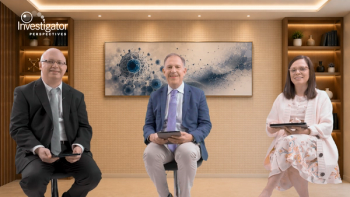
In this closing segment, Dr. Peter Voorhees, Dr. Luciano Costa, and Dr. Doris Hansen discuss the limitations of available evidence for sequencing therapies in relapsed/refractory multiple myeloma.
In this segment, Dr. Peter Voorhees presents a modified case involving a patient in their early 70s with relapsed multiple myeloma whose disease has become refractory to both lenalidomide and daratumumab following frontline daratumumab, lenalidomide, and dexamethasone therapy.
In this segment, Dr. Peter Voorhees opens the panel discussion on sequencing and patient selection across the multiple myeloma treatment continuum.
In this segment, Dr. Peter Voorhees and Dr. Doris Hansen discuss the safety profile and post-treatment management of CAR T-cell therapy in relapsed/refractory multiple myeloma, with emphasis on considerations for community oncologists caring for patients after discharge from the CAR T-cell center.
In this segment, Dr. Peter Voorhees and Dr. Doris Hansen discuss how the findings from CARTITUDE-2 Cohort A relate to the randomized CARTITUDE-4 study and how these data inform consideration of CAR T-cell therapy in relapsed/refractory multiple myeloma.
In this segment, Dr. Peter Voorhees introduces the role of BCMA-directed CAR T-cell therapy in relapsed/refractory multiple myeloma and its movement into earlier lines of treatment.
In this segment, Dr. Peter Voorhees discusses treatment selection with bispecific antibodies in relapsed/refractory multiple myeloma, focusing on patients with prior CD38 antibody exposure.
In this segment, Dr. Peter Voorhees discusses the MonumenTAL-3 study evaluating the GPRC5D-directed bispecific antibody talquetamab in earlier-line relapsed/refractory multiple myeloma.
In this segment, Dr. Peter Voorhees introduces the evolving role of bispecific antibodies in relapsed/refractory multiple myeloma, highlighting the movement of these therapies into earlier lines of treatment.
In this segment, Dr. Luciano Costa provides practical considerations for managing patients with newly diagnosed multiple myeloma receiving frontline quadruplet therapy.
In this segment, Dr. Peter Voorhees and Dr. Luciano Costa discuss how treatment selection can be individualized for patients with newly diagnosed multiple myeloma, including considerations when choosing between triplet and quadruplet regimens.
In this segment, Dr. Peter Voorhees and Dr. Luciano Costa discuss the design and clinical implications of the CEPHEUS trial in newly diagnosed multiple myeloma, with particular attention to patients who were transplant-ineligible or transplant-deferred.
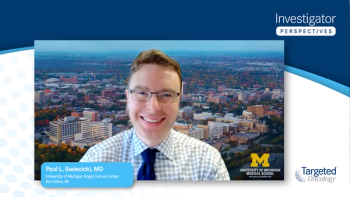
Paul L. Swiecicki, MD, of the University of Michigan Rogel Cancer Center, discusses the biological rationale for targeting epidermal growth factor receptor (EGFR) and MET in head and neck squamous cell carcinoma (HNSCC).
Paul L. Swiecicki, MD, of the University of Michigan Rogel Cancer Center, describes historical outcomes for patients with relapsed or recurrent metastatic head and neck squamous cell carcinoma (HNSCC) who progress after anti-PD-(L)1 therapy and platinum-based chemotherapy.
In this segment, Dr. Peter Voorhees introduces the Targeted™ Oncology Investigator Perspectives program and outlines the evolving treatment landscape in newly diagnosed multiple myeloma, including the movement of novel therapies into earlier lines of treatment.
Daniel DeAngelo, MD, PhD, discusses how the field of AML is moving away from traditional chemotherapy and toward targeted triplet therapies.
At the 2026 IMS meeting, Sagar Lonial, MD, discusses the FDA approval of iberdomide, early enthusiasm for its use, and the CELMoD trials clinicians should watch.
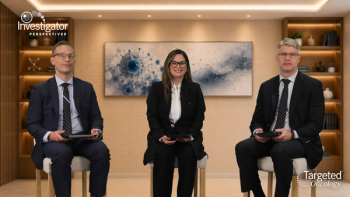
Martin Dietrich, MD, PhD, tells community oncologists to build in access to second opinions, often by telemedicine, and says he would rather be slow and right than fast and wrong, because a less effective first choice drives resistance that later agents cannot fully recover.
Ticiana Leal, MD, argues that trials need more patient-reported outcomes and quality of life measures, since patients with ROS1-positive advanced non-small cell lung cancer now stay on oral therapy for years and the effect on daily life is poorly captured.
As Leukemia and Lymphoma Awareness Month draws to a close, Daniel DeAngelo, MD, PhD, discusses the key trends in acute lymphoblastic leukemia treatment.
Pieter Sonneveld, MD, PhD, discusses CAR T-cell therapy and bispecific antibodies moving to frontline myeloma care.
Trispecific T-cell engagers target 2 tumor antigens or dual immune targets, aiming to reduce antigen-loss resistance and boost cancer killing beyond bispecifics.
Jeffrey V. Matous, MD, discusses moving fixed-duration T-cell–redirecting therapy into frontline multiple myeloma treatment and the persistent challenge of ultra-high-risk disease.
Luciano Costa, MD, of UAB, explains why most patients with myeloma will soon need just 1 or 2 lines of therapy to restore normal life expectancy.