Geoffrey Y. Ku, MD, highlights ongoing advances in gastric/GEJ treatment.

Geoffrey Y. Ku, MD, highlights ongoing advances in gastric/GEJ treatment.
Gavin Wright, MBBS, discusses how the tumor-targeted imaging agent abenacianine helped surgeons locate hard-to-find tumors in the phase 2b VISUALIZE trial.
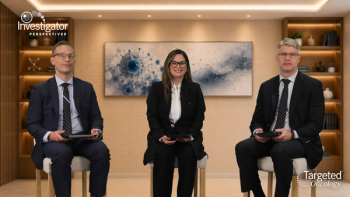
Martin Dietrich, MD, PhD, says the first move at progression is to extend frontline therapy rather than abandon it, looking for oligometastatic patterns that stereotactic radiation can handle while the inhibitor continues; a patient progressing at four years with two or three new lesions is a candidate.
Wade Iams, MD, says progression-free survival (PFS) drives his frontline choice, since median overall survival remains years away in ROS1-positive advanced non-small cell lung cancer and no head-to-head comparison exists.
Dr Shubham Pant outlines what's next for daraxonrasib in pancreatic cancer, including the RASolute 303 and RASolute 304 trials.
Surbhi Sidana, MD, discusses the ongoing trials that could expand the use of iberdomide into various combinations and settings in patients with multiple myeloma.
System barriers like interoperability gaps, prior authorization delays, and reimbursement pressures intensify oncology physician burnout, disrupting care coordination and straining community practices.
Herbert Lepor, MD, discusses NYU Langone's 1000th focal cryotherapy procedure, Andre De Shields' case, and why prostate cancer treatment is at a turning point.
Shubham Pant, MD, MBBS, reviews the common adverse effects of daraxonrasib and the prophylactic strategies his team uses to manage them in pancreatic cancer.
Surbhi Sidana, MD, discusses the key aspects of iberdomide that make the CELMoD's FDA approval so significant for multiple myeloma treatment.
Actionable strategies curb oncologist burnout by easing admin workload, enabling true PTO disconnect, strengthening leadership communication, and boosting self-care support.
Wade Iams, MD, says the guidance has changed on what to do when a ROS1 result lands after chemoimmunotherapy has already started.
Wade Iams, MD, says adding RNA-based next-generation sequencing (NGS) to DNA-based NGS identifies about 15% more patients with actionable fusions, and urges clinicians to confirm whether the panel they ordered includes RNA at all, since the report rarely makes that obvious.
Spot physician burnout early by recognizing emotional exhaustion, rising cynicism, and slipping effectiveness—before staff turnover and patient care suffer.
Survey of 200+ oncology physicians reveals top burnout drivers—EMR burden, leadership gaps, poor work-life boundaries, and neglected self-care—pointing to systemic fixes.
Adam Cuker, MD, MS, and Amit R. Mehta, MD, discuss the changing treatment landscape and patients goals when treating chronic immune thrombocytopenia.
Surbhi Sidana, MD, discusses the versatility of iberdomide and the approved Iber-Dd regimen in relapsed multiple myeloma.
In the GESTALT feasibility and safety trial, GammaTile reduced rapid early progression to 6% vs a historical 50% to 80%, with 93% of patients starting chemoradiation on schedule.
Oncology leaders weigh how to scale trustworthy AI platforms, align governance, and integrate care-research workflows for real-world adoption.
AI-powered trial screening helps community oncology practices identify eligible patients locally, widening access beyond academic centers and reducing barriers such as distance and logistics.
Agentic AI speeds oncology trial screening by synthesizing records and ranking candidates, while clinicians keep final eligibility and consent decisions.
Laila Alkhouli, MD, discusses the importance of early detection of chronic graft-vs-host-disease and why standardizing screening is crucial.
Agentic AI taps electronic medical records to flag timely oncology trial candidates, fit workflow, cut clinician burden, and boost community practice enrollment.
Andrew Evens, DO, and Joanna Rhodes, MD, on CLL's transformation, CAR T vs bispecifics, Hodgkin survivorship, and delivering world-class lymphoma care across New Jersey.
Agentic AI in oncology distills evidence, molecular data, and guidelines to aid therapy decisions, promising smarter, context-aware cancer care.
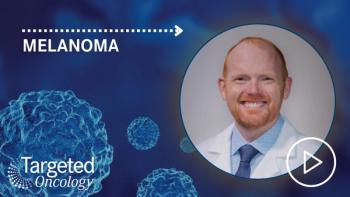
David Savage, MD, PhD, discusses the greater significance of the PFS benefit observed in a trial of darovasertib plus crizotinib in patients with HLA-A*02:01–negative uveal melanoma.
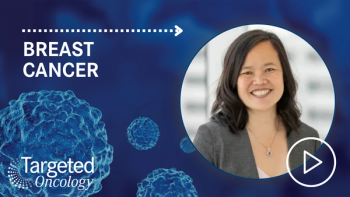
UCSF's Scarlett Lin Gomez, PhD, MPH, discusses how the clinician-researcher partnership shapes future work.
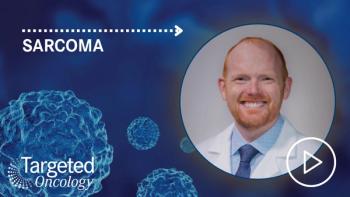
David Savage, MD, PhD, discusses the significance of abemaciclib's PFS benefit in liposarcoma and how he approaches getting patients access to it.
Scarlett Lin Gomez, PhD, MPH, of UCSF, explains why Asian American women's breast cancer survival advantage persists after adjusting for clinical and lifestyle factors.
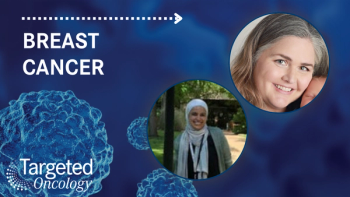
Cox and Abbadi outline next steps for BDNF/TrkB-targeted therapy, including translating the approach to high-grade serous ovarian cancer.