Hearn Jay Cho, MD, PhD, discusses the ongoing role of the CoMMpass dataset in researching immunotherapy and targeted therapy in high-risk multiple myeloma.

Hearn Jay Cho, MD, PhD, discusses the ongoing role of the CoMMpass dataset in researching immunotherapy and targeted therapy in high-risk multiple myeloma.
Maureen Cox, PhD, and Jumana Abbadi, MD, explain how macrophage-derived BDNF drives sensory nerve growth into triple-negative breast tumors, a potential drug target.
Learn how community oncologists deliver bispecific antibodies safely: step-up dosing, CRS prevention, infection support, and patient counseling.
Hearn Jay Cho, MD, PhD, of the Multiple Myeloma Research Foundation, looks back on 15 years of the groundbreaking CoMMpass genomic study.
Dr. Monty Pal concludes the program by discussing how the treatment landscape for advanced renal cell carcinoma (RCC) may evolve as new clinical evidence emerges.
Experts weigh response speed, survival and quality of life to choose first-line IO-TKI or dual immunotherapy for metastatic clear cell RCC.
Sagar Lonial, MD, discusses the importance of baseline MRD assessment to aid in using sustained MRD negativity for eventual discontinuation of lenalidomide in newly diagnosed multiple myeloma.
City of Hope's Dr Ravi Salgia urges fellow oncologists to refer eligible patients to a new national trial predicting immunotherapy success in NSCLC.
City of Hope's Dr Ravi Salgia on what it would truly take to cure stage IV non–small cell lung cancer and where oncology is headed next in the years ahead.
Sagar Lonial, MD, discusses why to take an individualized approach despite the trial's findings supporting discontinuation of lenalidomide at 2 years.
ASCO 2026 data show ePRO remote symptom monitoring cuts ER visits and costs, enabling faster toxicity detection and safer community cancer care.
OncoPRO unites oncology practices to streamline ePRO remote symptom monitoring, improving enrollment, workflow integration, and change management through shared implementation strategies.
ASCO 2026 data show ePRO symptom tracking keeps cancer patients on therapy longer, cuts hospitalizations and costs, and may boost survival.
City of Hope's Dr Ravi Salgia explains a new national trial using biomarkers to predict immunotherapy success in advanced non–small cell lung cancer.
Real-world ASCO 2026 data show ePRO-based remote monitoring helps catch metastatic cancer treatment symptoms earlier, improving toxicity control and reducing hospitalizations.
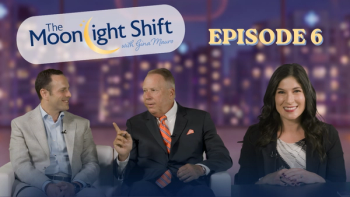
Patrick Borgen, MD, built Brooklyn's breast cancer program from 47 patients to 8,000. Now he and Joshua Feinberg, MD discuss what surgery looks like next.
Dr. Monty Pal concludes his discussion on treatment sequencing in advanced renal cell carcinoma (RCC) by summarizing how he applies current guideline recommendations alongside individualized clinical decision making in routine practice.
Dr. Monty Pal reviews emerging clinical evidence evaluating belzutifan-based treatment strategies in advanced renal cell carcinoma (RCC), with particular focus on the LITESPARK-011 trial comparing lenvatinib plus belzutifan with cabozantinib.
ASCO 2026 real-world data tie GLP-1 drugs to longer cancer survival, but oncology EHRs miss timing and duration—heres why it matters.
Mark Agulnik, MD, discusses the trend away from surgery and toward targeted treatment of progressive desmoid tumors, and how sequencing is the next major question.
Real-world community oncology data link GLP-1 drugs to 34% lower death risk across cancers, prompting calls for prospective trials.
Samantha Watters, PhD, MPH, discusses the most notable findings about the link connecting social vulnerability, physician access, and unmet need for allogeneic stem cell transplant.
A cross-sectional analysis of 52 first-line trials found post-progression access to effective therapy correlated with OS benefit in targeted therapy but not checkpoint blockade.
Vincent Ma, MD, describes his initial reaction to the July 30, 2026, FDA advisory committee vote on RP1 plus nivolumab in advanced melanoma.
Samantha E. Watters, PhD, MPH, discusses the variables she examined in her research on US states at risk of unmet needs in allogeneic transplant access.
Samantha E. Watters, PhD, MPH, discusses the barriers to access for allogeneic stem cell transplant in the United States.
Dr. Monty Pal discusses the growing importance of quality of life and long-term tolerability when selecting subsequent therapies for advanced renal cell carcinoma (RCC).
Dr. Monty Pal discusses how patient- and disease-specific characteristics influence treatment sequencing decisions for advanced renal cell carcinoma (RCC) beyond the first-line setting.
An investigator behind gedatolisib's FDA approval discusses the trial data, dosing, and adverse effects shaping HR+/HER2- breast cancer care.
Community oncology improves hereditary cancer care by expanding risk assessment, dense-breast and polyp screening, plus clearer referral pathways.