Why Truly Personalized Medicine Is Oncology's Next Big Frontier
Published: | Updated:
Dr Joyce Ohm on the future of cancer care: identifying molecular drivers in every tumor to develop truly individualized, targeted therapies.

Dr Joyce Ohm on the future of cancer care: identifying molecular drivers in every tumor to develop truly individualized, targeted therapies.
MCED screening and broader genetic testing push community oncology toward prevention. Learn how practices adapt workflows, training, and follow-up for high-risk patients.
Why genetic tests aren’t enough: learn how counseling, risk models, and ongoing follow-up shape personalized screening and cancer prevention.
Dr Joyce Ohm discusses the ethical questions raised by genome sequencing, from data ownership to reporting mutations of unknown significance.
Joseph Mikhael, MD, MEd, discusses the potential and limitations of at-home cancer care using on-body injection technology.
Community oncology expands hereditary cancer genetic testing with team-based counseling, trained clinicians, and structured follow-up pathways for complex results and high-risk families.
New KRAS-targeting drug for metastatic pancreatic cancer nearly doubles second-line survival; expert explains impact, side effects, next trials.
Genetic testing reshapes community oncology, expanding hereditary screening to guide personalized surveillance, identify high-risk families, and shift care toward cancer prevention.
Dr Joyce Ohm explains how sequencing tumor genomes reveals the mutations needed to design targeted cell and gene therapies for cancer patients.
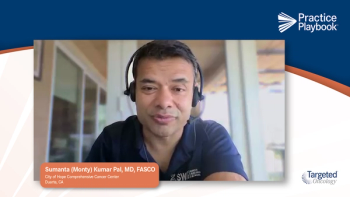
Dr. Monty Pal discusses his approach to selecting second-line therapy for advanced renal cell carcinoma (RCC) based on the type of first-line immunotherapy regimen previously received.
Dr. Monty Pal begins the discussion on treatment sequencing in advanced renal cell carcinoma (RCC) by emphasizing the importance of optimizing first-line therapy, noting that many patients may not receive multiple subsequent lines of treatment.
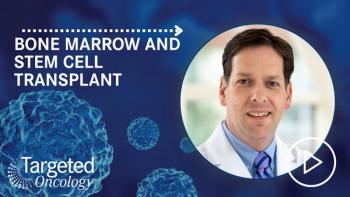
Brian C. Betts, MD, discusses how PTCy and tacrolimus protocols, as well as using younger donors, contributes to higher survival rates after stem cell transplant.
Joyce Ohm, PhD, explains how fast genome sequencing now drives targeted cancer therapies, revealing mutations and resistance in real time.
Brian C. Betts, MD, discusses how discharging patients as early as day 5 after stem cell transplant has proved feasible and improves quality of life.
Menin inhibitors such as ziftomenib and revumenib target NPM1 and KMT2A AML, pushing precision therapy earlier with manageable toxicity.
Obesity rewires DCIS-to-IDC invasion via metabolic stress, inflammatory signaling and SULF2, revealing an immunosuppressive niche
Learn how NPM1 MRD qPCR predicts relapse, shapes transplant decisions, and emerging trials test MRD negativity as a treatment target in AML.
Triplet therapy with ziftomenib, venetoclax, and azacitidine boosts responses in venetoclax‑naive NPM1‑mutated AML; phase 3 trials test frontline benefit.
Joseph Mikhael, MD, MEd, explains the function and potential benefits of the on-body injector now approved for use with isatuximab in multiple myeloma.
Explore how allostatic load, using routine labs and vitals, may strengthen early-onset cancer risk prediction and guide earlier prevention in community oncology.
Joseph Mikhael, MD, MEd, describes the impact of the FDA's approval of subcutaneous isatuximab with an on-body injector device.
MD Anderson trials test psilocybin therapy for head and neck cancer patients and survivors, aiming to curb suicide risk and ease treatment trauma.
KOMET-007 shows ziftomenib plus venetoclax/azacitidine drives deep MRD-negative remissions in R/R AML, with manageable toxicity and longer responses.
Dr. Monty Pal summarizes his practical first-line treatment algorithm for advanced renal cell carcinoma (RCC), highlighting how he incorporates disease risk, clinical presentation, and treatment goals into routine decision making.
Dr. Monty Pal discusses how the increasing use of adjuvant immunotherapy has introduced new considerations for the management of advanced renal cell carcinoma (RCC).
KOMET-007 tests ziftomenib with venetoclax and azacitidine in relapsed/refractory AML, selecting 600 mg to boost responses and guide future menin-based regimens.
Edgardo Santos, MD, discusses ROS1+ NSCLC treatment advances, taletrectinib data, toxicity profiles, and emerging therapies from recent Case-Based Roundtables.
New research shows T-cell receptor sequencing can reveal immune signatures of precancer and cancer in Lynch syndrome carriers, aiding early detection.
Doris K. Hansen, MD, discusses what she hopes long-term real-world data on CAR T-cell therapy will show in order to better inform treatment of multiple myeloma.
A 940-patient real-world study confirms alectinib outperforms crizotinib in ALK-positive NSCLC, mirroring results from the landmark ALEX trial.