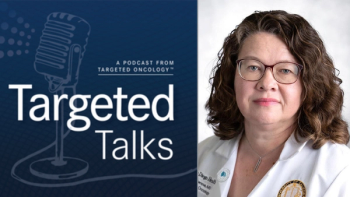
Lyudmila Bazhenova, MD, discusses the FDA’s expanded approval of taletrectinib for ROS1-positive non–small cell lung cancer.


FDA clears zidesamtinib for previously treated ROS1-positive metastatic NSCLC, showing 44% responses, CNS activity, and manageable safety in ARROS-1 trial.
The FDA has approved zidesamtinib (Jideytro), a ROS1-selective tyrosine kinase inhibitor (TKI), for adult patients with locally advanced or metastatic ROS1-positive non–small cell lung cancer (NSCLC) who have received a prior ROS1 kinase inhibitor.1 The approval, announced July 22, 2026, by manufacturer GSK, arrived ahead of the drug's original Prescription Drug User Fee Act target action date of September 18, 2026, and follows FDA breakthrough therapy and orphan D]drug designations.
The approval is supported by data from ARROS-1 (NCT05118789), a global, single-arm phase 1/2 trial evaluating zidesamtinib in patients with advanced ROS1-positive NSCLC and other ROS1-positive solid tumors. Among 117 patients with ROS1-positive NSCLC previously treated with a ROS1 inhibitor, the objective response rate was 44% (95% CI, 34%-53%). Duration-of-response rates at 6 and 12 months were 82% and 69%, respectively. Responses were observed across patients with brain metastases and ROS1 resistance mutations.
In a pooled safety population of 446 patients, the most common adverse reactions occurring in at least 15% of patients were edema, peripheral neuropathy, constipation, fatigue, and dyspnea.
Zidesamtinib was engineered to address efficacy and tolerability limitations of earlier ROS1 inhibitors. Its design combines high selectivity for ROS1, activity against a broad range of ROS1 resistance mutations, and blood-brain barrier penetration intended to control central nervous system disease. ROS1 rearrangements are found in a subset of NSCLC cases and are more common among nonsmokers; an estimated 50,000 people worldwide are diagnosed with ROS1-positive NSCLC each year, often in their 40s or 50s, and many require prolonged treatment.2,3
"The rapid progression of [zidesamtinib] from development to approval reflects both the strength of the underlying science and the urgent need for additional effective and tolerable treatments for ROS1-positive lung cancer," said Tony Wood, PhD, chief scientific officer at GSK, in a company statement.1