
Opinion|Videos|October 24, 2025
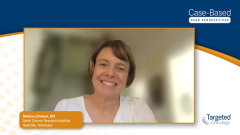
Prognostic Factors and Second-Line Treatment Options in ES-SCLC
Author(s)Melissa Johnson, MD
A panelist discusses how early relapse and prognostic indicators shape second-line therapy selection and emerging treatment roles.
Advertisement
Episodes in this series
A panelist discusses how early relapse within 6 months of platinum-based therapy signals poor prognosis and limited treatment sensitivity. They weigh second-line treatment options, including newer agents such as tarlatamab, against traditional chemotherapy, noting how performance status and comorbidities influence treatment choice.
A panelist discusses how molecular profiling, prior response depth, and time-to-relapse remain critical prognostic tools. They explain that these clinical parameters help guide whether patients are suitable for active therapy vs supportive care.
A panelist discusses how advances in bispecific therapies are redefining treatment paradigms by offering improved survival and safety compared with historical chemotherapeutic options.
Advertisement
Related to this article

Community oncology practices rapidly adopt bispecific therapy, but reimbursement gaps, intensive monitoring demands, and limited hospital coordination hinder safe, scalable in-office programs.

Preview the 2026 International Myeloma Society meeting: the IMS/IMWG cure consensus, plenary session phase 3 trials, and new bispecific/CAR T myeloma findings.

During a roundtable event, Amit R. Mehta, MD, and participants discussed treatment selection for a patient with immune thrombocytopenia at risk of thrombotic events.
The FDA designation is for LYT-200 plus a hypomethylating agent for relapsed/refractory high-risk myelodysplastic syndromes.

Real-world ESAS data show higher symptom burden after cancer diagnosis shifts spending from treatment to ER, home and mental health care.

Jeff Sharman, MD, explores how targeted therapies have transformed CLL treatment and what emerging approaches could shape the future of care.

Updated TRUST-I and TRUST-II data show durable taletrectinib responses in ROS1+ NSCLC regardless of prior chemotherapy or fusion partner.

David DiBardino, MD, explains how intratumoral radioenhancer therapy works, why standardization remains a challenge, and what early CONVERGE study data suggest for locally advanced NSCLC.
Advertisement
Advertisement
Trending on Targeted Oncology - Immunotherapy, Biomarkers, and Cancer Pathways
1
FDA Grants Fast Track Status to LYT-200 Combo in High-Risk MDS
2
Looking Back on the Transformation of CLL Treatment: Jeff Sharman, MD
3
What to Watch at IMS 2026: Defining Cure as Multitargeting, CELMoDs, and In Vivo CAR T Move Forward
4
Taletrectinib Sustains Durable ROS1+ NSCLC Responses at 3-Year Follow-Up
5