

Conference Coverage
about 9 hours ago
Investigating Novel Immunotherapy Targets in Metastatic RCCabout 10 hours ago
Claudin 6–Targeted ADC Shows Activity in Germ Cell Tumorsabout 12 hours ago
Late-Breaking Phase 3 Data Headline ESMO 2026 Presidential Symposium Iabout 13 hours ago
B7-H4 ADCs: Key Questions for Clinical IntegrationTrending on Targeted Oncology - Immunotherapy, Biomarkers, and Cancer Pathways
1
Late-Breaking Phase 3 Data Headline ESMO 2026 Presidential Symposium I
2
Vopimetostat Plus Daraxonrasib Yields 82% ORR in MTAP-Deleted PDAC
3
Personalized mRNA Vaccine Intismeran Plus Pembro Cuts Melanoma Recurrence
4
Sunvozertinib Now Available in US for EGFR Exon 20 Insertion NSCLC
5
B7-H4 ADCs: Key Questions for Clinical Integration
Latest Content











Advertisement
Shorts

0:34
When to Consider Dual Immunotherapy in NSCLC
a day ago
by
Matthew Gubens, MD, MS

1:13
Key Findings from the Real-World ARAAT Trial
2 days ago
by
Alicia K. Morgans, MD, MPH
1:05
Using Chemo Before Targeted Therapy in NSCLC?
5 days ago
by
Lyudmila Bazhenova, MD

0:32
The Switch from IV to Subcutaneous Drug Delivery
6 days ago
by
J. Thaddeus Beck, MD

0:50
Telehealth Brings Myeloma Expertise Closer to Home
7 days ago
by
Ashley Rosko, MD
0:39
Stop Assuming, Start Asking: Understanding the 'No'
12 days ago
by
Narjust Florez, MD

0:43
Don’t Wait Until the Last Line to Consider Clinical Trials
13 days ago
by
Krish Patel, MD

0:47
Unlocking New Possibilities in Metastatic Breast Cancer Treatment
19 days ago
by
Komal Jhaveri, MD, FACP

0:30
Strategies for Sequencing Therapies in RCC
19 days ago
by
Daniel Heng, MD

0:46
CLL Outcomes Are Closing in on Age-Matched Controls
20 days ago
by
Jeff Sharman, MD
Podcasts
Dr Bazhenova on the Updated FDA Label for Taletrectinib in ROS1+ NSCLC
Lyudmila Bazhenova, MD, discusses the FDA’s expanded approval of taletrectinib for ROS1-positive non–small cell lung cancer.
Lung Cancer in Hispanic and Latinx Patients: Risk Factors, Biomarkers, and Clinical Trial Access
For Hispanic Heritage Month, Narjust Florez, MD, discusses lung cancer risk, biomarker testing, and trial access in Hispanic and Latinx patients.
Dr Jhaveri on the FDA Approval of Imlunestrant Plus Abemaciclib for ESR1-Mutated Breast Cancer
Komal Jhaveri, MD, discusses the FDA approval of imlunestrant plus abemaciclib for ESR1-mutated breast cancer, EMBER-3 data, and what's next.
Dr Herzberg on the Expanding Toolkit in KRAS-Mutant Non–Small Cell Lung Cancer
Benjamin Herzberg, MD, discusses KRAS-mutant non–small cell lung cancer, upfront biomarker testing, and the emerging RAS inhibitor toolkit on Targeted Talks.
ASTRO 2026 Preview: Dr Raj Singh on De-Escalation, Brain Metastases, and What's Next in Radiation Oncology
Dr Raj Singh previews key ASTRO 2026 data, from FMISO PET-guided de-escalation in HPV-positive head and neck cancer to SRS vs whole brain radiotherapy trials in brain metastases.
Bringing CAR T and Bispecifics to the Community
How a community center launches CAR T and bispecific care: managing CRS/ICANS outpatient, closing access gaps, adapting to REMS.

Rethinking HER2: A Pan-Cancer Look at IHC, ERBB2, and Tumor-Agnostic Testing
Drs Aditya Shreenivas and Razelle Kurzrock break down a 200,000-tumor real-world study on HER2 IHC, ERBB2 alterations, and pan-cancer testing implications.
Radiation Oncology's Financial Squeeze With Dr Ryan Funk
Ryan Funk, MD, explains how 2026 CMS coding changes and commercial payer contracts are straining radiation oncology practices, threatening rural and freestanding centers and patient access to care.
Gynecologic Cancer Trends, Testing, and Treatment Advances Explained
A gynecologic oncologist unpacks shifting cancer trends, HRD and germline testing, screening pitfalls, and where new treatments are headed.
AI in Oncology: Managing Information Overload for Trainees and Patients
Oncologists share practical ways to manage oncology information overload, guide patients to trusted resources, and use AI cautiously to stay current.
Videos






Targeted Talks
Featuring Dr Noelle Cloven
The OncoloGIST

Behind the FDA Approval of RP1
Sign up now to read the exclusive insights.
Community Corner


































Advertisement
All News
Advertisement

Adding the mRNA-based individualized neoantigen intismeran to pembrolizumab reduced the risk of disease recurrence or death by 42% in melanoma.

Experts weigh continuous BTK inhibitors vs fixed-duration CLL therapy, highlighting TP53/17p risk, patient logistics, and subtle zanubrutinib–acalabrutinib tolerability differences.

The FDA converted the accelerated approval of pembrolizumab in TMB-high solid tumors to traditional approval, redefining TMB-high as at least 13 mut/Mb.
Following an end-of-phase 2 meeting with the FDA, Rgenta plans to start a phase 3 trial of oral RGT-61159 in adenoid cystic carcinoma in the first quarter of 2027.
The FDA granted fast track designation to SBE303, Samsung Bioepis’ investigational Nectin-4–targeting ADC, for advanced urothelial cancer following enfortumab vedotin.

The antibody-drug conjugate sofetabart mipitecan showed efficacy and safety, leading to selection of a phase 3 dose for the FRAmework-01 trial.

The FDA granted orphan drug designation to Cardiff Oncology’s PLK1 inhibitor onvansertib for relapsed or refractory CMML after early phase 1 activity.

Findings highlight the need for individualized monitoring after discharge, despite low rates of severe toxicities.

During a live event, Robert Orlowski, MD, PhD, and participants discussed how access barriers, disease tempo, and bridging choices shape CAR T referral for a patient with early relapsed multiple myeloma.
The guidelines incorporate cosibelimab for locally advanced cutaneous squamous cell carcinoma after favorable results in the CK-301-101 trial.
Advertisement

Study Finds Geographic Gaps in TNBC Trial Access Persist Across US
Published: | Updated:
More than 76% of US counties have no TNBC trial, and only 9.8% of rural counties have one vs 47% of metropolitan counties, a new analysis finds.

Rusfertide Improves Hematocrit Control, Reduces Phlebotomy in Polycythemia Vera
Published: | Updated:
The phase 3 VERIFY trial found that rusfertide improved clinical response, reduced phlebotomy requirements, and eased symptom burden in patients with polycythemia vera receiving standard-of-care therapy.

At Rutgers Cancer Institute, neuro-oncologists met to discuss the latest trends in precision brain cancer care with FET-PET imaging, advanced molecular testing, and same-day multidisciplinary clinics.
During a virtual event, Thomas Martin, MD, and participants considered the use of the on-body injector for subcutaneous isatuximab for a frail patient with transplant-ineligible newly diagnosed myeloma.
The investigational chemoimmunotherapy antibody-drug conjugate demonstrated enhanced tumor inhibition in preclinical models.

Updated ARC-20 data show casdatifan delivers durable responses and strong survival in clear cell renal cell carcinoma, alone and in key first-line combinations.
Rural breast cancer deaths rise faster than urban rates, driven by low income, later diagnosis, and treatment gaps—warning of widening disparities by 2035.

The TASKIN trial found a 12-month overall survival rate of 61.3% with vilamakitug plus standard-of-care therapy, with exploratory findings suggesting potential benefit in right-sided tumors.
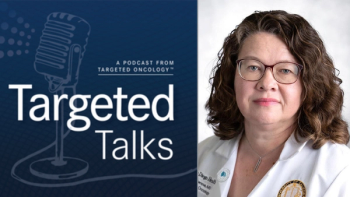
Lyudmila Bazhenova, MD, discusses the FDA’s expanded approval of taletrectinib for ROS1-positive non–small cell lung cancer.
UGN-103, a formulation of intravesical mitomycin as treatment for low-grade intermediate-risk non–muscle-invasive bladder cancer, will receive FDA review with a PDUFA date of June 14, 2027.
FDA approves dostarlimab for MSI-H/dMMR locally advanced rectal cancer, driving high complete responses and helping many patients avoid surgery, radiation, and chemo.
SABR improved recurrence-free survival vs historical benchmark with IVC tumor thrombus; investigators hypothesize this could be used to reduce invasive surgery.
In patients 45+ with papillary thyroid cancer, men with dual BRAF V600E and TERT promoter mutations face sharply higher mortality, reshaping risk stratification.
Selpercatinib achieved a 53% objective response rate in pediatric patients with RET-altered solid tumors, with no treatment discontinuations due to treatment-related adverse events in LIBRETTO-121.

Has CAR T Access Improved 1 Year After REMS Elimination?
Published: | Updated:
Four oncologists share their perspectives on what is still limiting access to CAR T-cell therapies in 2026.

Breakthrough targeted therapies—from KRAS and PROTACs to CAR T—plus ctDNA monitoring and personalized vaccines push earlier detection and smarter cancer treatment.

J. Thaddeus Beck, MD, discusses how the shift from intravenous to subcutaneous formulations is changing oncology practice, from clinic logistics to patient preferences.

Experts debate second-line tivozanib for advanced renal cell carcinoma, weighing PFS gains, tolerability, and whether continuing immunotherapy adds real benefit.
The designation expands the investigational immunotherapy’s development across tumor types for patients whose disease progresses after prior treatment, including immune checkpoint inhibition.

Phase 2b data show iopofosine I-131 drives deep, durable responses in relapsed Waldenström macroglobulinemia after BTK inhibitors, with manageable cytopenias.
The RELIGHT study found that adding retlirafusp alfa to chemotherapy extended overall and progression-free survival in previously untreated gastric and GEJ cancers.

Gary Simmons, DO, MSHA, discusses outpatient CAR T-cell therapy in the community, the operational and payer bottlenecks his practice has faced, and advice for colleagues.

During a virtual event, Neil M. Iyengar, MD, and participants discussed how approvals for trastuzumab deruxtecan before and after surgery complicate sequencing for patients with HER2-positive early breast cancer.
Advertisement
Advertisement