

Bladder Cancer
Latest News
Advertisement
Latest Videos
















































Advertisement
More News
Massimo Lazzari, MD, discusses findings from an analysis of the urinary microbiota in patients with bladder cancer.

An association was found between a lower risk of grade 3 or higher chemotherapy toxicity with higher body mass indexes and normal albumin, a protein made in the liver, levels in older adult patients with solid tumors, according to an analysis of a prospective, multicenter study.
A sudden surge in the cases of COVID-19 due to pandemic, along with efforts to contain it, has led to multiple challenges that no country has experienced in the last several decades. The global pandemic from COVID-19 poses a unique set of challenges not only for patients with cancer who need their treatment, but also for caregivers, oncologists, and the overall care team.

The FDA has granted a fast track designation a combination of novel selective PI3K-gamma inhibitor IPI-549 plus nivolumab for the treatment of patients with advanced urothelial cancer, according to a press release from developer Infinity Pharmaceuticals.
In an interview with Targeted Oncology, Kashyap Patel, MD, discussed the COVID-19 pandemic and the implementation of new precautions in his practice as the number of COVID-19 infected persons rises in the state.<br />
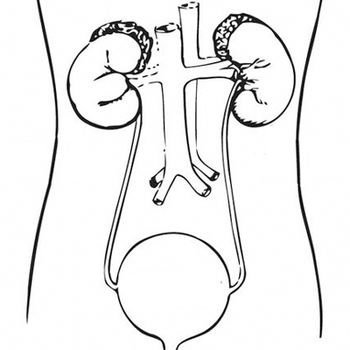
When checkpoint inhibitors<strong> </strong>were introduced, it had been more than 30 years since any new drugs had been approved for the treatment of urothelial cancer. Recently, 2 new non–checkpoint inhibitors, erdafitinib and enfortumab vedotin-ejfv, reached the market, and more may be available soon.
In an interview with Targeted Oncology, Massimo Lazzari, MD, discussed the findings from the analysis of microbiota in patients with bladder cancer. He highlighted how these findings can impact the treatment paradigm and exploration of new therapeutic agents in this space.
Patients harboring IDH1/2 muta­tions may receive benefit by the use of PARP inhibitors, with investigators initi­ating clinical trials in patients across multiple different tumor types to determine the efficacy of this strategy.
Treatment with pembrolizumab demonstrated antitumor activity along with tolerable toxicity in patients with 4 different rare and hard-to-treat malignancies, according to results from a phase II study led by The University of Texas MD Anderson Cancer Center researchers and published in the Journal for ImmunoTherapy of Cancer.
Thomas Powles, MD, MBBS, MRCP, discusses how researchers are working to optimize treatment with immune checkpoint inhibitors for patients with urothelial carcinoma.
New data from the RANGE study have found that ramucirumab combined with docetaxel confers a progression-free survival benefit in patients with platinum-refractory advanced urothelial cancer versus placebo and docetaxel in extended follow-up, according to a recent paper in Lancet Oncology.
The FDA has accepted a Biologics License Application for MYL-1402O, a proposed biosimilar to bevacizumab, according to a press release from co-developers Biocon and Mylan. The BLA is seeking approval for the biosimilar as a treatment for multiple types of cancer and the FDA has set an action date goal of December 27, 2020, for a decision on the BLA.
As the new coronavirus disease 2019 creates problems internationally, health-wise and economically, it is also becoming a cause for concern throughout the oncology community.
According to results from the phase III DANUBE bladder cancer trial, neither of the co-primary end points of the trial were met. The combination of durvalumab, and tremelimumab did not show an improvement in overall survival in treatment-naïve patients with unresectable, stage IV bladder cancer. Also, durvalumab alone failed to show an OS benefit over standard-of-care chemotherapy alone in patients with high PD-L1 expression.
In an interview with Targeted Oncology, Shilpa Gupta, MD, discussed the results of the BLASST-1 trial evaluating neoadjuvant nivolumab plus gemcitabine and cisplatin in patients with muscle-invasive bladder cancer undergoing a cystectomy. She highlighted the next steps and key points community oncologists need to know about these data now.
In February 2020, the FDA gave indications to multiple therapies meant for treatment of solid tumor and hematologic malignancies. FDA action included 10 Priority Reviews, 2 Breakthrough Therapy designations, and 2 Fast Track designations.

To help clinicians cope with an increasing number of geriatric patients with cancer, the Association of Community Cancer Centers is addressing this problem with a 2-pronged approach that focuses on the delivery of care and diagnostic assessment.
The FDA has granted Breakthrough Therapy Designation to enfortumab vedotin plus pembrolizumab for the treatment of patients with unresectable locally advanced or metastatic urothelial cancer who are unable to receive cisplatin-based chemotherapy in the first-line setting.
Stephen Boorjian, MD, discusses the efficacy results of the phase II study intravesical nadofaragene firadenovec in patients with high-grade, Bacillus Calmette-Guerin unresponsive nonmuscle invasive bladder cancer, which he presented at the 2020 Genitourinary Cancer Symposium.
Nivolumab plus gemcitabine and cisplatin administered in the neoadjuvant setting to patients with muscle-invasive bladder cancer resulted in a pathologic nonmuscle-invasive rate of 66% and a pathologic complete response rate of 49%.
The combination of durvalumab and olaparib may have activity as neoadjuvant therapy in the treatment of muscle-invasive bladder carcinoma.
Frequencies of certain genomic mutations associated with upper tract urothelial carcinoma versus urothelial carcinoma of the bladder may serve as the rationale for differ­ing response rates, Sumati V. Gupta, MD, said during a presentation of the data at the 11th European Multidis­ciplinary Congress on Urological Cancers.
In January 2020, the FDA approved new treatment options in gastrointestinal stromal tumors, bladder cancer, and epithelioid sarcoma. The FDA also granted several Priority Review Designations, orphan drug designations, and a Fast Track designation, as well as a Breakthrough Therapy designation.
Tremelimumab monotherapy showed clinical activity with durable responses in patients with metastatic urothelial carcinoma and documented transitional cell carcinoma of the urothelium who failed first-line platinum-based chemotherapy, according to results from a phase II study, which is evaluating the drug in solid tumors.
In a phase II trial, the combination of lenvantinib and pembrolizumab demonstrated a manageable safety profile and encouraging antitumor activity in patients with selected advanced solid tumors. The decision to combine the agents was based on preclinical data, which suggested that VEGF and FGF signaling may enhance the therapeutic efficacy of lenvatinib.
Advertisement
Advertisement
Trending on Targeted Oncology - Immunotherapy, Biomarkers, and Cancer Pathways
1
Plinabulin Receives FDA Fast Track Designation in Post-ICI NSCLC
2
Denosumab Biosimilar Approved For Existing Oncology Indications
3
FDA Oncology Recap: Approvals, Designations, and Decisions in September 2026
4
Tile-Based Radiation Improves Local Control in Resected Brain Metastases
5