
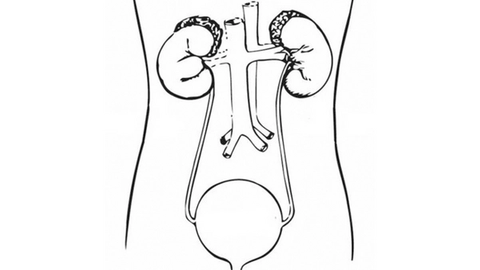

Bladder Cancer
Latest News

February 11th 2021
By Gina Mauro
A subgroup analysis from the phase 3 JAVELIN Bladder 100 trial demonstrated that Japanese patients with advanced urothelial cancer whose disease did not progress on frontline chemotherapy benefited from the addition of avelumab to best supportive care in the first-line maintenance setting.
Advertisement
Latest Videos

















































Advertisement
More News
Eganelisib, an investigational PI3K-gamma inhibitor in combination with nivolumab, demonstrated promising efficacy compared with nivolumab alone as treatment of platinum-refractory, immunotherapy naïve patients with advanced metastatic urothelial cancer, according to updated findings from the phase 2 MARIO-275 clinical trial.
After decades of dormancy, the therapeutic landscape of locally advanced/metastatic urothelial cancer underwent a paradigm shift—with multiple regulatory approvals of immune checkpoint inhibitors as second-line treatment—leading to changes in guideline-recommended management of patients in this setting.

Neal Shore, MD, discusses the current outlook for the treatment landscape in advanced or metastatic urothelial carcinoma.

Neal D. Shore, MD, FACS, discusses the current treatment landscape and upcoming drugs being reviewed by the FDA for the treatment of patients with bladder cancer.
In patients with bacillus Calmette-Guérin unresponsive non-muscle invasive bladder cancerwith high-risk carcinoma in situ disease, the combination of intravesical BCG and N-803 demonstrated efficacy with a tolerable safety profile, according to findings from the pivotal phase 2/3 QUILT 3.032 study.
Adjuvant atezolizumab in patients with high-risk muscle-invasive urothelial cancer with detectable circulating tumor DNA demonstrated more benefit compared with those with MIUC and undetectable ctDNA, according to data from the IMvigor010 trial.

Treatment with mitomycin-containing reverse thermal gel, led to complete responses in over 50% of patients with low-grade upper tract urothelial carcinoma, which were maintained at 1 year, final results from the pivotal phase 3 OLYMPUS trial show.
In a subgroup of patients with high-grade, BCG-unresponsive non-muscle invasive bladder cancer, the novel intravesical gene-mediated therapy nadofaragene firadenovec maintained its efficacy, according to a poster shared during the 21st Annual Meeting of the Society of Urologic Oncology.
Durable responses were shown with the investigational agent UGN-102 as treatment of patients with low-grade intermediate-risk non-muscle invasive bladder cancer, according to final results of the phase 2b OPTIMA II study .
Treatment strategies that build on standard therapies plus the use of novel agents in metastatic urothelial carcinoma were spotlighted at the European Society for Medical Oncology Virtual Congress 2020, with some having the potential to affect treatment regimens of patients who are receiving therapy in the frontline setting.
During a Targeted Oncology Case Based Peer Perspectives event, Bradley G. Somer, MD, discussed the case of a 30-year-old patients with bladder cancer.
During a Targeted Oncology Case Based Peer Perspectives event, Thomas Hutson, DO, PharmD, discussed the case of a 66-year old woman with bladder cancer that presented post chemotherapy.
Enfortumab vedotin-ejfv induced durable responses as treatment of patients with locally advanced or metastatic urothelial cancer who have previously received immunotherapy but not a prior platinum-containing chemotherapy and are not eligible for cisplatin.
During a Targeted Oncology Case Based Peer Perspectives event, Sandy Ting Liu, MD, discussed the case of a62-year-old male patient with bladder cancer.
Nivolumab monotherapy administered after surgery demonstrated a significant improvement in disease-free survival compared with placebo in patients with high-risk, muscle-invasive urothelial carcinoma, for all patients randomized in the phase 3 CheckMate-274 trial and those with PD-L1 ≥1% in their tumors, meeting the primary end point of the study.

Enfortumab vedotin monotherapy demonstrated significant long-term results in updated findings from the EV-201 trial presented at the 2020 ESMO Virtual Congress.

Petros Grivas, MD, PhD, discusses the challenge with biomarker discovery currently in the treatment landscape of urothelial carcinoma.
Final results from cohort 1 of the phase 3 TROPHY-U-01 trial reported continued significant activity with sacituzumab govitecan-hziy as treatment of patients with metastatic urothelial carcinoma who progressed on both platinum-based chemotherapy and checkpoint inhibition.
The co-primary end points of overall survival in patients with metastatic urothelial cancer were not met in the phase 3 DANUBE trial of durvalumab in combination with tremelimumab and durvalumab monotherapy, according to results presented at the 2020 ESMO Virtual Congress.
Although responses were observed with induction avelumab prior to standard of care gemcitabine/carboplatin, clinically meaningful efficacy was not sustained for patients with metastatic urothelial carcinoma.
Avelumab in combination with best supportive care as frontline maintenance in patients with advanced or metastatic urothelial carcinoma who had not progressed on first-line platinum-based chemotherapy led to improvements in both progression-free and overall survival.
The addition of BGB-A333 to tislelizumab led to marked antitumor activity and durable responses with a tolerable safety profile as treatment of patients with urothelial carcinoma in the phase 1/2 BGB-900-101 study.
The global phase 3 EV-301 study of enfortumab vedotin-ejfv in adult patients with locally advanced or metastatic urothelial carcinoma who received prior platinum-based chemotherapy and a PD-1/PD-L1 inhibitor met its primary end point of overall survival compared with chemotherapy.
Advertisement
Advertisement
Trending on Targeted Oncology - Immunotherapy, Biomarkers, and Cancer Pathways
1
Plinabulin Receives FDA Fast Track Designation in Post-ICI NSCLC
2
Denosumab Biosimilar Approved For Existing Oncology Indications
3
FDA Oncology Recap: Approvals, Designations, and Decisions in September 2026
4
Tile-Based Radiation Improves Local Control in Resected Brain Metastases
5