

Bladder Cancer
Latest News
Phase 1 INSIGHT-005 Study to Investigate Eftilagimod Alpha Plus Avelumab in mUC
By Jordyn Sava
Advertisement
Latest Videos



















































Advertisement
More News
During a Targeted Oncology case-based roundtable event, Pedro Barata, MD, MSc, discussed with participants their approaches to therapy for a patient whose bladder cancer progresses after receiving chemotherapy and immunotherapy.

Joshua J. Meeks, MD, discusses investigational targets in the bladder cancer space.
Jonathan E. Rosenberg, MD, discusses what has been previously shown with enfortumab vedotin for patients with locally advanced metastatic urothelial cancer.
In an interview with Targeted Oncology, Philippe Barthelemy, MD, discussed the preliminary findings of the AVENANCE trial of avelumab in patients with advanced or metastatic urothelial carcinoma.
In an interview with Targeted Oncology, Jeanny B. Aragon-Ching, discussed recent updates from the JAVELIN Bladder 100 trial. She also discussed ongoing research involving the novel agent EV-103 in patients with advanced or metastatic urothelial cancer.
The combination of toripalimab and chemotherapy displayed promising efficacy results in a phase 2 study.
Jonathan E. Rosenberg, MD, discusses what the frontline treatment landscape for metastatic urothelial cancer currently looks like.
In an interview with Targeted Oncology, Jonathan Rosenberg, MD, further discussed the background and results of the EV-103 study in patients with locally advanced metastatic urothelial cancer.

The combination of enfortumab vedotin plus pembrolizumab led to a confirmed overall response rate of 64.5% in patients with metastatic urothelial cancer.

Multiple blood-based biomarkers suggest potential responses to treatment with maintenance avelumab for patients with advanced or metastatic urothelial carcinoma from the phase 3 JAVELIN Bladder 100 trial, according to an exploratory analysis presented at the European Society for Medical Oncology Congress 2022.

Sumanta K. Pal, MD, discusses the safety and efficacy results of the COSMIC-021 clinical trial.
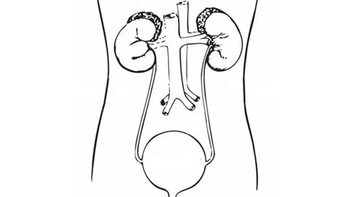
The PARP inhibitor rucaparib was shown to improve progression-free survival in a cohort of the ATLANTIS study platform for metastatic urothelial carcinoma.
During the 2022 Debates and Didactics in Hematology and Oncology conference, Bassel Nazha, MD, MPH and Jacqueline T. Brown, MD, debated on adjuvant vs neoadjuvant systemic therapy for patients with upper tract urothelial cancer.

Sam S. Chang, MD, MBA, discusses the methods and design of the QUILT 3032 study.

Sophia Kamran, MD, discusses future roles that radiation oncology will play in combination with resection and targeted therapy in urothelial carcinoma.
The FDA has accepted the biologics license application for N-803 as a treatment for patients with Bacillus Calmette–Guérin-unresponsive non-muscle-invasive bladder cancer carcinoma in situ with or without Ta or T1 disease.
Results from a phase 3 study of pembrolizumab and nadofaragene firadenovec in patients with BCG-unresponsive non–muscle invasive bladder cancer suggests that immune checkpoint inhibitors have synergy with antibody drug conjugates.
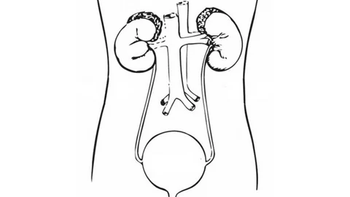
In an interview with Targeted Oncology, Vignesh Packiam, MD, discussed the research of gemcitabine plus cabazitaxel and pembrolizumab in patients with non-muscle invasive urothelial carcinoma who are unresponsive to docetaxel.
The development of vicineum for the treatment of patients with high-risk, Bacillus Calmette-Guerin-unresponsive non–muscle invasive bladder cancer has been voluntarily paused.
In an interview with Targeted Oncology, Matthew T. Campbell, MD, examined the positive phase 1 study results of infigratinib for the treatment of patients with localized upper tract urothelial cancer.
In an interview with Targeted Oncology, Sam S. Chang, MD, MBA, discussed the background of N-803 plus BCG in patients with BCG-unresponsive non-muscle invasive bladder cancer and what he expects for the future of this space.

Sam S. Chang, MD, MBA, discusses the research of N-803 in combination with BCG in patients with BCG-unresponsive non-muscle invasive bladder cancer.
The FDA has granted fast track designation to belzupacap sarotalocan for the treatment of patients with non-muscle invasive bladder cancer. A phase 1 study is planned to launch in 2022.

Sam S. Chang, MD, MBA, discusses unanswered research questions about histologic subtypes of bladder cancer.
In an interview with Targeted Oncology, Roger Li, MD, discussed the use of the CG0070 in combination with pembrolizumab and nivolumab for patients with non-muscle invasive bladder cancer who are unresponsive to Bacillus Calmette-Guerin.
Advertisement
Advertisement
Trending on Targeted Oncology - Immunotherapy, Biomarkers, and Cancer Pathways
1
Plinabulin Receives FDA Fast Track Designation in Post-ICI NSCLC
2
FDA Oncology Recap: Approvals, Designations, and Decisions in September 2026
3
Denosumab Biosimilar Approved For Existing Oncology Indications
4
CEPHEUS and Frontline Treatment in Newly Diagnosed Multiple Myeloma
5