

Bladder Cancer
Latest News
Advertisement
Latest Videos



















































Advertisement
More News

Tumor mutation burden was linked with improved survival while some alterations were linked with inferior outcomes from treatment with enfortumab vedotin for urothelial carcinoma.
Findings from the phase 2 HCRN GU 16-257 trial may help advance a more personalized approach to the management of muscle-invasive bladder cancer.

Guru P. Sonpavde, MD, discusses The Cancer Genome Atlas and key takeaways for community oncologists.
The phase 1 dose-escalation portion of a phase 1/2 trial evaluating BT8009 in patients with urothelial cancer led to promising overall response and clinical benefit rates, including 1 complete response at the 5 mg/m2 dose.
The phase 1/2 LUMINOS-103 trial will evaluate the intravesical instillation of lerapolturev in a cohort of patients with non-muscle-invasive bladder cancer.
In an interview with Targeted Oncology, Thomas Flaig, MD, further discussed the updates to the 2022 NCCN guidelines for patients with bladder cancer and explained how the field has evolved over the past few years.

Thomas Flaig, MD, discusses some of the updated and current NCCN guidelines for patients with bladder cancer.

Dr Matthew Galsky contemplates how he would use immunotherapy in patients with MIBC, if it were available for use in both the neoadjuvant and adjuvant setting.
Matthew Galsky, MD, highlights some remaining unmet needs for patients with MIBC, and currently ongoing clinical trials in the neoadjuvant MIBC treatment setting that excite him.
Dr Matthew Galsky explains the adjuvant therapy regimen he would have recommended for the patient with MIBC from the presented case, and whether patient preference factors into his decisions in clinical practice.
Matthew Galsky, MD, explains safety and efficacy data from the CheckMate 274 trial, which led to the FDA approval of adjuvant nivolumab for patients with MIBC, and highlights important data updates from recent conferences.
Dr Matthew Galsky reviews the available adjuvant therapy options for patients with stage II or III MIBC who previously underwent bladder removal surgery.
Matthew Galsky, MD, presents the case of a 55-year-old man with stage T2N0M0 muscle-invasive bladder cancer (MIBC) for review, and explains how cisplatin eligibility is defined in patients.
During a Targeted Oncology case-based roundtable event, Helen Moon, MD, discussed with participants their approaches to metastatic bladder cancer and immunotherapy in the switch maintenance setting.
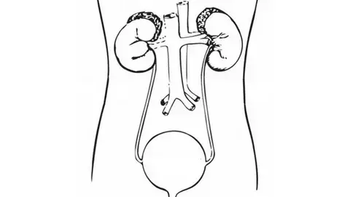
A Nectin-4–directed drug received FDA Fast Track Designation based on preclinical and clinical data showing potential efficacy and safety in patients with locally advanced or metastatic urothelial cancer.

Parminder Singh, MD, discusses the safety associated with standard-of-care tri-modality therapy for muscle-invasive bladder cancer and the addition of atezolizumab to standard of cancer.
Dr Terence Friedlander closes his discussion by highlighting ongoing clinicals in neoadjuvant MIBC treatment that excite him and speculates on how he would use immunotherapy in patients with MIBC if it were available for use in both the neoadjuvant and adjuvant setting.
Terence Friedlander, MD, summarizes the remaining unmet needs for patients with MIBC.
Dr Terence Friedlander explains which adjuvant therapy he would have recommended for the patient with MIBC from the presented case.
Terence Friedlander, MD, continues his discussion of the CheckMate 247 trial by highlighting important updates from recent conferences on adjuvant nivolumab therapy in patients with MIBC.
Dr Terence Friedlander explains safety and efficacy data from the CheckMate 247 trial, which led to the FDA approval of adjuvant nivolumab for patients with MIBC.
Terence Friedlander, MD, reviews the available adjuvant therapy options for patients with stage II or III MIBC who previously underwent bladder removal surgery.
Dr Terence Friedlander defines cisplatin eligibility in patients with MIBC and discusses how many patients receive neoadjuvant cisplatin and the treatment approaches if a patient is ineligible.

For patients with locally advanced or metastatic urothelial cancer, the FDA has accepted for priority review supplemental biologics license applications for enfortumab vedotin-ejfv and pembrolizumab.
Patients with low-grade upper tract urothelial cancer elicited a clinical benefit at the end of the phase 3 OLYMPUS study when treated with UGN-101.
Advertisement
Advertisement
Trending on Targeted Oncology - Immunotherapy, Biomarkers, and Cancer Pathways
1
FDA Oncology Recap: Approvals, Designations, and Decisions in September 2026
2
Plinabulin Receives FDA Fast Track Designation in Post-ICI NSCLC
3
Denosumab Biosimilar Approved For Existing Oncology Indications
4
CEPHEUS and Frontline Treatment in Newly Diagnosed Multiple Myeloma
5