


Bladder Cancer
Latest News
Advertisement
Latest Videos













































Advertisement
More News

Vikram Narayan, MD, discusses the significance of the 5-year overall survival and cystectomy-free survival rates of nadofaragene firadenovec-vncg in treating patients with high-risk, BCG-unresponsive non-muscle invasive bladder cancer.
RAG-01 has received an FDA fast track designation and is being investigated for the treatment of non-muscle invasive bladder cancer.

Antoni Vilaseca Cabo, MD, discusses phase 1 data presented on TAR-210 for the treatment of patients with FGFR-altered high- and intermediate-risk non-muscle invasive bladder cancer.
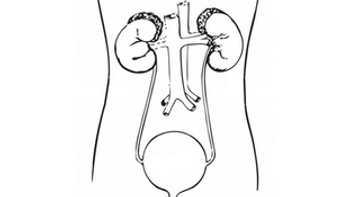
In an interview with Targeted Oncology, Shilpa Gupta, MD, discussed the rationale and potential significance of the MAIN-CAV trial in patients with locally advanced/metastatic urothelial carcinoma.

Sima Porten, MD, MPH, discusses the rationale for the phase 3 SunRISe-5 study of TAR-200 in non-muscle invasive bladder cancer and unmet needs in this patient population.

Non-muscle invasive bladder cancer treatment with TAR-210 demonstrated safety and clinical activity in FGFR-altered high- and intermediate-risk patient groups.
Responders to UGN-101 Have Positive RFS in Upper Tract Urothelial Cancer
Published: | Updated:
In patients at 15 centers who had upper tract urothelial cancer, those with no evidence of disease after UGN-101 induction had a 68% rate of 3-year recurrence-free survival, and this outcome did not differ based on tumor status, method of instillation, or treatment intent.
Nadofaragene firadenovec maintained its durable clinical activity at 5 years in patients with high-risk, BCG-unresponsive non–muscle-invasive bladder cancer.
Maintenance UGN-101 therapy demonstrated good durability of response in initial responders with low-grade upper tract urothelial cancer, as evidenced by a low rate of disease progression in a multicenter, longitudinal follow-up study.
Combination therapy with nivolumab and gemcitabine-cisplatin showed promising results in treating metastatic urothelial carcinoma with significantly improved overall survival and progression-free survival rates.
Roger Li, MD, discusses what the future may hold for the use of TAR-210 for the treatment of patients with intermediate-risk non-muscle-invasive bladder cancer with susceptible FGFR alterations.

Stephen Williams, MD, discusses the phase 3 SunRISe-2 study investigating TAR-200 plus cetrelimab in muscle-invasive bladder cancer being presented at the 2024 American Urological Association Annual Meeting.
EG-70, a novel, nonviral gene therapy, elicited a 73% complete response at any time for patients with non-muscle invasive bladder cancer (NMIBC) with carcinoma in situ.
Treatment with TAR-200 displayed a high complete response rate in Bacillus Calmette-Guérin-unresponsive high-risk non-muscle-invasive bladder cancer.
Patients who underwent extended lymph node dissection during radical cystectomy compared with those who underwent standard lymph node dissection exhibited no benefit in disease-free survival or overall survival.

Arlene O. Siefker-Radtke, MD, discusses the latest breakthroughs in bladder cancer treatment with erdafitinib, an FGFR1-4 inhibitor.

Mark D. Tyson, II, MD, MPH, discusses the safety and efficacy findings from the BOND-003 trial of cretostimogene grenadenorepvec in high-risk Bacillus Calmette-Guérin-unresponsive non-muscle-invasive bladder cancer with carcinoma in situ.
In the phase 3 BOND-003 trial, cretostimogene grenadenorepvec led to durable complete responses over 12 months among patients with high-risk BCG-unresponsive non-muscle-invasive bladder cancer with carcinoma in situ.
Mark D. Tyson, II, MD, MPH, discusses the background of the phase 3 BOND-003 study evaluating cretostimogene grenadenorepvec in patients with high-risk Bacillus Calmette-Guérin-unresponsive non-muscle-invasive bladder cancer with carcinoma in situ.
Mark D. Tyson, II, MD, MPH, concludes his conversation on the BOND-003 trial by discussing the next steps for research on cretostimogene grenadenorepvec.
Patients with Bacillus Calmette-Guérin-unresponsive non-muscle-invasive bladder cancer carcinoma in situ now have a new treatment option following the FDA’s approval of nogapendekin alfa.
For patients who underwent radical cystectomy for bladder cancer, those with lower net worth incurred higher costs posttreatment.
Three additional clinical trials will study nadofaragene firadenovec-vncg for the treatment of patients with non-muscle invasive bladder cancer.
An investigational new drug application for UGN-103 was accepted by the FDA. A phase 3 study to assess the safety and efficacy of the agent in low-grade intermediate-risk non-muscle invasive bladder cancer is anticipated.

Alex Chehrazi-Raffle, MD, discusses findings from a real-world analysis of adjuvant treatment in bladder cancer presented at ASCO GU.
Advertisement
Advertisement
Trending on Targeted Oncology - Immunotherapy, Biomarkers, and Cancer Pathways
1
FDA Oncology Recap: Approvals, Designations, and Decisions in September 2026
2
Plinabulin Receives FDA Fast Track Designation in Post-ICI NSCLC
3
Denosumab Biosimilar Approved For Existing Oncology Indications
4
CEPHEUS and Frontline Treatment in Newly Diagnosed Multiple Myeloma
5