


Bladder Cancer
Latest News
Advertisement
Video Series





Latest Videos















































Advertisement
More News

Dr Ghatalia discusses RETAIN-2, highlighting ctDNA analysis drawn from RETAIN-1 and RETAIN-2.
Induction ipilimumab/nivolumab plus chemoradiotherapy consolidation was associated with bladder preservation in muscle-invasive urothelial carcinoma.
AKY-1189 gains fast track designation in urothelial cancer.

IMvigor011 shows post-cystectomy ctDNA timing and levels predict relapse, while adjuvant atezolizumab clears ctDNA and extends survival in MIBC.

The phase 3 IMvigor011 trial represents a landmark shift toward personalized, biomarker-driven adjuvant therapy in muscle-invasive bladder cancer.
Gemcitabine-iDRS did not show superior bladder-intact event-free survival over chemoradiotherapy and there were no patient subgroups that suggest further evaluation in subsequent studies.
An integrated analysis of the RETAIN-1 and RETAIN-2 trials demonstrates that circulating tumor DNA is a powerful prognostic indicator for metastatic recurrence in muscle-invasive bladder cancer.
Phase 2 results showed efficacy and tolerability of disitamab vedotin in pretreated HER2+ and HER2-low urothelial cancer.
Neoadjuvant enfortumab vedotin plus pembrolizumab significantly improved event-free survival and overall survival compared with gemcitabine plus cisplatin.
FDA strengthens capecitabine and 5‑FU labels: DPD deficiency can trigger fatal toxicity; consider testing, lower doses, and prompt antidote.
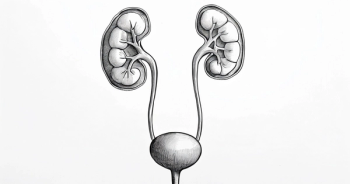
During his presentation at the 4th Annual Miami Cancer Institute Precision Oncology Symposium, Petros Grivas, MD, PhD, FASCO, provided a detailed roadmap for community oncologists with an emphasis on precision medicine.
Explore the vital role of community oncology in GU cancer treatment, bridging research and real-world applications for better patient care.
A recent study reveals comparable outcomes for radical cystectomy and bladder-sparing therapy in treating recurrent high-grade bladder cancer, emphasizing patient-centered care.
A groundbreaking bladder cancer treatment, TAR-200, offers new hope for patients failing first-line therapy, showcasing impressive response rates and ease of use.
New combination therapy shows a 96% survival rate in patients with BCG-unresponsive bladder cancer, offering a promising alternative to radical cystectomy.
A groundbreaking trial shows that combining enfortumab vedotin and pembrolizumab enhances survival rates in muscle-invasive bladder cancer patients.
MVR-T3011 shows promising efficacy in treating high-risk, BCG-unresponsive bladder cancer, with high response rates and favorable safety profiles.
TARA-002 shows promising efficacy and safety in treating BCG-naive non-muscle invasive bladder cancer, with high response rates and durability.

New findings reveal that GDF-15 neutralization with visugromab and nivolumab significantly enhances long-term responses in advanced cancer patients.
Patients with non-muscle invasive bladder cancer seek improved communication with providers about treatment options, highlighting a need for collaborative care discussions.
Explore the evolving role of medical oncologists in treating non–muscle invasive bladder cancer with innovative immunotherapy options and trial insights.
The FDA approves enfortumab vedotin and pembrolizumab for muscle-invasive bladder cancer, significantly improving survival rates post-surgery.
New data reveals detalimogene's promising efficacy and safety in treating high-risk bladder cancer, offering hope for improved patient outcomes.
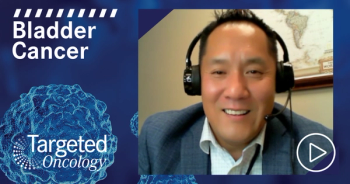
Chandler H. Park, MD, discusses real-world data for maintenance avelumab in bladder cancer and factors that sway his treatment selection.
UGN-103 shows promising 77.8% efficacy in treating recurrent low-grade bladder cancer, paving the way for a potential FDA approval.
Advertisement
Advertisement
Trending on Targeted Oncology - Immunotherapy, Biomarkers, and Cancer Pathways
1
FDA Oncology Recap: Approvals, Designations, and Decisions in September 2026
2
Plinabulin Receives FDA Fast Track Designation in Post-ICI NSCLC
3
Denosumab Biosimilar Approved For Existing Oncology Indications
4
CEPHEUS and Frontline Treatment in Newly Diagnosed Multiple Myeloma
5