
Bladder Cancer
Latest News
Advertisement
Latest Videos












































Advertisement
More News
In an interview, Shilpa Gupta, MD, discussed findings from cohort A of Study EV-103 in patients with cisplatin-ineligible locally advanced or metastatic urothelial carcinoma.
Rohan Garje, MD, explains some of the differences between the sarcomatoid and classic carcinoma of the bladder.

Jonathan E. Rosenberg, MD, explains the study design and patient inclusion criteria of the phase 2 EV-103 study investigating combination enfortumab vedotin plus pembrolizumab for the treatment of patients with metastatic or locally advanced urothelial carcinoma.
Jonathan E. Rosenberg, MD, joins the Oncology Brothers, Rohit Gosain, MD, and Rahul Gosain, MD, in reviewing the results of the EV-103 study in patients with metastatic or locally advanced urothelial carcinoma.
Rohit Gosain, MD, and Rahul Gosain, MD, provide a summary of the key data discussed during their conversation with Jonathan E. Rosenberg, MD, on the phase 2 EV-103 trial in metastatic or locally advanced urothelial carcinoma.
Experts explain how they would choose between combination therapy regimens for patients with metastatic or locally advanced urothelial carcinoma if the choice of treatment was not influenced by low supply availability.
Key opinion leaders discuss the available data on combination enfortumab vedotin plus pembrolizumab for the treatment of patients with metastatic or locally advanced urothelial carcinoma and an FGFR mutation.
Topline data from the phase 3 ATLAS and ENVISION trials of UGN-102 showed a robust and consistent therapeutic profile when used for patients with low-grade, intermediate-risk non-muscle invasive bladder cancer.

Sia Daneshmand, MD on the non-muscle invasive bladder cancer treatment paradigm.
A total of 110 patients with Bacillus Calmette-Guerin-unresponsive non-muscle invasive bladder cancer have been enrolled in a phase 3 study evaluating cretostimogene grenadenorepvec.
In an interview, Rohan Garje, MD, discussed his research on comparing the outcomes of sarcomatoid and classic urothelial carcinoma of bladder.
Discussing findings from a phase 1/2 study, Sarah P. Psutka MD, looks at the use of acupuncture for patients with non muscle-invasive bladder cancer prior to induction of their BCG treatment.
A further look at nivolumab combined with cisplatin-based chemotherapy outside of the primary CheckMate-901 study shows survival benefit for the study combination.
Rohan Garje, MD, discusses the goals of his research in assessing the outcomes of sarcomatoid vs classic urothelial carcinoma of bladder.

For Bladder Cancer Awareness Month, Jahan Aghalar, MD, discussed the latest advancements in treating patients with bladder cancer along with which targets have helped to push the field forward.

Thomas Flaig, MD, discusses recent updates seen in the bladder cancer space and how they have led to changes to the NCCN guidelines.
In an interview with Targeted Oncology, Siamak Daneshmand, MD, discussed TAR-200 as seen in the SunRISE-1 trial and the what is up next for the treatment landscape of high-risk BCG-unresponsive non-muscle invasive bladder cancer.
In an interview with Targeted Oncology, Petros Grivas, MD, PhD, discusses the set up and key results from the KEYNOTE-057 trial of pembrolizumab for patients with bacillus Calmette-Guérin-unresponsive, papillary high-risk non–muscle-invasive bladder cancer.

FDA approval has not been granted to N-803 for the treatment of Bacillus Calmette–Guérin-unresponsive non-muscle-invasive bladder cancer carcinoma in situ.
Emerging data demonstrate the potential of these drugs to optimize survival, preserve quality of life, and even spare patients a radical cystectomy.
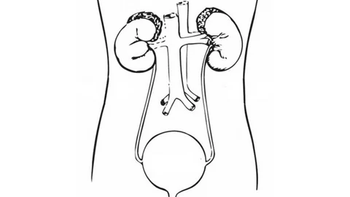
Treatment with TARA-002 at 3 different dose levels was generally well-tolerated, and no dose limiting toxicities were observed among patients with high-grade non-muscle invasive bladder cancer.
At the 2023 National Comprehensive Cancer Network Annual Conference, Arlene O. Siefker-Radtke, MD, gave an assessment on where emerging targeted therapies for patients with metastatic or advanced bladder stand.
Enfortumab vedotin plus pembrolizumab is now an FDA approved treatment based on positive phase 1b/2 findings.

Following positive phase 1 results in patients with previously treated advanced urothelial carcinoma, the FDA granted Fast Track Designation for the novel AHR inhibitor IK-175.

In the PATRIOT-II study, patients treated with first-line platinum-based chemotherapy prior to avelumab maintenance had a complete response rate of 13% and a partial response (PR) rate of 68%.
Advertisement
Advertisement
Trending on Targeted Oncology - Immunotherapy, Biomarkers, and Cancer Pathways
1
FDA Oncology Recap: Approvals, Designations, and Decisions in September 2026
2
Plinabulin Receives FDA Fast Track Designation in Post-ICI NSCLC
3
Denosumab Biosimilar Approved For Existing Oncology Indications
4
CEPHEUS and Frontline Treatment in Newly Diagnosed Multiple Myeloma
5