
BREAST CANCER
Latest News



Advertisement
Latest Videos































Advertisement
More News

A biologics license application has been submitted to the FDA for margetuximab in combination with chemotherapy for the treatment of patients with metastatic HER2-positive breast cancer, according to a press release from MacroGenics, Inc.<br />

The FDA has granted Breakthrough Therapy Designation to the addition of tucatinib to trastuzumab and capecitabine for the treatment of patients with locally advanced unresectable or metastatic HER2-positive breast cancer, including those with brain metastases who received prior treatment with trastuzumab, pertuzumab, and T-DM1, according to a press release from Seattle Genetics.<br />
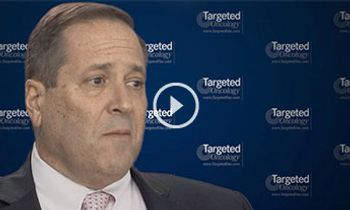
Adam M. Brufsky, MD, PhD, FACP, discusses the TBCRC049 trial, which looks at the safety and efficacy of the tucatinib/trastuzumab/capecitabine combination to treat leptomeningeal metastases in HER2-positive breast cancer.

In a 500-patient randomized trial, the pharmacokinetics, clinical activity, and safety of pertuzumab and trastuzumab administered as a subcutaneous fixed-dose combination were found to be noninferior to the intravenous versions of the drugs.
A pathologic complete response rate of 44% was observed with a neoadjuvant durvalumab (Imfinzi)-based regimen administered to patients with triple-negative breast cancer, according to results of a phase I/II study presented in a poster at the 2019 San Antonio Breast Cancer Symposium.
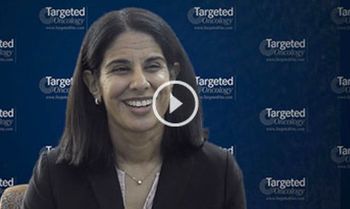
Sara M. Tolaney, MD, MPH, discusses the results of the monarcHER trial, which examined adding the CDK4/6 inhibitor abemaciclib and endocrine therapy to trastuzumab versus trastuzumab plus chemotherapy in advanced hormone receptor-positive, HER2-positive breast cancer.
Nearly 12 years after discontinuing treatment, anastrozole, an aromatase inhibitor, maintained a preventive effect for postmenopausal women at high risk for breast cancer. Women assigned to anastrozole were 49% less likely to have developed breast cancer compared with women assigned to placebom according to data presented at the 2019 San Antonio Breast Cancer Symposium.
Preliminary results from the phase III NeoTRIPaPDL1 Michelangelo study showed that the addition of atezolizumab to combination carboplatin plus nab-paclitaxel did not result in a statistically significant increase in the pathologic complete response rate compared with the combination alone in patients with early high-risk and locally advanced triple-negative breast cancer.
According to a pooled analysis of neoadjuvant trials presented at the San Antonio Breast Cancer Symposium, a pathologic complete response to HER2-directed neoadjuvant therapy reduced the risk of recurrence in patients with early HER2-positive breast cancer but did not eliminate it, supporting the common practice of continued anti-HER2 therapy.
In patients with triple-negative breast cancer or those with PD-L1–positive breast cancer across several subtypes, durvalumab as maintenance therapy, may improve outcomes compared with chemotherapy, according to an exploratory analyses from the phase II randomized SAFIR02-IMMUNO trial presented at the 2019 San Antonio Breast Cancer Symposium.
The addition of pembrolizumab to standard-of-care chemotherapy for neoadjuvant and adjuvant treatment of early triple-negative breast cancer lead to higher rates of pathologic complete responses in the KEYNOTE-522 trial, especially in those patients with stage III and/or node-positive disease.
Frontline treatment with palbociclib demonstrated positive progression-free survival n real-world patients with HR-positive/HER2-negative metastatic breast cancer and may lead to an overall survival benefit , according to data from the pivotal PALOMA-2 trial.
High rates of disease control were reported in the first set of results from a randomized trial in which adjuvant T-DM1 was compared to trastuzumab and paclitaxel for the treatment of patients with early HER2-positive breast cancer.

Rita Nanda, MD, discusses the IMpower130 trial in patients with metastatic triple-negative breast cancer who express PD-L1.
Patients with HER2-positive metastatic breast cancer who had received prior anti-HER2 therapies continued to experience a progression-free survival benefit with margetuximab and a trend toward overall survival compared with trastuzumab when either agent was combined with chemotherapy, according to updated findings from the phase III SOPHIA trial.
In the phase III APHINITY trial, pertuzumab with trastuzumab plus chemotherapy demonstrated a 0.9% improvement in overall survival and continued to reduce the risk of disease recurrence in patients with HER2-positive early breast cancer in the adjuvant setting, according to a 6-year analysis of the phase III APHINITY trial presented at the 2019 San Antonio Breast Cancer Symposium.
In the phase II HER2CLIMB trial, a 34% reduction in the risk of death was observed with the addition of tucatinib to the combination of trastuzumab and capecitabine in patients with heavily pretreated unresectable locally advanced or metastatic HER2-positive breast cancer compared to the combination alone, according to results from the phase II HER2CLIMB trial presented at the 2019 San Antonio Breast Cancer Symposium.
Japanese patients with HR-positive, HER2-negative breast cancer had a significant improvement in invasive disease-free survival with the addition of the novel oral fluoropyrimidine derivative S-1, according to findings from the phase III POTENT trial presented at the 2019 San Antonio Breast Cancer Symposium.
In heavily pretreated patients with advanced HER2-positive breast cancer, trastuzumab deruxtecan induced a confirmed objective response rate of almost 61% and a durable benefit, according to results from the phase II DESTINY-Breast01 trial presented at the 2019 San Antonio Breast Cancer Symposium.
George W. Sledge, Jr., MD, professor of medicine, Stanford University Medical Center, discusses the next steps for the phase III MONARH-2 trail following the positive interim analysis results presented during the 2019 European Society of Medical Oncology Congress.
In an interview with Targeted Oncology, Massimo Cristofanilli, MD, discussed emerging treatment approaches for patients with ER-positive/HER2-negative breast cancer with an ESR1 mutation.
In patients whose solid<strong> </strong>tumors harbor a mutation in <em>KRAS </em>G12C, therapy with MRTX849 has produced promising responses and acceptable toxicity across 3 tumors types, according to data presented at the 2019 American Association for Cancer Research–National Cancer Institute–European Organization for Research and Treatment of Cancer International Conference on Molecular Targets and Cancer Therapeutics.
Triple-negative breast cancer — defined as tumors that lack expression of estrogen receptor, progesterone receptor, and human epidermal growth factor receptor 2 amplification— is a heterogenous disease and clinically represents a major unmet need in the field of oncology. TNBC is associated with aggressive tumor biology and higher risk of recurrence and visceral metastasis, including brain metastasis.

Positive overall survival data from the phase II KATE-2 study were presented at the 2019 ESMO Annual Meeting. Leisha Emens, MD, shares the results.
Joyce A. O’Shaughnessy, MD, led a group of physicians at a recent Targeted Oncology live case-based peer perspective event in discussion on emerging data that could affect treatment options for patients with triple-negative breast cancer in the future.
Advertisement
Advertisement
Trending on Targeted Oncology - Immunotherapy, Biomarkers, and Cancer Pathways
1
FDA Accepts NDA for Daraxonrasib in Metastatic Pancreatic Cancer
2
Teclistamab/Talquetamab Reduces Risk of Progression by 89% in R/R Multiple Myeloma
3
Advanced Renal Cell Carcinoma: Tailoring Second-Line Therapy After Prior Immunotherapy
4
Updated HARMONi Analysis Shows Consistent OS Benefit With Ivonescimab in EGFRm Lung Cancer
5