


BREAST CANCER
Latest News
Advertisement
Latest Videos































Advertisement
More News

The phase III FeDeriCa trial found that a fixed-dose subcutaneous injection of pertuzumab and trastuzumab with hyaluronidase in combination with intravenous chemotherapy was pharmacokinetically noninferior to the standard IV infusions of the regimen in patients with HER2-positive breast cancer.<br />

The FDA has issued a warning for a rare, but severe, lung inflammation that could be caused by the use of CDK4/6 inhibition in patients with advanced breast cancers. The warning applies to treatment with palbociclib, ribociclib, and abemaciclib specifically, but warnings of the risk of lung inflammation have been approved to be added to the prescribing information for the entire class of CDK4/6 inhibitors.
In an interview with Targeted Oncology, Charles Geyer, MD, discussed the potential role of neratinib as well as other new agents that are coming down the pipeline for the treatment of patients with metastatic HER2-positive breast cancer. He also addressed the biggest challenges oncologists face in managing this disease.
The FDA has accepted a supplemental New Drug Application for the use of neratinib in combination with capecitabine for the treatment of patients with HER2-positive metastatic breast cancer following failure of ≥2 prior lines of HER2-directed therapy.
In an interview with Targeted Oncology, John Bartlett, MD, explained the standardized cancer testing project, its relevance, and how it could be used to improve the treatment of patients with pancreatic, prostate, breast cancer.

In an interview with Targeted Oncology, Muhammed Murtaza, MBBS, PhD, discussed the role for TARDIS in the treatment landscape of early-stage breast cancer, as well as the data supporting its use. He also highlighted next steps necessary for validating these results and the potential clinical value of liquid biopsies in the breast cancer space.

Jesus Anampa, MD, MS, assistant professor, Department of Medicine, Albert Einstein School of Medicine, says in the past, most patients with breast cancer were treated with chemotherapy. In some cases, these patients were being over-treated. To limit the use of chemotherapy in patients who don’t need it, a group of researchers conducted the TAILORx trial.
The United States Preventive Services Task Force is recommending that therapies like tamoxifen, raloxifene, or aromatase inhibitors be administered to women who have a high risk for developing breast cancer and low risk for the adverse events that may be caused by these therapies. This recommendation is part of an update to the USPSTF recommendation statement on treatments for reducing breast cancer risk.
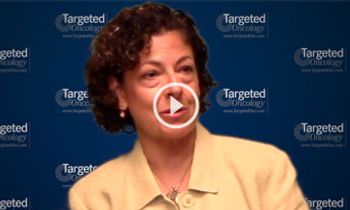
Angela DeMichele, MD, MSCE, discusses predictors of response to neoadjuvant chemotherapy in various subgroups of patients with breast cancer. Selecting characteristics of patients who will most likely benefit from this therapy is not an exact science, she adds.
The FDA has granted neratinib with an orphan drug designation for the treatment of patients with breast cancer–related brain metastases.
The combination of atezolizumab and nab-paclitaxel has been approved by the European Commission as a frontline treatment for adult patients with unresectable, locally advanced, or metastatic PD-L1–positive triple-negative breast cancer, a result of the positive outcomes in the phase III IMpassion130 trial.
FDA Aims To Include More Male Patients in Breast Cancer Clinical Trials With New Industry Guidelines
The FDA has drafted new industry recommendations for sponsors to encourage male inclusion in clinical trials for breast cancer.<br />
In an interview with <em>Targeted Oncology,</em> Carol Mangione, MD, MSPH, a co-author on the USPSTF Recommendation Statement, gave insight into the specifics of the recommendations and how the Task Force hopes these suggestions will impact patient outcomes.<br />
CDK4/6 inhibitors<strong> </strong>offer clear benefits in pro­gression-free survival, delayed time to chemotherapy, and overall survival in both pre and postmenopausal patients with estrogen receptor-positive metastatic breast cancer, said Angela DeMichele, MD, MSCE.
In a presentation at the <em>18th Annual </em>International Congress on the Future of Breast Cancer® East, hosted by Physicians’ Education Resource®, LLC, in New York, Armin Shahrokni, MD, MPH, emphasized the importance of performing a comprehensive geriatric assessment for each patient to determine optimal treatment.

The American Society of Clinical Oncology and Friends of Cancer Research have issued a joint research statement that broadens eligibility criteria affecting 2 patient subgroups: patients with treated/stable brain metastases and those with new, active, or progressive brain metastases.<br />
Both cell cycle-specific and nonspecific mechanisms that lead to acquired resistance to CDK4/6 inhibition in estrogen receptor-positive breast cancer have resulted in multiple promising agents and combinations for the second-line management of metastatic disease.
Reporting on the debate with his peer, Lawrence J. Solin, MD, FACR, FASTRO explained his stance on whole breast irradiation in comparison with partial breast irradiation in breast cancer treatment during an interview with <em>Targeted Oncology</em>. More research is needed to support the idea that PBI can be used for more patients, according to Solin.
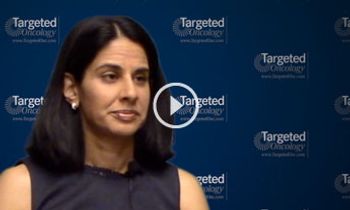
Sara M. Tolaney, MD, MPH, discusses the evolving role of neoadjuvant endocrine therapy in the breast cancer space. She says there is particular interest in using this therapy in patients with HER2-positive and triple-negative breast cancer, but it can be more challenging in patients with ER-positive disease.
Ribociclib in combination with fulvestrant demonstrated a statistically significant improvement in overall survival in postmenopausal women with hormone receptor–positive, HER2-negative advanced or metastatic breast cancer, according to interim results from the phase III MONALEESA-3 trial.
The combination of abemaciclib and fulvestrant has demonstrated a statistically significant improvement in overall survival compared with fulvestrant and placebo in women with HR–positive, HER2-negative advanced or metastatic breast cancer who have previously received endocrine therapy, according to updated interim results from the phase III MONARCH 2 trial.
Carey K. Anders, MD, spoke with <em>Targeted Oncology</em> about treatment options emerging to improve outcomes for patients with metastatic breast cancer and secondary brain metastases.
The combination of pembrolizumab with chemotherapy demonstrated a benefit in terms of pathological complete response when used as neoadjuvant therapy compared with chemotherapy alone in patients with triple-negative breast cancer, according to interim results of the pivotal phase III KEYNOTE-522 trial.
Neratinib has received approval from Health Canada for the treatment of patients with early-stage, hormone receptor–positive, HER2-overexpressed/amplified breast cancer in the extended adjuvant setting. The agent should be given to patients 1 year after completing trastuzumab-based adjuvant therapy.<br />
Advertisement
Advertisement
Trending on Targeted Oncology - Immunotherapy, Biomarkers, and Cancer Pathways
1
FDA Accepts NDA for Daraxonrasib in Metastatic Pancreatic Cancer
2
Teclistamab/Talquetamab Reduces Risk of Progression by 89% in R/R Multiple Myeloma
3
Advanced Renal Cell Carcinoma: Tailoring Second-Line Therapy After Prior Immunotherapy
4
Updated HARMONi Analysis Shows Consistent OS Benefit With Ivonescimab in EGFRm Lung Cancer
5