



DLBCL
Latest News
Advertisement
Latest Videos



















































Advertisement
More News

Obinutuzumab (Gazyva) plus bendamustine, followed by obinutuzumab alone has been approved by the FDA as a treatment of patients with follicular lymphoma who were not responsive to a rituximab regimen, or who relapsed after rituximab-based therapy.

In this article, Shipra Gandhi, MD, Pallawi Torka, MD, and Francisco J. Hernandez Ilizaliturri, MD summarize the current clinical development of these novel agents in lymphoid malignancies.
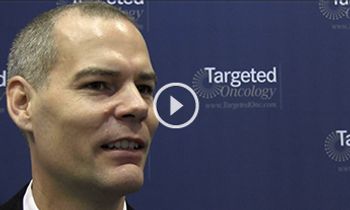
Peter Martin, MD, discusses the evolving paradigm of treatment for mantle cell lymphoma. Martin says the evolution of the paradigm currently includes Bruton's tyrosine kinase inhibitor, phosphoinositide 3-kinase inhibitor, immunomodulatory treatments, and immunotherapies.

​John McCarty, MD, medical director, Bone Marrow Transplant Program, Virginia Commonwealth University Health, discusses advice physicians can give to patients with lymphoma seeking stem cell mobilization.

Patrick Johnston, MD, PhD, assistant professor of medicine, Mayo Clinic, discusses a phase I study that incorporated belinostat with standard CHOP chemotherapy for patients with newly diagnosed peripheral T-cell lymphoma. Johnston says the goal of the trial was to discover the maximum tolerable dose. He said there were no additional significant toxicities in patients and the combination was well-tolerated.

Kathryn Kolibaba, MD, discusses results from the phase II trial dubbed Pyramid Trial. The open-label trial examined a combination of R-CHOP and bortezomib in patients with untreated non-germinal center B-cell-like subtype diffuse large cell lymphoma.
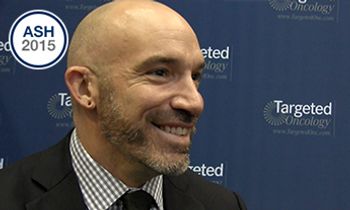
Jeffrey Jones, MD, discusses small molecule inhibitors of B-cell receptor signaling in chronic lymphocytic leukemia (CLL).

Amy Johnson, PhD, discusses the overall high response rates in patients with chronic lymphocytic leukemia (CLL) to a new novel bruton tyrosine kinase (BTK) inhibitor called acalabrutinib (ACP-196).
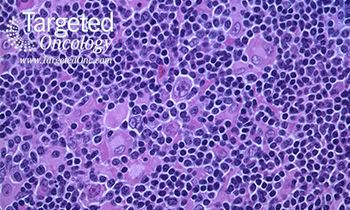
In this review, our authors discuss the mechanism of action and clinical development of various checkpoint inhibitors in lymphoma.

Ibrutinib (Imbruvica) saw over 80% response in patients with treatment-refractory Waldenstrom

Two CD19-targeted chimeric antigen receptor (CAR)-modified T-cell therapies showed complete response (CR) rates from 90% to 100% in patients with high-risk acute lymphoblastic leukemia (ALL), according to data from two studies presented during the 2015 ASH Annual Meeting.

Updated data shows chimeric antigen receptor (CAR)-modified T-cell therapies continue to remain effective for patients with non-Hodgkin lymphoma (NHL), according to findings presented at the 2015 ASH Annual Meeting.

Ibrutinib reduced risk of death by 84% against chlorambucil in treatment-naive elderly patients with chronic lymphocytic leukemia, or small lymphocytic lymphoma.

Leonard says some of the more interesting studies to crop up in the field of Hodgkin's lymphoma include ones that utilize checkpoint inhibitors, as well as one of the first combination immunotherapies to be used in the disease
Andre Goy, MD, MS, chief, John Theurer Cancer Center's Division of Lymphoma, talks about the emerging novel therapies in diffuse large B-cell lymphoma (DLBCL).

When John P. Leonard, MD, spoke at the American Society of Hematology inaugural meeting on Hematologic Malignancies about mantle cell lymphoma (MCL), he balanced his enthusiasm about the emerging benefits that tumor profiling brings to this disease with an acknowledgement that many important questions about mantle cell lymphoma remain unanswered.

The development of novel targeted drugs, such as brentuximab vedotin (Adcentris), against discrete cell surface proteins, such as CD30, has awakened a new way of thinking about targeted cancer biology

Almost 10 years following a study that proved intraperitoneal (IP), or abdominal, chemotherapy, along with intravenous (IV) therapy, may add 16 months or more to the lives of women with ovarian cancer, less than half of these patients at US hospitals receive this type of treatment

Treatment with the PD-1 inhibitor nivolumab demonstrated durable objective response rates in patients with classical Hodgkin lymphoma, diffuse large B-cell lymphoma, and follicular lymphoma.

Catherine M. Diefenbach, MD, assistant professor, Department of Medicine, NYU Langone Medical Center, discusses the efficacy of two doses of polatuzumab vedotin (POV) in patients with relapsed/refractory (RR) follicular lymphoma (FL).
Treatment with obinutuzumab in combination with bendamustine nearly doubled progression-free survival compared with bendamustine alone in patients with rituximab-refractory indolent non-Hodgkin lymphoma.

Common AEs associated with brentuximab vedotin, such as peripheral neuropathy and neutropenia, are often manageable with modifications to dose and schedule.

Duvelisib (IPI-145) is an orally administered, dual inhibitor of phosphoinositide 3-kinase (PI3K) delta (δ) and gamma (γ) isoforms, and the drug is selective for PI3K class I isoforms over other lipid and protein kinases.
The focus in non-Hodgkin lymphoma (NHL) now needs to shift to predictive biomarkers, according to Randy Gascoyne, MD.
To gain new insight on bortezomib’s use in the frontline MCL setting, Targeted Oncology interviewed Andrew Evens, DO, MSc, director of the Tufts Cancer Center.
Advertisement
Advertisement
Trending on Targeted Oncology - Immunotherapy, Biomarkers, and Cancer Pathways
1
Plinabulin Receives FDA Fast Track Designation in Post-ICI NSCLC
2
FDA Oncology Recap: Approvals, Designations, and Decisions in September 2026
3
Denosumab Biosimilar Approved For Existing Oncology Indications
4
CEPHEUS and Frontline Treatment in Newly Diagnosed Multiple Myeloma
5