



Follicular Lymphoma
Latest News
Advertisement
Video Series


Latest Videos












































Advertisement
More News

Stephen Schuster, MD, discusses findings from follow-up of the phase 2 ELARA study presented at the 2023 ASH Annual Meeting.
Treatment with single-agent pirtobrutinib showed encouraging efficacy with a tolerable safety profile in a cohort of heavily pretreated patients with relapsed/refractory follicular lymphoma.
Investigators report no new safety signals in patients with relapsed/refractory follicular lymphoma following treatment with tisagenlecleucel infusion.
The FDA breakthrough drug designation for epcoritamab in follicular lymphoma was supported by findings from the phase 1/2 EPCORE NHL-1 study.
Priority review to the biologics license application for odronextamab has been granted by the FDA for adult patients with follicular lymphoma and diffuse large B-cell lymphoma.

John M. Burke, MD, discusses how Bruton tyrosine kinase inhibitors have demonstrated unexpected promise in treating follicular lymphoma, challenging previous assumptions in the field of oncology.

CD19-direct CAR T-cell therapies and the CD20-targeted bispecific antibodies both represent a viable treatment choice for patents with relapsed/refractory follicular lymphoma.
In an interview, Brad S. Kahl, MD, discussed the changes in the field of follicular lymphoma and how physicians should approach treatment.
The use of bispecific antibodies has the potential to revolutionize the management of FL.

Treatment with liso-cel had a manageable safety profile with no new safety signals in patients with relapsed/ refractory follicular lymphoma.

Epcoritamab plus rituximab/lenalidomide demonstrated antitumor activity in patients with relapsed/refractory follicular lymphoma, including those with high-risk features.
Matthew Matasar, MD, discusses the development of mosunetuzumab and how it is a positive step forward in the field of follicular lymphoma treatment.

An analysis of Medicare patients with follicular lymphoma revealed which characteristics correlated with overall survival.
In the pivotal phase 2 GO29781 study, the objective response rate and response durability was high, leading to the FDA approval of mosunetuzumab for the treatment of relapsed or refractory follicular lymphoma.

Phase 2 study results show the durability of response associated with mosunetuzumab in patients with relapsed or refractory follicular lymphoma.
Christopher J. Melani, MD, discusses the combination regimen from the ViPOR study evaluating patients with aggressive lymphomas.
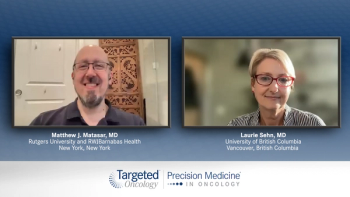
Closing out their discussion on bispecific antibody therapies, Matthew Matasar, MD and Laurie Sehn, MD, consider ongoing clinical trials and real-world use of these novel agents.
High objective response and complete response rates observed with mosunetuzumab in patients with relapsed/refractory follicular lymphoma.
Sarah C. Rutherford, MD, discussed how findings from her research could impact the current guidelines for follicular lymphoma.
The FDA has granted priority review to an approval application for mosunetuzumab for the treatment of patients with relapsed or refractory follicular lymphoma.
The European Commission has granted a conditional marketing authorization to mosunetuzumab for the treatment of adult patients with relapsed or refractory follicular lymphoma who have previously received at least 2 prior systemic therapies
Zanubrutinib Plus Obinutuzumab Elicits Improved Responses in Relapsed/Refractory Follicular Lymphoma
The addition of zanubrutinib to obinutuzumab in patients with relapsed/refractory follicular lymphoma demonstrated improved overall response rates, progression-free survival, and overall survival.

Findings from an arm of the EPCORE NHL-2 trial, presented at the 2022 ASCO Annual meeting, showed promising antitumor activity in patients with relapsed or refractory follicular lymphoma on subcutaneous epcoritamab combined with rituximab and lenalidomide.
The FDA has granted accelerated approval to tisagenlecleucel for the treatment of adult patients with relapsed/refractory follicular lymphoma after receiving 2 or more lines of systemic therapy.
Match-adjusted analysis of patients with follicular lymphoma treated with axicabtagene ciloleucel in the ZUMA-5 trial vs those treated with tisagenlecleucel in ELARA showed a similar outcomes in regard to efficacy between the 2 cellular therapies.
Advertisement
Advertisement
Trending on Targeted Oncology - Immunotherapy, Biomarkers, and Cancer Pathways
1
SOT106 Receives New FDA FTD and ODD in Sarcoma
2
Luciano Costa, MD, Discusses the Changing Treatment Paradigm in Myeloma
3
Global Experts Define Consensus Criteria for Cure in Multiple Myeloma
4
Dr Matous on Moving T-Cell Redirection Into Frontline Myeloma Care
5