


Follicular Lymphoma
Latest News


Mosunetuzumab Elicits High Remission Rates in Relapsed/Refractory Follicular Lymphoma
By Jordyn Sava
Bone Marrow Biopsies Do Not Add Value in Follicular Lymphoma Clinical Trials
By Jordyn Sava
Advertisement
Latest Videos










































Advertisement
More News

Zanubrutinib Plus Obinutuzumab Elicits Improved Responses in Relapsed/Refractory Follicular Lymphoma
The addition of zanubrutinib to obinutuzumab in patients with relapsed/refractory follicular lymphoma demonstrated improved overall response rates, progression-free survival, and overall survival.

Findings from an arm of the EPCORE NHL-2 trial, presented at the 2022 ASCO Annual meeting, showed promising antitumor activity in patients with relapsed or refractory follicular lymphoma on subcutaneous epcoritamab combined with rituximab and lenalidomide.

The FDA has granted accelerated approval to tisagenlecleucel for the treatment of adult patients with relapsed/refractory follicular lymphoma after receiving 2 or more lines of systemic therapy.
Match-adjusted analysis of patients with follicular lymphoma treated with axicabtagene ciloleucel in the ZUMA-5 trial vs those treated with tisagenlecleucel in ELARA showed a similar outcomes in regard to efficacy between the 2 cellular therapies.
The FDA discouraged marketing authorization for zandelisib based data from the phase 2 TIDAL study which examined the PI3K inhibitor in subjects with relapsed/refractory follicular lymphoma or marginal zone lymphoma.
Epcoritamab had been granted orphan drug designation by the FDA for the treatment of follicular lymphoma and is being studied in a phase 1/2 clinical trial.
“It's an exciting time with all the novel agent development in relapsed indolent lymphoma,” according to Brad S. Kahl, MD.
Without confirmed clinical benefit in follicular lymphoma and small lymphocytic leukemia, idelalisib's indications for these malignancies were withdrawn from the United States market.
The investigational agent glofitamab produced high responder rates in combination with obinutuzumab in multiple relapsed or refractory follicular lymphoma.
Based on findings from extended follow-up analysis of the phase 2 ELARA study, tisagenlecleucel is a beneficial treatment for patients with relapsed or refractory follicular lymphoma.
Monsunetuzumab induced deep and durable remission in patients with heavily pretreated follicular lymphoma.
The combination of obinutuzumab with polatuzumab vedotin, or lenalidomide may be a solution for the toxicity sometimes observed with chimeric antigen receptor T cells in patients with follicular lymphoma.
The post-marketing requirements for duvelisib are no longer necessary, according to the FDA, and the agent has been withdrawn from the United States market for the treatment of patients with relapsed or refractory follicular lymphoma.

Mark J. Roschewski, MD, discusses standard of care options for the treatment of follicular lymphoma.

The FDA is considering an application parsaclisib as treatment of patients with relapsed or refractory follicular lymphoma, marginal zone lymphoma, and mantle cell lymphoma, and granted priority review for 2 of the 3 indications.
The FDA has accepted a biologics license application for tisagenlecleucel and granted it priority review as a potential treatment for relapsed or refractory follicular lymphoma after 2 lines of therapy
A significant proportion of patients worldwide live disease-free for a decade or longer following first-line therapy, with various approaches suggesting that there may be pathways to develop approaches for a cure for at least a subset of patients
Obinutuzumab is associated with greater toxicity compare to rituximab in follicular lymphoma.
The study is currently recruiting in Chicago, Illinois.
According to Eliza A. Hawkes, MD, the phase 2 1st FLOR trial showed the positive efficacy of frontline nivolumab in combination with rituximab.
Enrollment in the phase 2b PARADIGME trial of 177Lu lilotomab satetraxetan (Betalutin) in patients with follicular lymphoma has continued despite the surge of the COVID-19 Delta variant.
The first patient with marginal zone lymphoma has been dosed in the global phase 2 TIDAL study of zandelisib, a phosphatidylinositol 3-kinase (PI3K) delta inhibitor, for the treatment of MZL and follicular lymphoma in patients who have received at least 2 or more prior therapies.
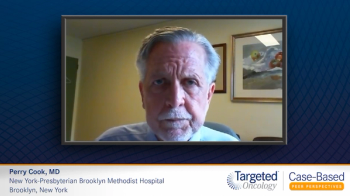
A hematologist/oncologist discusses the tazemetostat as a treatment option for patients with relapsed/refractory follicular lymphoma.
A key opinion leader explains the first-line treatment options for follicular lymphoma and the challenges of treating patients with early disease progression.
Perry Cook, MD, presents the case of a 76-year-old man with relapsed/refractory follicular lymphoma.
Advertisement
Advertisement
Trending on Targeted Oncology - Immunotherapy, Biomarkers, and Cancer Pathways
1
SOT106 Receives New FDA FTD and ODD in Sarcoma
2
Luciano Costa, MD, Discusses the Changing Treatment Paradigm in Myeloma
3
Global Experts Define Consensus Criteria for Cure in Multiple Myeloma
4
Dr Matous on Moving T-Cell Redirection Into Frontline Myeloma Care
5