





GYNECOLOGIC CANCERS
Latest News
Advertisement
Latest Videos



















































Advertisement
More News

Immunotherapy has especially demonstrated broad activity in cervical cancer, fueling development in this area and providing further signs of hope for new treatment options to come into the landscape with greater efficacy and manageable safety profiles.

Margarett C. Ellison, MD, MHA, FACS, FACOG, gynecologic oncologist for Gynecologic Oncology of Tallahassee, a Division of Florida Cancer Specialists & Research Institute, reviews potential immunotherapy treatments for Cervical Cancer Awareness Month.
Paclitaxel/Carboplatin Demonstrates Noninferiority to Paclitaxel/Ifosfamide in Uterine Carcinosarcoma
By Will Pizii
Phase 3 study findings show that paclitaxel combined carboplatin stands up to the combination of paclitaxel and ifosfamide for the treatment of patients with uterine carcinosarcoma.

In patients with recurrent and/or metastatic cervical cancer, the second-line combination of balstilimab and zalifrelimab may offer meaningful clinical benefit, but further research is needed.

Annelise Wilhite, MD, a gynecology oncology fellow at the University of South Alabama Health, discusses the difficulty in treating vulvar and vaginal melanomas.
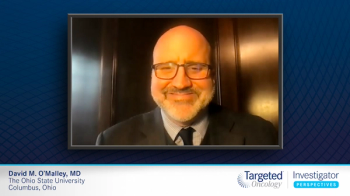
David M. O’Malley, MD, discusses the management of adverse events across various regimens for cervical cancer treatment and provides insight on future directions for disease management.
Dr David M. O’Malley comments on emerging agents in the pipeline for the treatment of recurrent/metastatic cervical cancer and shares his approach to the sequencing of therapies.
David M. O’Malley, MD, shares insight on data presented at SITC 2021 on the use of a second-generation, Fc-enhanced anti-CTLA4 antibody, AGEN1181, in patients with advanced cervical cancer as well as other solid tumors.
Dr David M. O’Malley reviews ESMO 2021 updates evaluating the use of combination anti-PD-1 and anti-CTLA4 agents for recurrent and metastatic cervical cancer.
An expert gynecologic oncologist discusses the rationale for using PD-L1 inhibitors and CTLA4 inhibitors in gynecologic cancers.
David M. O’Malley, MD, provides insight on the evolution of cervical cancer and reviews current systemic treatment options for recurrent and advanced disease.

Dana Chase, MD, discusses frontline therapy options for patients with advanced ovarian cancer.
he CINtec PLUS Cytology duel-stain biomarker technology was found to be more sensitive than Pap in detecting cervical precancer in women with HPV.
Even though most early stage adult patients with granulosa cell tumors experience an excellent outcome, up to 33% of patients will eventually develop a tumor relapse. Recurrence may be detected many years after the initial treatment, thus prolonged surveillance is necessary.

Pembrolizumab is now FDA approved in combination with chemotherapy and with or without bevacizumab, for the treatment of patients with persistent, recurrent or metastatic cervical cancer whose tumors express PD-L1.
The FDA has accepted and granted priority review to the supplemental biologics license application for the PD-1 inhibitor cemiplimab-wlc for the treatment of patients with recurrent or metastatic cervical cancer whose disease progressed on or after chemotherapy.
Tisotumab vedotin has become the first and only approved antibody-drug conjugate for the treatment of recurrent or metastatic cervical cancer with disease progression on or after chemotherapy.

Tisotumab vedotin elicited significant responses without prohibitive toxicity in combination with carboplatin as frontline therapy, as well as in combination with pembrolizumab as second- or third-line therapy in patients with recurrent or metastatic cervical cancer.
In patients with persistent, recurrent, or metastatic cervical cancer the addition of pembrolizumab to chemotherapy with or without bevacizumab significantly improved survival and response rates.

High responses to single-agent dostarlimab-gxly were seen in patients with endometrial cancer who had a high tumor mutational burden, irrespective of mismatch repair or microsatellite stability status.
The first patient with a locally advanced or metastatic solid tumor has been dosed with buparlisib in combination with A0025 with or without atezolizumab in a phase 1a clinical trial.
In an interview with Targeted Oncology, Melissa K. Frey, MD, discussed findings from implementing web-based health information collection of family history in patients with gynecologic cancers.
In an interview with Targeted Oncology™, Isabelle Ray-Coquard, MD, PhD, discussed the NEOPEMBROV study in greater detail and the benefits of adding pembrolizumab to perioperative treatment for serous carcinoma deemed non-optimally resectable.
In an interview with Targeted Oncology™, Shannon N. Westin, MD, MPH, FACOG, discussed the need for the DUO-E trial in the endometrial cancer space and the unique patient population the study will evaluate.
Advertisement
Advertisement
Trending on Targeted Oncology - Immunotherapy, Biomarkers, and Cancer Pathways
1
Plinabulin Receives FDA Fast Track Designation in Post-ICI NSCLC
2
FDA Oncology Recap: Approvals, Designations, and Decisions in September 2026
3
Denosumab Biosimilar Approved For Existing Oncology Indications
4
CEPHEUS and Frontline Treatment in Newly Diagnosed Multiple Myeloma
5