





GYNECOLOGIC CANCERS
Latest News
Advertisement
Latest Videos

















































Advertisement
More News

In an interview with Targeted Oncology, Melissa M. Hardesty, MD, explained the state of gynecologic oncology treatment for rural patients in Alaska and how research is finding answers for improving clinical outcomes.

In an interview with Targeted Oncology, Bradley Monk, MD, FACCOG, FACS, discusses the OUTBACK trial, including the results, strengths, and challenges.

The FDA has approved the combination of lenvatinib and pembrolizumab for the treatment of patients with advanced endometrial cancer that is not microsatellite instability–high or mismatch repair deficient, who have disease progression following prior systemic treatment and who are not candidates for curative surgery or radiation.
In an interview with Targeted Oncology, Eugene Ahn, MD, reviewed the data from the uterine cancer cohort of the TAPUR study and explained the implications of the findings.

Maurie Markman, MD, addresses different treatment options, including checkpoint inhibitors, for patients with endometrial cancer.
The combination of the anti-PD-1/PD-L1 therapy pembrolizumab with the platinum-based chemotherapy regimens paclitaxel plus cisplatin or paclitaxel plus carboplatin administered with or without bevacizumab improved both progression-free and overall survival in patients with persistent, recurrent, or metastatic cervical cancer, meeting the primary end point of the phase 3 KEYNOTE-826 trial.

The FDA has accepted the biologics license application for the anti-PD-1 antibody drug balstilimab for the treatment of recurrent of metastatic cervical cancer with disease progression on or after chemotherapy.

In season 2, episode 6 of Targeted Talks, Alexander B. Olawaiye, MD leads a discussion with Haider S. Mahdi, MD, about the modern approaches to treating cervical and endometrial cancers.

In an interview with Targeted Oncology, held during the 2021 ASCO Annual Meeting, Travis Sims, MD, MPH, discussed the treatment of HRD-positive ovarian cancer and the retrospective analysis of HRD status and its impact of survival outcomes for this patient population.
In patients with ERBB2/ERBB3-expressed, mutated, or -amplified uterine cancer, the combination of pertuzumab and trastuzumab led to a 37% disease control rate, according to results from the Targeted Agent Profiling and Utilization Registry study.

In women with locally advanced cervical cancer, administering adjuvant chemotherapy following standard cisplatin-based chemoradiation did not improve survival outcomes, according to findings from the phase 3 OUTBACK trial.
In an interview with Targeted Oncology following the medical conference presentation, Ritu Salani, MD, expanded on the role biomarkers play in the treatment of cervical cancer, how this testing looks in the everyday clinics, and how it can potentially change pending competition of ongoing clinical trials.
For the past 17 years, HPV-related cervical cancer has been declining, however, other tumors related to the virus continue to remain steady.

Annelise Wilhite, MD, discusses a clinical investigation of survival in patients with vulvar/vaginal melanomas.

The FDA has granted priority review to 2 supplemental new drug applications for the combination use of pembrolizumab and lenvatinib.
In an interview with Targeted Oncology, Ursula A. Matulonis, MD, discusses results from further follow-up of patients with ovarian cancer treated in the ENGOT-OV16/NOVA.
Here is a look back at the FDA happenings from the month of April 2021.
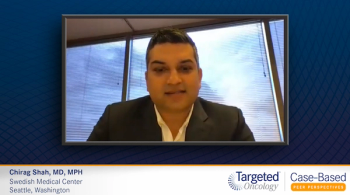
A leader in gynecologic oncology, Chirag Shah, MD, MPH, provides insight into the future of ovarian cancer by discussing the potential for immunotherapy, TP53 inhibition, and novel therapeutics on the horizon.
Chirag Shah, MD, MPH, discusses platinum sensitivity vs resistance impact treatment selection in subsequent lines of therapy.
An expert in gynecologic oncology reviews the PRIMA and NOVA clinical trials and discusses their implications for the management of ovarian cancer.
Chirag Shah, MD, MPH, provides key insights into factors to consider when counseling patients with ovarian cancer on the available treatment options for maintenance therapy.
Key opinion leader in obstetrics and gynecology Chirag Shah, MD, MPH, discusses best practices for molecular testing and genetic counseling for patients with newly diagnosed or relapsed ovarian cancer.
Chirag Shah, MD, MPH shares insight into factors influencing the prognosis of patients with ovarian cancer.
Chirag Shah, MD, MPH, an expert in gynecologic oncology, provides an overview of the case of a 67-year-old woman with ovarian cancer by reviewing the patient’s initial presentation, clinical work-up, and treatment.
Chirag Shah, MD, MPH, an expert in gynecologic oncology, reviews the case of a 67-year-old woman with ovarian cancer and discusses factors to consider when selecting therapy including the recent results of the PRIMA and NOVA trials of niraparib in patients with ovarian cancer.
Advertisement
Advertisement
Trending on Targeted Oncology - Immunotherapy, Biomarkers, and Cancer Pathways
1
Plinabulin Receives FDA Fast Track Designation in Post-ICI NSCLC
2
FDA Oncology Recap: Approvals, Designations, and Decisions in September 2026
3
Denosumab Biosimilar Approved For Existing Oncology Indications
4
CEPHEUS and Frontline Treatment in Newly Diagnosed Multiple Myeloma
5