



GYNECOLOGIC CANCERS
Latest News
Advertisement
Latest Videos














































Advertisement
More News

Hays says current genetic testing gives oncologists a wide variety of information that may make choosing the correct treatment "a little more difficult." Hays adds that within the current treatment paradigm of gynecologic cancer, oncologists are mainly focusing on BRCA mutations.

Researchers are now working on refining the use of PARP inhibitors in ovarian cancer by gaining a greater understanding of mechanisms of resistance and exploring combination and sequencing possibilities. For expert insight on these topics, Targeted Oncology sat down with Shannon Westin, MD.
Trabectedin (Yondelis) improved progression-free survival (PFS) when compared with dacarbazine in women with advanced uterine leiomyosarcoma, according to a subgroup analysis of the phase III SAR-3007 trial.

Single-dose fosaprepitant dimeglumine (Emend for injection) in combination with antiemetic agents has been approved by the FDA for the preventing

Results from The Cancer Genome Atlas (TCGA) have shown that alterations in gene copy number (ie, amplifications or deletions) are an important characteristic of high-grade serous ovarian cancers (HGSOC).

A recent preclinical study conducted by researchers at the The University of Chicago Medical Center suggests that the antibiotic monensin may be effective in combating such a malignancy.
The use of computed-tomography (CT)-planned high-dose-rate (HDR) intracavitary brachytherapy (BT) demonstrated excellent local control (LC) and survival for patients with stage I/II cervical carcinoma.
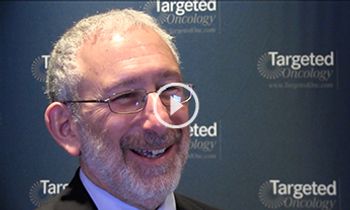
Maurie Markman, MD, discusses characterizing tumor types in ovarian cancer and treating the malignancy with checkpoint inhibitors.
Michael Birrer, MD, PhD, discusses several international phase III trials showing bevacizumab significantly prolonging progression free survival in patients with ovarian cancer.

Yael Cohen, MD, discusses VB111, a highly targeted anti-angiogenic agent. The treatment is currently going through a phase III trial for treating glioblastoma, phase I trial for thyroid cancer and phase II trial for ovarian cancer.

An orphan drug designation has been granted to the multi-epitope folate receptor alpha (FRα) vaccine TPIV 200 as a treatment for patients with ovarian cancer by the FDA.

A correlation was drawn between adjuvant hormone therapy (AHT) and a 37% reduction in the risk of death in women with epithelial ovarian cancer, according to results of a 24-year study.

A new method of screening utilizing CA-125 and a risk assessment algorithm could drop risk of mortality from ovarian cancer in certain women, according to findings from the UK Collaborative Trial of Ovarian Cancer Screening.

A follow-up benefits analysis of adding denosumab to aromatase inhibitor (AI) therapy shows the agent not only helps prevent fractures, it also reduces risk of recurrence and death in postmenopausal women with HR-positive breast cancer.

Implementation of the Affordable Care Act (ACA) may have helped increase the number of women whose cases of cervical cancers were found and treated early, according to a study published in JAMA.

Ovarian cancer outcomes appear to be improved in women with a history of oral contraceptive use, according to a retrospective study recently published in BMC Cancer.

Details of a new technology for studying tumor metabolism have been published in Nature Materials, whereby a cellulose strip containing tumor cells was wrapped around a metal core and incubated, mimicking conditions consistent with in vivo tumors.

Tamar Safra, MD, talks about research into treatments for specific types of ovarian cancer.
Michael Birrer, MD, PhD, on treatments targeting either VEGF or ANG2 in gynecologic cancers.

Thomas Herzog, MD, on the cautions of interval debulking surgery in ovarian cancer and its difference from neoadjuvant treatment. Herzog said interval debulking surgery entails an initial, maximum surgical effort that is followed up by chemotherapy.
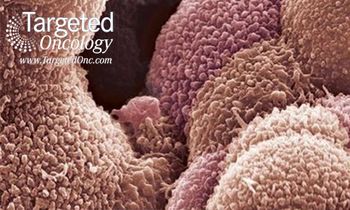
UCLA researchers have discovered a new drug that helps reduce ascites in patients with ovarian cancer through inhibiting certain receptors.

Patients with ovarian cancer who have high-to-medium expression of folate receptor alpha responded well overall to mirvetuximab soravtansine.
Neoadjuvant chemotherapy is increasingly used in advanced ovarian cancer, even though it has not been shown to improve survival versus primary cytoreduction.

Jeffrey R. Infante, MD director of Drug Development, Sarah Cannon Research Institute, talks about the anti-PD-L1 antibody avelumab in patients with previously treated, recurrent or refractory ovarian cancer.

While immune checkpoint inhibitors initially showed promise in patients with ovarian cancer, results still need to be validated by larger randomized trials.
Advertisement
Advertisement
Trending on Targeted Oncology - Immunotherapy, Biomarkers, and Cancer Pathways
1
Plinabulin Receives FDA Fast Track Designation in Post-ICI NSCLC
2
FDA Oncology Recap: Approvals, Designations, and Decisions in September 2026
3
Denosumab Biosimilar Approved For Existing Oncology Indications
4
CEPHEUS and Frontline Treatment in Newly Diagnosed Multiple Myeloma
5