



GYNECOLOGIC CANCERS
Latest News
Advertisement
Latest Videos



















































Advertisement
More News
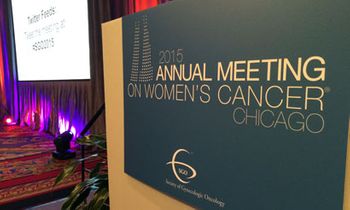
A 2:1 open-label phase II trial of the FANG vaccine achieved a marked delay in time to progression, in all 14 of 21 patients with stage III/IV ovarian cancer who participated. The other 7 patients did not receive the vaccine.
Robert L. Coleman, MD, FACOG, FACS, professor, The University of Texas MD Anderson Cancer Center, discusses the results and key takeaways from GOG0213.

Cancer proliferates when a rogue, transformed cell wins a sophisticated hide-and-seek game against the immune system. Immunotherapy activates the patient’s immune system to recognize and fight the tumor cells.

Recent advancements in the treatment of ovarian cancer have led the National Comprehensive Cancer Network to make changes to their clinical practice guidelines in its 20th annual edition.
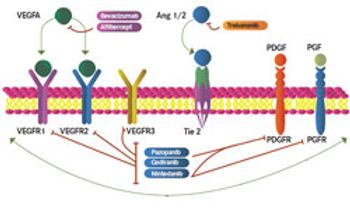
Novel antitumor agents are currently being evaluated in clinical trials for use in various gynecological cancers.

Growth in healthcare spending in the United States continues to outpace growth in European countries that enjoy a similar standard of living.

Jason D. Wright, MD, from Columbia University, discusses clinical trial designs in ovarian cancer.
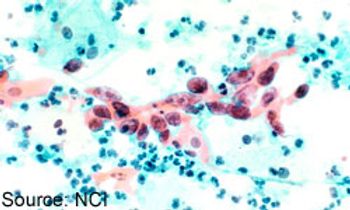
The search for gynecologic cancer biomarkers that are prognostic or predictive of patient responses to treatment is an active and fruitful area of investigation.

Only about 5% of patients with cancer are recruited into oncology clinical trials, raising a concern that unless this improves, progress in the development new treatments for cancer may be delayed.

Response rates to standard platinum-based chemotherapy among patients with the clear cell subtype of ovarian cancer are especially low, necessitating new treatment targets.

To gain insight into the integration of olaparib (Lynparza) into clinical practice, Targeted Oncology interviewed Ursula A. Matulonis, MD, medical director of gynecologic oncology at Dana-Farber Cancer Institute.

Novartis Oncology hopes to overcome many of these challenges with the innovative Signature Clinical Trial program, which “bring[s] the ‘Protocol to the Patient.

An orphan drug designation has been granted to Reolysin (wild-type reovirus) for the treatment of patients with ovarian cancer.

Screening techniques for use in the general population have long been available for cervical cancer and are being actively developed for ovarian cancers.

A panel of expert clinical investigators discussed details of several treatments and a dozen patient cases involving gastric, colorectal, and pancreatic cancer at a satellite meeting of the 2015 ASCO GI Cancers Symposium.

Targeted agents have become available in recent years to treat many major cancers, but for women with ovarian cancer, standard treatment following cytoreductive surgery remains systemic intravenous/intraperitoneal chemotherapy with a platinum agent and a taxane. Approximately 80% of women who receive first-line treatment with this platinum-based regimen experience relapsed disease. However, early research indicates that more and better options may be on the way.

Representatives Diana DeGette (D, Colorado) and Fred Upton (R, Michigan) recently released a "discussion draft" of the 21st Century Cures Act.

Donna McNamara, MD, discusses PARP inhibitors for the treatment of ovarian cancer.

Manish A Shah, MD, talks about a recent phase II study of FOLFOX with or without onartuzumab, a MET inhibitor, for the treatment of metastatic gastroesophageal adenocarcinoma.

Metastatic disease accounts for the vast majority of cancer-related deaths. Ensuring a definitive diagnosis and the most effective treatment in a timely fashion is essential for extending life expectancy.

In the past decade, there has been a rapid increase in the understanding of how various cancers develop and progress.

Patients with advanced, MET-amplified gastroesophageal cancer had a high likelihood of response to an investigational MET inhibitor, results from a preliminary, dose-escalation trial suggested.

The New York State Stem Cell Science Program recently awarded a 4-year $11.9 million grant to Roswell Park Cancer Institute to fund research and development of a stem-cell based treatment for ovarian cancer.

One of the leading non-clinical attributes that affect how oncologists decide which therapeutic agent to prescribe over another is patient affordability.
Jason D. Wright, MD, discusses progression-free survival (PFS) as an endpoint for ovarian cancer trials.
Advertisement
Advertisement
Trending on Targeted Oncology - Immunotherapy, Biomarkers, and Cancer Pathways
1
Plinabulin Receives FDA Fast Track Designation in Post-ICI NSCLC
2
FDA Oncology Recap: Approvals, Designations, and Decisions in September 2026
3
Denosumab Biosimilar Approved For Existing Oncology Indications
4
CEPHEUS and Frontline Treatment in Newly Diagnosed Multiple Myeloma
5