




HEAD & NECK CANCERS
Latest News
Advertisement
Latest Videos














































Advertisement
More News
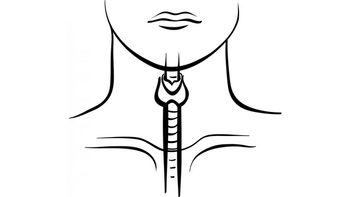
The rising prevalence of thyroid cancer and thyroid nodules, especially for differentiated thyroid cancer, has brought into question the management of disease as it is known today.
The FDA has granted Breakthrough Therapy Designation to cabozantinib for the potential treatment of patients with differentiated thyroid cancer that has progressed following prior therapy and who are radioactive iodine-refractory if eligible for radioactive iodine.
The FDA has granted a Breakthrough Therapy Designation to tipifarnib for the treatment of patients with recurrent or metastatic HRAS-mutant head and neck squamous cell carcinoma with variant allele frequency ≥ 20% after disease progression on platinum-based chemotherapy.
The FDA has granted Orphan Drug Designation to the small-molecule tyrosine kinase inhibitor apatinib for the treatment of the rare malignancy, adenoid cystic carcinoma.

Treatment with single-agent durvalumab did not improve overall survival when compared with the standard-of-care frontline combination of chemotherapy plus cetuximab as treatment of patients with recurrent or metastatic head and neck squamous cell carcinoma whose tumors highly expressed PD-L1.
Tislelizumab improved overall survival compared with investigator’s choice of chemotherapy in patients with advanced unresectable or metastatic esophageal squamous cell carcinoma who have received prior systemic therapy.
Biological activity was observed with dusquetide as treatment of severe oral mucositis in patients with head and neck cancer receiving chemoradiation in the pivotal phase 3 DOM-INNATE study.
Cabozantinib demonstrated significant improvement in progression-free survival in patients with radioiodine-refractory differentiated thyroid cancer who have progressed after up to 2 prior vascular endothelial growth factor receptor-targeted therapies compared with placebo, meeting the primary end point of the pivotal phase 3 COSMIC-311 clinical trial.

The addition og xevinapant to standard cisplatin-based concomitant fractionation chemoradiation therapy led to a reduction in the risk of mortality as treatment of patients with locally advanced squamous cell carcinoma of the head and neck.

Debio 1143, a potential first-in-class inhibitor of apoptosis proteins, demonstrated a statistically and clinically significant overall survival improvement when used in combination with chemoradiotherapy as treatment of patients with high-risk locally advanced squamous cell carcinoma of the head and neck, according to a press release from Debiopharm.

Avelumab in combination with a novel HPV16-targeted vaccine, demonstrated clinical activity as treatment of patients with HPV16-positive recurrent and/or metastatic malignancies.

Christopher Nutting, MD, discusses the results of a randomized phase 3 trial using dysphagia-optimized intensity modulated radiotherapy versus standard IMRT in patients with head and neck cancer.

“Today’s approval for the prevention of HPV-related oropharyngeal and other head and neck cancers represents an important step in Merck’s mission to help reduce the number of men and women affected by certain HPV-related cancers.”

Overall, these data support the use of pembrolizumab and pembrolizumab plus chemotherapy as first-line treatment of patients with relapsed and/or metastatic HNSCC.
Robert L. Ferris, MD, PhD, discusses the rationale for evaluating STING agonists as treatment for patients with head and neck cancers.
The FDA has accepted and granted a priority review to a supplemental Biologics License Application for pembrolizumab for the treatment of adult and pediatric patients with unresectable or metastatic solid tumors with tissue tumor mutational burden-high who have progressed following prior treatment and who have no satisfactory alternative treatment options.
An association was found between a lower risk of grade 3 or higher chemotherapy toxicity with higher body mass indexes and normal albumin, a protein made in the liver, levels in older adult patients with solid tumors, according to an analysis of a prospective, multicenter study.
A sudden surge in the cases of COVID-19 due to pandemic, along with efforts to contain it, has led to multiple challenges that no country has experienced in the last several decades. The global pandemic from COVID-19 poses a unique set of challenges not only for patients with cancer who need their treatment, but also for caregivers, oncologists, and the overall care team.
In an interview with Targeted Oncology, Kashyap Patel, MD, discussed the COVID-19 pandemic and the implementation of new precautions in his practice as the number of COVID-19 infected persons rises in the state.<br />
Patients harboring IDH1/2 muta­tions may receive benefit by the use of PARP inhibitors, with investigators initi­ating clinical trials in patients across multiple different tumor types to determine the efficacy of this strategy.
Treatment with pembrolizumab demonstrated antitumor activity along with tolerable toxicity in patients with 4 different rare and hard-to-treat malignancies, according to results from a phase II study led by The University of Texas MD Anderson Cancer Center researchers and published in the Journal for ImmunoTherapy of Cancer.
The FDA has accepted a Biologics License Application for MYL-1402O, a proposed biosimilar to bevacizumab, according to a press release from co-developers Biocon and Mylan. The BLA is seeking approval for the biosimilar as a treatment for multiple types of cancer and the FDA has set an action date goal of December 27, 2020, for a decision on the BLA.
As the new coronavirus disease 2019 creates problems internationally, health-wise and economically, it is also becoming a cause for concern throughout the oncology community.
In February 2020, the FDA gave indications to multiple therapies meant for treatment of solid tumor and hematologic malignancies. FDA action included 10 Priority Reviews, 2 Breakthrough Therapy designations, and 2 Fast Track designations.

To help clinicians cope with an increasing number of geriatric patients with cancer, the Association of Community Cancer Centers is addressing this problem with a 2-pronged approach that focuses on the delivery of care and diagnostic assessment.
Advertisement
Advertisement
Trending on Targeted Oncology - Immunotherapy, Biomarkers, and Cancer Pathways
1
FDA Oncology Recap: Approvals, Designations, and Decisions in September 2026
2
New Drug Application Filed for Savolitinib/Osimertinib in MET+ NSCLC
3
Plinabulin Receives FDA Fast Track Designation in Post-ICI NSCLC
4
Luciano Costa, MD, Discusses the Changing Treatment Paradigm in Myeloma
5