


HEMATOLOGY
Latest News
Advertisement
Latest Videos


CME Content






































Advertisement
More News

Two-year follow up data of the phase 3 ASPEN study shows support for the long term benefits of zanubrutinib in patients with previously treated Waldenström macroglobulinemia.

Despite a favorable vote by the Oncologic Drugs Advisory Committee, the FDA has opted not to approve remestemcel-L for the treatment of pediatric steroid-refractory acute graft-vs-host disease.
Ben Derman, MD, discusses next steps for using minimal residual disease-guided discontinuation of maintenance therapy in patients with multiple myeloma.
The phase 1 study is evaluating the combination of a CD19-targeting chimeric antigen receptor and an orthogonal IL-2 in patients with CD19-positive hematologic malignancies.
The REACH3 study showed ruxolitinib to elicit a high efficacy rate and have a manageable safety profile in patients with chronic graft-versus-host disease.

The categories of steroid refractory gvhd are discussed: intolerant, unresponsive, and dependent.

The group discusses treatment goals and patient education for chronic GVHD.
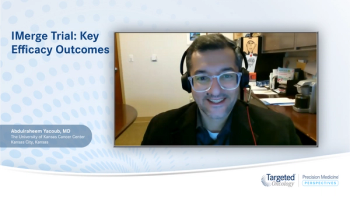
Following the 2023 ASCO Annual Meeting, Abdulraheem Yacoub, MD, reviews key data updates from the IMerge trial investigating imetelstat in patients with lower-risk MDS.

Positive topline results from the AGAVE-201 trial have led the companies to submit a biologics license application to the FDA by the end of 2023.
During a Targeted Oncology™ Case-Based Roundtable™ event, Daniel Pollyea, MD, MS, and participants discussed the diagnosis and treatment of a patient with blastic plasmacytoid dendritic cell neoplasm.

Dr Chen and Dr Cutler review a clinical case and discuss GVHD assessment for the patient.

Dr Lee shares an overview of therapy and supportive care options for chronic GVHD according to the severity of a symptom.
During a Targeted Oncology™ Case-Based Roundtable™ event, Doris M. Ponce, MD, and participants discussed treatment goals and management of graft-vs-host disease.
Utilizing the combination of inotuzuamb ozogamicin and low intensity chemotherapy, with or without blinatumoamab, showed promising results, but also an increase of patient deaths during remission.

Corey Cutler details the NIH Clinical Scoring of Organ System for chronic GHVD symptoms.
Colleen Danielson, NP, walks through how chronic GVHD symptoms are assessed.

Catherine J. Lee, MD, MS, associate professor of medicine in the Clinical Research Division at Fred Hutchinson Cancer Center in Seattle, Washington, led a live virtual discussion on how to treat patients with chronic graft-vs-host disease (GVHD) and how best to assess the extent of their disease.
The panelists share their insights on the identification of patients at high risk for GVHD.
Dr Chen presents statistics on the incidence of chronic graft versus host disease.
In an interview with Targeted Oncology, George Nahas, DO, discussed relevant research on chimeric antigen receptor therapy, bispecifics, and more that are moving the needle in multiple myeloma research.

The partial clinical hold on the TakeAim Leukemia trial exploring emavusertib in patients with acute myeloid leukemia and myelodysplastic syndrome has been lifted.
During a Targeted Oncology™ Case-Based Roundtable™ event, Danko Martincic, MD, outlined the definition, risk factors, and treatment for patients with tumor lysis syndrome.
Yi-Bin Chen leads the panel in a review of various GVHD prophylaxis regimens.
In the first article of this series, Elias Jabbour, MD, gives an overview of myelodysplastic syndrome and discusses the evolving treatment landscape.
In the first installment of this series, Elias Jabbour, MD, provides an overview of myelodysplastic syndrome, discusses the current treatment landscape for lower-risk MDS, and offers insights on factors that influence treatment selection.
Advertisement
Advertisement
Trending on Targeted Oncology - Immunotherapy, Biomarkers, and Cancer Pathways
1
Subcostal Robotic Surgery Cuts Thoracic Pain
2
FDA Grants Final Approval to Cabozantinib Capsule Formulation
3
David DiBardino, MD, on the Rationale for Intratumoral Therapy in Lung Cancer
4
Risk-Adapted Quadruplet Therapy Sustains 5-Year Survival Benefit in High-Risk Myeloma
5