



HEMATOLOGY
Latest News
Advertisement
Latest Videos


CME Content






































Advertisement
More News
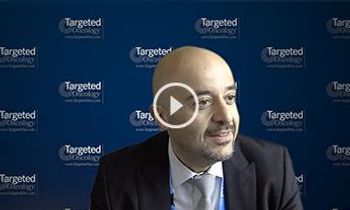
Rami Komrokji, MD, discusses the different systems of classifying myelodysplastic syndrome.
OMS906, a MASP-3 inhibitor, demonstrated clinical efficacy in a proof-of-concept study for patients with paroxysmal nocturnal hemoglobinuria, according to an interim analysis presented at the 2023 EHA Congress.

In a phase 3 study, imetelstat has shown prolonged transfusion independence and hemoglobin increase in the relapsed or refractory myelodysplastic syndrome population.

Results from the phase 3 COMMANDS study were presented in a press briefing ahead of the 2023 ASCO Annual Meeting.

The FDA has approved avapritinib for adult patients with indolent systemic mastocytosis based on findings from the phase 2 PIONEER trial.

A phase 3 trial evaluating roxadustat for the treatment of anemia in patients receiving concurrent chemotherapy for non-myeloid malignancies met its primary end point.
The proportion of patients with myelodysplastic syndromes who achieved red blood cell transfusion independence in the first 28 weeks was 47.5% for patients given roxadustat vs 33.3% for patients given placebo for the treatment of anemia.
Yazan Samhouri, MD, discusses some of the current research that his team at AHN is working on.

In an interview with Targeted Oncology, Adam J. Olszewski, MD, discussed mosunetuzumab and the rationale and findings of this phase 1b/2 study assessing the agent in elderly patients with diffuse large B-cell lymphoma.
Findings from the COMMANDS study in which luspatercept showed statistically significant and clinically meaningful improvements for patients with low-risk myelodysplastic syndrome, the FDA has set a target action date of August 28, 2023.

Multiple cases of unacceptable toxicity requiring dose reductions have occurred in a phase 1 study of MT-0169 in patients with relapsed or refractory multiple myeloma or non-Hodgkin lymphoma. The FDA has placed a partial clinical hold on the study

Gayathri Ravi, MD, discusses the role minimal residual disease plays in decision making and treating patients with hematologic malignancies.

During a Targeted Oncology™ Case-Based Roundtable™ event, Hetty E. Carraway, MD, MBA, discussed with participants diagnosing and treating patients with BPDCN, as well as the remaining challenges in this space.

The largest registrational study of immune checkpoint inhibitor therapy in relapsed/refractory extranodal natural killer/T-cell lymphoma showed potent and durable antitumor activity with sugemalimab.

Abdulraheem Yacoub, MD, offers closing thoughts on the future myelofibrosis treatment landscape, with a focus on treatments under investigation.
A detailed overview on monitoring patients with myelofibrosis, and signs that a treatment isn’t effective.
An expert on myelofibrosis discusses recently updated data on momelotinib, which was recently submitted for FDA approval.
Abdulraheem Yacoub, MD, details the systemic therapy options for myelofibrosis and his approach to treatment sequencing.
A myelofibrosis expert discusses the indications for treatment initiation and transplantation for patients with myelofibrosis.
An expert on myeloproliferative neoplasms gives an overview of myelofibrosis and assessing patient risk.
Abdulraheem Yacoub, MD, presents the case of a 68-year-old woman with myelofibrosis and offers his initial impressions.
In an interview with Targeted Oncology, Guenther Koehne, MD, PhD, provided an overview of The Summit of Americas on Immunotherapies for Hematologic Malignancies and some of the recent and exciting advances being seen in the hematology space.
Gary J. Schiller, MD, discusses the treatment for blastic plasmacytoid dendritic cell neoplasm and what clinicians need to look out for when evaluating these rare occurrences.
The combination of CDK9 plus BTK inhibition has already demonstrated synergistic clinical efficacy vs BTK inhibition alone. Now, a clinical trial collaboration will evaluate PRT2527 and zanubrutinib for patients with hematologic malignancies.
Results were published from a phase 1b trial of patients with higher-risk myelodysplastic syndromes, showing strong efficacy and safety outcomes.
Advertisement
Advertisement
Trending on Targeted Oncology - Immunotherapy, Biomarkers, and Cancer Pathways
1
Subcostal Robotic Surgery Cuts Thoracic Pain
2
FDA Grants Final Approval to Cabozantinib Capsule Formulation
3
David DiBardino, MD, on the Rationale for Intratumoral Therapy in Lung Cancer
4
Risk-Adapted Quadruplet Therapy Sustains 5-Year Survival Benefit in High-Risk Myeloma
5