

HEMATOLOGY
Latest News
Advertisement
Latest Videos

CME Content






































Advertisement
More News
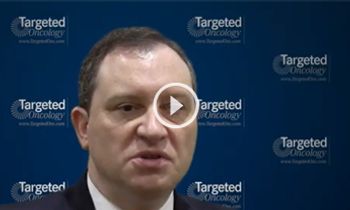
<br /> Richard R. Furman, MD, professor of medicine, Morton Coleman, MD Distinguished Professor of Medicine, director, Chronic Lymphocytic Leukemia Research Center, Weill Cornell Medicine, and attending physician, NewYork-Presbyterian Hospital, discusses the 42-month follow-up data of acalabrutinib monotherapy in patients with relapsed/refractory chronic lymphocytic leukemia.
Data from up to 6 years of long-term follow-up shows better progression-free survival, overall survival, objective response rates, and sustained efficacy for patients with chronic lymphocytic leukemia who receive single-agent ibrutinib in earlier lines of treatment, including those with high-risk prognostic factors. According to the poster presented by Paul M. Barr, MD, Division of Hematology/Oncology, Wilmot Cancer Institute, University of Rochester, Rochester, NY, during the 2019 American Society of Hematology Annual Meeting, first-line ibrutinib yielded deeper responses over time with 30% complete responses versus 10% to 12% CR for later lines of treatment.
Patients with high-risk chronic lymphocytic leukemia or small lymphocytic lymphoma who previously progressed on ibrutinib, responded well to treatment the CD19-directed CAR T-cell therapy lisocabtagene maraleucel and had manageable toxicity, according to updated findings from the phase I/II TRANSCEND CLL 004 study presented at the 2019 American Society of Hematology Annual Meeting and Exposition.

The administration of a higher initial dose of duvelisib at 75 mg BID led to a higher overall response rate of 62% compared with 40% in patients with relapsed/refractory peripheral T-cell lymphoma who received 25 mg BID, according to data from the dose-optimization phase of the PRIMO trial presented at the 2019 American Society of Hematology Annual Meeting.<br />
In the SEQUOIA trial, zanubrutinib, a Bruton’s tyrosine kinase inhibitor, showed continued high overall response rates for patients with chronic lymphocytic leukemia or small lymphocytic lymphoma, regardless of deletion 17p status, according to findings presented at the American Socitey of Hematology Annual Meeting and Exposition.
In the final analysis of the GADOLIN study in patients with rituximab-refractory indolent non-Hodgkin lymphoma, the combination of obinutuzumab plus bendamustine reduced the risk of progression or death by 43% compared with bendamustine alone. In patients with follicular lymphoma, the reduction was 49%.
Treatment with LOXO-305 prompted responses from more than half of patients with heavily pretreated B-cell malignancies, including patients with resistance or intolerance to other BTK inhibitors or BCL2 inhibitors, according to findings from the phase I/II BRUIN trial presented at the 2019 American Society of Hematology Annual Meeting and Exposition.
A 100% overall response rate was achieved with the combination of lenalidomide and obinutuzumab in patients with relapsed indolent non-Hodgkin lymphoma that was refractory to rituximab, according to findings of a single-arm, phase I/II trial presented at the 2019 American Society of Hematology Annual Meeting and Exposition.<br />
Findings from a subgroup analysis of the phase III AUGMENT trial of patients aged 70 or older with indolent non-Hodgkin lymphoma showed a 34% reduction in the risk of disease progression or death compared with rituximab plus placebo, according data presented at the 2019 American Society of Hematology Annual Meeting and Exposition.<br />
A high rate of rapid and durable complete responses were observed in patients with aggressive relapsed/refractory large B-cell lymphoma treated with lisocabtagene maraleucel.
In a phase I/II dose escalation study, there was a complete remission rate of 44% in patients with relapsed/refractory chronic lymphocytic leukemia receiving umbralisib, ublituximab, and venetoclax, according to findings presented at the 2019 ASH Annual Meeting.
Fixed-duration treatment with the combination of venetoclax plus obinutuzumab results in superior progression-free survival and high rates of undetectable minimal residual disease in patients with previously untreated chronic lymphocytic leukemia than chlorambucil plus obinutuzumab.
Patients with relapsed/refractory follicular lymphoma showed durable responses with the combination of polatuzumab-vedotin, obinutuzumab, and lenalidomide, according to results presented at the 2019 ASH Annual Meeting.
Obinutuzumab combined with lenalidomide resulted in early and very high complete response rates in previously untreated patients with follicular lymphoma in a single-center phase II study. At a median follow-up of 25 months, the 2-year progression-free survival was 96%.
An open-label, single-arm, phase II study in patients with chronic lymphocytic leukemia demonstrated the frontline AVO triplet, comprised of acalabrutinib, venetoclax, and obinutuzumab, achieved undetectable minimal residual disease in the bone marrow in 48% of patients after only 8 monthly cycles of therapy, according to lead author Benjamin L. Lampson, MD, PhD, who presented the findings at the 2019 ASH Annual Meeting.
Updated follow-up analysis of the phase III E1912 study showed that ibrutinib/rituximab induced higher rates of progression-free survival (PFS) when compared against fludarabine, cyclophosphamide, and rituximab in patients ≤70 years with previously untreated chronic lymphocytic leukemia (CLL), according to Tait D. Shanafelt, MD, who presented the findings at the 2019 ASH Annual Meeting.
Patients <70 years old with chronic lymphocytic leukemia treated in the minimal residual disease (MRD)–cohort of the phase II CAPTIVATE trial had undetectable MRD rates of 75% and 72% in the peripheral blood and bone marrow, respectively, with the frontline combination of ibrutinib and venetoclax, according to findings presented at the 2019 ASH Annual Meeting.

Jacqueline C. Barrientos, MD, MS, discusses exciting novel combination strategies that are being presented at the 2019 ASH Annual meeting.
Patients with refractory large B-cell lymphoma who were treated with Axi-cel had a 3-year overall survival rate of 47%, according to an updated analysis of the phase II ZUMA-1 trial.
Complete remissions were achieved in greater than 20% of patients with highly refractory non-Hodgkin lymphomas who had been previously been treated with chimeric antigen receptor T-cell therapy with Mosunetuzumab, a novel bispecific antibody, according to study results presented at the 2019 American Society of Hematology Annual Meeting.
Patients with treatment-naïve chronic lymphocytic leukemia experienced a statistically significant improvement in progression-free survival with acalabrutinib as a single agent or in combination with obinutuzumab when compared with obinutuzumab plus chlorambucil, according to results from the phase III ELEVATE-TN trial presented at the 2019 ASH Annual Meeting.
Encouraging signs of dose-dependent efficacy, as well as a promising safety profile, were observed in patients with heavily pretreated relapsed/refractory multiple myeloma who were treated with CC-93269, a human IgG1-based T-cell engager that binds to BCMA and CD3 epsilon in a 2+1 format.
Patients with a difficult-to-treat form of multiple myeloma who were treated with a novel, bispecific anti-BCMA/anti-CD38 chimeric antigen receptor (CAR) T-cell therapy experienced promising responses and a manageable safety profile, according to results of a study that were presented at the 61st Annual American Society of Hematology Annual Meeting and Exposition.<br />
A multi-antigen off-the-shelf chimeric antigen receptor natural killer cell therapy has been included in the ASH annual meeting spotlight due to exciting preclinical evidence. An investigational new drug application was approved in September 2019 for the therapy, labeled as FT596, developed by Fate Therapeutics, and human trials are scheduled to start in the first quater of 2020.
Hodgkin lymphoma represents approximately 10% of all cases of malignant lymphoma. This group of diseases most commonly affects adolescent and young adults, although approximately 20% to 25% of patients are aged ≥60 years at diagnosis.
Advertisement
Advertisement
Trending on Targeted Oncology - Immunotherapy, Biomarkers, and Cancer Pathways
1
Subcostal Robotic Surgery Cuts Thoracic Pain
2
David DiBardino, MD, on the Rationale for Intratumoral Therapy in Lung Cancer
3
Four Approvals Reflect Growth in Hormone-Sensitive Prostate Cancer Treatment
4
FDA Grants Final Approval to Cabozantinib Capsule Formulation
5